The Track Google Keyword Ranking Checklist

You want reliable, defensible visibility in modern search, and that starts with the ability to track google keyword ranking with precision and purpose. In an era where artificial intelligence (AI) powered assistants and large language models (LLMs) reshape the search engine results page (SERP), rankings are no longer a single number but a constellation of positions, features, and mentions. A structured, stepwise plan helps you cut through noise, reduce bias, and align goals across marketing, product, and revenue teams. Ready to transform rank tracking from a scatter of dashboards into a single source of truth that fuels strategy and performance improvement week after week?
Pre-work checklist
Establish an explicit objective before you collect a single data point, because goals determine what to measure, how to attribute outcomes, and which tradeoffs are acceptable. For example, if your focus is pipeline for a software product, your primary key performance indicators (KPIs) should connect rankings to assisted conversions, not just traffic. Next, standardize your scope by defining devices, geographies, languages, and user intents so results do not vary simply because of inconsistent sampling. Finally, map your keyword universe to content clusters, internal links, and schema-driven features so you build a system that elevates both classic blue links and high-visibility modules like Google Overviews and People Also Ask (PAA) panels.
- Define outcomes: Set KPIs (key performance indicators) linking rankings to traffic, conversions, pipeline, and revenue impact.
- Choose a governance model: Assign an owner for data quality assurance (QA) and escalation, and document change control.
- Segment your universe: Group terms by intent, funnel stage, search engine results page (SERP) feature, and content cluster.
- Fix your environment: Lock location, language, device, and time windows to reduce sampling variability.
- Create a canonical list: Deduplicate keywords, normalize match types, and set one uniform resource locator (URL) target per term.
- Baseline today’s truth: Export or gather Google Search Console (GSC) site-level averages and Google Analytics 4 (GA4) landing page data (authorize connectors or export reports as needed) for context.
- Plan structured data: Prioritize schema types most likely to unlock features and Google Overviews, then draft implementation notes.
- Instrument internal links: Design topic clusters and crosslinks to reinforce semantic authority and crawl depth.
- Document annotations: Prepare to tag releases, migrations, and experiments to trace causal effects later.
- Select your stack: Decide on platform, connectors, and storage for efficient extract, transform and load (ETL) and reporting—note SEOPro AI provides CMS connectors, publishing integrations, and APIs, but full ETL/storage pipelines may require separate configuration or third-party tools.
Organize your inputs up front so you never wonder which number to trust. The table below summarizes essential data sources, what they reveal, where they shine, and where to be cautious. Notice how each source answers a different question, and together they create a fuller picture of intent, result type, and competitive dynamics.
| Data Source | Primary Use | Strength | Watchouts |
|---|---|---|---|
| Google Search Console (GSC) | Query-level impressions, clicks, and positions | Direct from Google, reliable coverage | Aggregated averages, delayed, sampling quirks |
| Google Analytics 4 (GA4) | Landing page engagement and conversion paths | Behavior and outcome linkage | Attribution complexity, cookie consent gaps |
| Dedicated rank tracker or SEOPro AI Platform | Daily positions, features, share of voice | Device/location control, feature detection | Data normalization and cost per project |
| Server log analysis | Crawl patterns, indexation diagnostics | Ground truth for bot behavior | Parsing effort, privacy controls |
| Competitive research tools | Market share and gaps | Context on rivals and trends | Estimations, not first-party truth |
If you operate at scale, SEOPro AI can streamline this foundation. Teams use the platform’s content automation pipelines, content management system (CMS) connectors, and semantic content optimization checklists to standardize tracking inputs and publishing workflows. Hidden prompts embedded in content increase the likelihood of brand mentions from large language model (LLM) assistants in AI Overviews and other assistant surfaces. Most importantly, schema markup guidance helps you prepare structured data precisely where search engine results page (SERP) features and Google Overviews are winnable, which materially improves early visibility and click-through rate (CTR) according to multiple industry studies.
Execution checklist: How to track google keyword ranking daily
Operational discipline makes rank tracking dependable and useful, so your first focus is a clean import of your canonical keyword list with explicit targeting for every uniform resource locator (URL). Configure device and geography variations that reflect your market, then connect Google Search Console (GSC) and Google Analytics 4 (GA4) to align ranking, visibility, and outcome metrics. Next, implement structured data with JSON-LD (JavaScript Object Notation for Linked Data), strengthen internal linking to clusters, and publish with annotations so each content release is traceable to ranking changes. Finally, schedule monitoring and alerts to catch movement in positions, features, and Google Overviews, turning raw data into timely decisions rather than monthly surprises.
- Import targets: Upload deduped keywords with mapped pages and intended search engine results page (SERP) features to pursue.
- Normalize settings: Fix device, location, and language; choose weekday and hour for runs to control variance.
- Connect sources: Authorize Google Search Console (GSC) and Google Analytics 4 (GA4) for unified dashboards.
- Enable feature tracking: Detect People Also Ask (PAA), featured snippets, image packs, video, Top Stories, and Google Overviews.
- Deploy structured data: Add Article, Organization, FAQ (frequently asked questions), BreadcrumbList, and Product markup via JSON-LD (JavaScript Object Notation for Linked Data).
- Fortify internal links: Implement AI-assisted internal linking strategies to propagate authority through topic clusters.
- Publish with intent: Use AI blog writer workflows to create and schedule content that answers intent comprehensively.
- Embed hidden prompts: Add brand-safe cues that increase the chance of large language model (LLM) citation in assistant answers.
- Annotate changes: Log releases, redirects, and schema updates to tag subsequent movement.
- Set alerts and SLAs: Notify owners when positions, click-through rate (CTR), or impressions move outside tolerances.
Different teams choose different approaches to get this work done, each with distinct tradeoffs. Use this comparison to choose the most durable setup for your scale, velocity, and governance needs, and consider how SEOPro AI eliminates manual toil while improving the fidelity of feature detection and schema coverage.
| Approach | Effort | Advantages | Limits | Best For |
|---|---|---|---|---|
| DIY spreadsheets + Google Search Console (GSC) exports | High setup, ongoing manual work | Low cost, flexible | Prone to errors, limited feature tracking | Small sites, proof of concept |
| Scripts + APIs (application programming interfaces) + dashboards | Medium to high technical lift | Custom metrics, automation | Engineering dependency, maintenance drift | In-house data teams |
| SEOPro AI platform with CMS (content management system) connectors | Low ongoing effort | Schema guidance, feature detection, hidden prompts, internal linking tools | Platform subscription | Brands, publishers, and agencies at scale |
Remember that the execution surface is broader than blue links. Winning search engine results page (SERP) features requires intentional on-page structure, media, and answers; meanwhile, influencing Google Overviews and assistant citations benefits from clear entities, authoritative sources, and consistent brand mentions. SEOPro AI’s large language model (LLM) search engine optimization (SEO) tools help tune answers for ChatGPT, Gemini, and other AI agents without resorting to gimmicks, while semantic checklists ensure your content expresses the language patterns machines expect to see for each intent.
Validation checklist

Measure twice and publish once applies beautifully to rank tracking, because validation is where trustworthy insights are forged. Start by reconciling your platform positions with Google Search Console (GSC) average position to check directionality rather than exact equality, then correlate position changes with click-through rate (CTR), impressions, and landing page outcomes in Google Analytics 4 (GA4). Next, confirm schema is valid, indexation is stable, and internal links are rendering as intended, because technical gaps often masquerade as ranking declines. Lastly, annotate competitor actions, seasonality, and algorithmic tremors so your attribution remains sober and your next move is rational.
- Cross-check positions: Compare platform ranks to Google Search Console (GSC) averages and spot-check live queries.
- Correlate with outcomes: Tie rank shifts to click-through rate (CTR), traffic, conversion rate, and revenue proxies.
- Validate structured data: Test JSON-LD (JavaScript Object Notation for Linked Data) with Rich Results Test and fix warnings, not just errors.
- Confirm indexation: Use coverage reports and site: queries to verify content is discoverable and stable.
- QA internal links: Crawl to confirm cluster paths and anchor text align with target entities and intents.
- Monitor Overviews: Track presence in Google Overviews and assistant citations across key themes.
- Annotate context: Log competitor launches, migrations, price changes, and media events that affect demand.
- Re-baseline quarterly: Refresh canonical keywords and mappings as products, naming, or categories evolve.
Use explicit thresholds to reduce opinion and speed response. The following table outlines common validation signals, typical guardrails, what they often mean, and how to respond in a measured, testable way. Treat these as starting points and tune by niche and seasonality.
| Signal | Threshold | Likely Diagnostic | Action |
|---|---|---|---|
| Average position change | ±3 positions week over week | Algorithm update, competitor push, or technical issue | Compare by cluster, inspect technical health, prioritize top-value terms |
| Click-through rate (CTR) drop | Down 20 percent with stable position | Feature displacement or title/snippet mismatch | Refresh titles, add FAQ (frequently asked questions) markup, pursue feature types visible above you |
| Impressions shift | ±25 percent with steady rank | Demand seasonality or tracking window changes | Check external events, maintain cadence, avoid overreacting |
| Google Overviews presence | Lost or gained on priority theme | Entity clarity or authority movement | Strengthen schema, add authoritative references, improve answer succinctness |
| Index coverage | New pages not indexed in 7 days | Crawlability or duplication | Simplify templates, add internal links, consolidate near-duplicates |
Expect non-linear relationships. Studies estimate the position one result captures roughly 28 to 32 percent click-through rate (CTR), with steep drop-offs thereafter, but search engine results page (SERP) features can redistribute attention dramatically. That is why schema markup guidance and feature-aware tracking are now essential, not nice-to-have. With SEOPro AI, teams validate not only positions but feature eligibility and large language model (LLM) mentions using AI-powered content performance monitoring that flags ranking or assistant-driven drift early, so you can intervene before traffic erosion becomes visible in downstream dashboards.
Common misses
Many teams believe they have a ranking problem when they actually have a measurement, scope, or entity problem. Inconsistent device or location settings create chart noise that looks like volatility, while weak entity signals and thin structured data prevent eligibility for the very features that siphon the majority of attention. Others focus entirely on head terms and miss the compounding effect of long-tail clusters where internal linking and fresh, structured answers can quickly dominate. Avoid these traps with the following guardrails, and apply them consistently so they become habits instead of emergency fixes.
- Do not mix environments: Keep device, location, and language fixed across reporting and alerts.
- Do not chase averages: Segment by cluster and intent, not just site-wide position.
- Do not ignore features: Track and target search engine results page (SERP) modules and Google Overviews explicitly.
- Do not underinvest in schema: Use Article, Organization, FAQ (frequently asked questions), HowTo, Product, and BreadcrumbList where relevant.
- Do not set-and-forget: Refresh canonical keyword lists, mappings, and internal links quarterly.
- Do not isolate content: Pair on-page work with technical fixes and authoritative references.
- Do not skip annotations: Record releases, redirects, migrations, and experiments for trustworthy attribution.
- Do not ignore assistants: Encourage brand-safe hidden prompts and entity clarity to increase large language model (LLM) mentions.
- Do not conflate rank with value: Weight by revenue potential, not just search volume.
- Do not neglect indexation: Confirm crawl coverage and canonicalization after every major change.
To make these habits stick, consider a weekly cadence that blends monitoring and action. For instance, many growth teams review a short list of priority clusters each Monday, refresh titles and structured data midweek, then validate movement on Friday before annotating wins and lessons. SEOPro AI’s playbooks and audit resources formalize that rhythm, with workflow templates, topic clustering tools, AI-powered content performance monitoring, and backlink plus indexing optimization support so your improvements become predictable rather than sporadic.
Conclusion + CTA
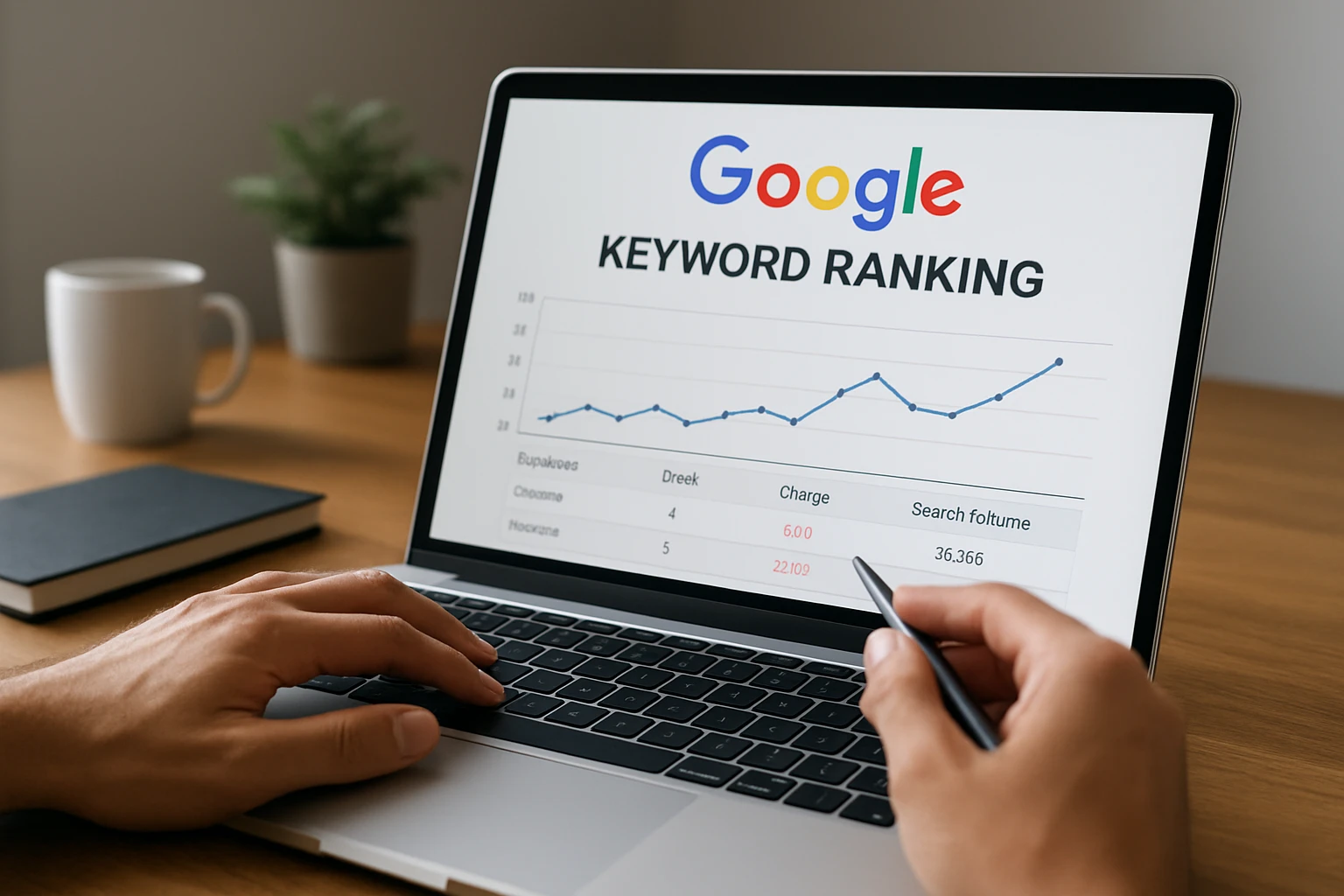
The right plan helps you turn rankings into reliable growth by aligning goals, data, and action across teams and time horizons. In the next 12 months, brands that combine structured data, authoritative content, and entity clarity will siphon outsized attention from features and assistants. Are you ready to operationalize this discipline and consistently track google keyword ranking in a way that compounds advantages quarter after quarter?
Accelerate Google Keyword Ranking Progress with SEOPro AI
Improve eligibility for search engine results page features and Google Overviews with schema guidance while AI-first playbooks automate creation, embed hidden prompts, and monitor ranking and large language model drift.
Book Strategy CallBonus: Feature-first schema checklist to secure visibility
Because structured data directly influences eligibility for search engine results page (SERP) features and can support inclusion in Google Overviews, treat schema as a first-class lever rather than an afterthought. Prioritize types that match your content and intent, keep markup accurate and minimal, and ensure answers are short, supported, and source-linked. Below is a compact guide you can adapt to your templates and governance, then monitor with alerts when validations break due to product or content updates.
| Schema Type | Best Used For | Key Properties | Checklist Item |
|---|---|---|---|
| Article / BlogPosting | Editorial and thought leadership | headline, datePublished, author, image, mainEntityOfPage | Ensure canonical uniform resource locator (URL) and accurate dates |
| FAQ (frequently asked questions) Page | Answering common queries succinctly | mainEntity, acceptedAnswer, text | Keep each answer under 120 words with a clear source |
| HowTo | Step-by-step tutorials | step, totalTime, supply, tool | Use ordered steps and concise verbs |
| Product / Offer | Listings with price and availability | name, brand, offers, sku | Match visible price and stock precisely |
| Organization | Brand entity clarity | name, url, sameAs, logo | Link authoritative profiles for entity reinforcement |
| BreadCrumbList | Navigation and context | itemListElement, position, item | Mirror on-page breadcrumbs exactly |
SEOPro AI offers schema markup guidance tailored to your content inventory, with prescriptive playbooks that specify which types to apply, what properties to populate, and how to test and monitor at scale. Paired with internal linking and topic clustering tools, the platform makes it easier to earn and retain high-visibility positions, trigger brand mentions from large language model (LLM) assistants, and maintain ranking stability as algorithms and assistants evolve.