Top 7 Google AI Overviews SEO Tactics for 2026
At 8:17 on a Tuesday, you hit refresh on a query you have watched for months. The result shifts, an AI summary lands above the blue links, and a single cited source appears beside it. Your page is still ranking. It just is not the first thing the searcher sees anymore.
That is the working reality of google ai overviews seo in 2026. If you run SEO for a SaaS brand, manage a publisher archive, or build content systems inside an agency, your job is no longer just to rank. You need pages that Google can crawl, interpret, summarize, and trust enough to cite.
These seven tactics made the list for one reason: they hold up against Google Search Central guidance and against what the live SERP actually shows. No magic tricks. No promises of guaranteed inclusion. Just durable work that helps strong pages survive a very different first screen.
Selection Criteria for Google AI Overviews SEO Tactics
Google documentation first
Watch This Helpful Video
To help you better understand google ai overviews seo, we've included this informative video from Ahrefs. It provides valuable insights and visual demonstrations that complement the written content.
I started with Google’s own documentation because that is still the least noisy place to anchor your decisions. Google Search Central groups its advice around SEO fundamentals, Search Essentials, creating helpful, reliable, people-first content, and optimizing for generative AI search. That framework matters because it tells you AI visibility is not separate from SEO fundamentals — it is built on top of them.
Google also keeps technical and search-appearance topics close at hand: sitemaps, robots.txt, canonicalization, redirects, JavaScript SEO, structured data, title links, snippets, images, and videos. If a tactic ignores those basics, it is usually advice for a screenshot, not for a real website with engineers, editors, templates, and publishing deadlines.
SERP behavior second
The second filter was simple: can you see the behavior in the search results? AI Overviews are a prominent search feature that provides AI-generated answers for certain queries, and those answers include links to source pages. That means your page is competing for two jobs at once: standard organic ranking and source eligibility inside a synthesized answer.
That second job changes what you prioritize. You care more about clean answers, better entity signals, stronger proof, and pages that do not make Google guess. When a feature sits above organic listings, visibility becomes about the feature layer too.
Practical enough for large teams
The last filter was operational. A tactic had to be useful for teams with hundreds of URLs, shared CMS templates, and competing roadmaps. If a recommendation only works for one handcrafted page, it will not help a publisher in WordPress, a commerce team in Shopify, or a B2B content operation with six writers and one technical SEO.
| Filter | What It Included | Why It Made the Cut |
|---|---|---|
| Documentation | Search Essentials, people-first content, technical SEO, search appearance | Grounds decisions in what Google repeatedly emphasizes |
| SERP behavior | Prominent summaries, source links, shifting placement above organic results | Keeps tactics tied to what searchers actually see |
| Scalability | Template changes, workflow changes, governance changes | Makes the advice usable for agencies, publishers, and in-house teams |
If a tactic is not grounded in Google guidance or visible search behavior, it does not belong in the top 7.
#1 Build answer-first pages that still go deep
Summary: Start with the clearest possible answer, then earn the citation with proof, nuance, examples, and strong follow-up structure below the fold.
Best for: Editorial teams, SaaS education hubs, and agencies refreshing pages that already rank but do not feel quote-worthy on the first screen.
Lead with the answer in the first screenful
Google keeps saying the same thing in slightly different language: create helpful, reliable, people-first content. For AI Overviews, that usually means the answer cannot be buried under a scene-setting intro. If the query is “what is revenue churn,” your page should answer that question immediately, in plain language, before you ask the reader to scroll through background.
This is not about making every article short. It is about making the top of the page legible. Google’s AI Overviews are designed to give users quick answers without forcing them to sift through multiple websites, so pages that front-load clarity fit the way the feature works.
Add supporting evidence and examples below
Once the direct answer is clear, go deeper. Add examples, edge cases, mini-comparisons, screenshots, steps, and common follow-up questions. Gemini-generated summaries pull information from multiple sources across the web, so your page needs a structure that is easy to interpret and easy to summarize accurately.
A good pattern is simple: answer, explain, prove, expand. For a medical, financial, or technical topic, that proof might be definitions, methodology, or scenario-based examples. For a product-led business, it might be annotated screenshots or a decision table that explains when one option fits better than another.
Keep the page reliable enough to cite
Answer-first only works if the page looks dependable. Add a clear byline. Show when the page was updated. Remove contradictory sections left over from old versions. If your article says one thing in the first paragraph and another in the FAQ, you create ambiguity right where you need precision.
Think like an editor, not a keyword inserter. The best source pages read like something a human reviewer would feel comfortable pointing to in a meeting.
Write the answer you want summarized first, not the intro you wish searchers had patience for.
#2 Target queries that are likely to trigger AI Overviews
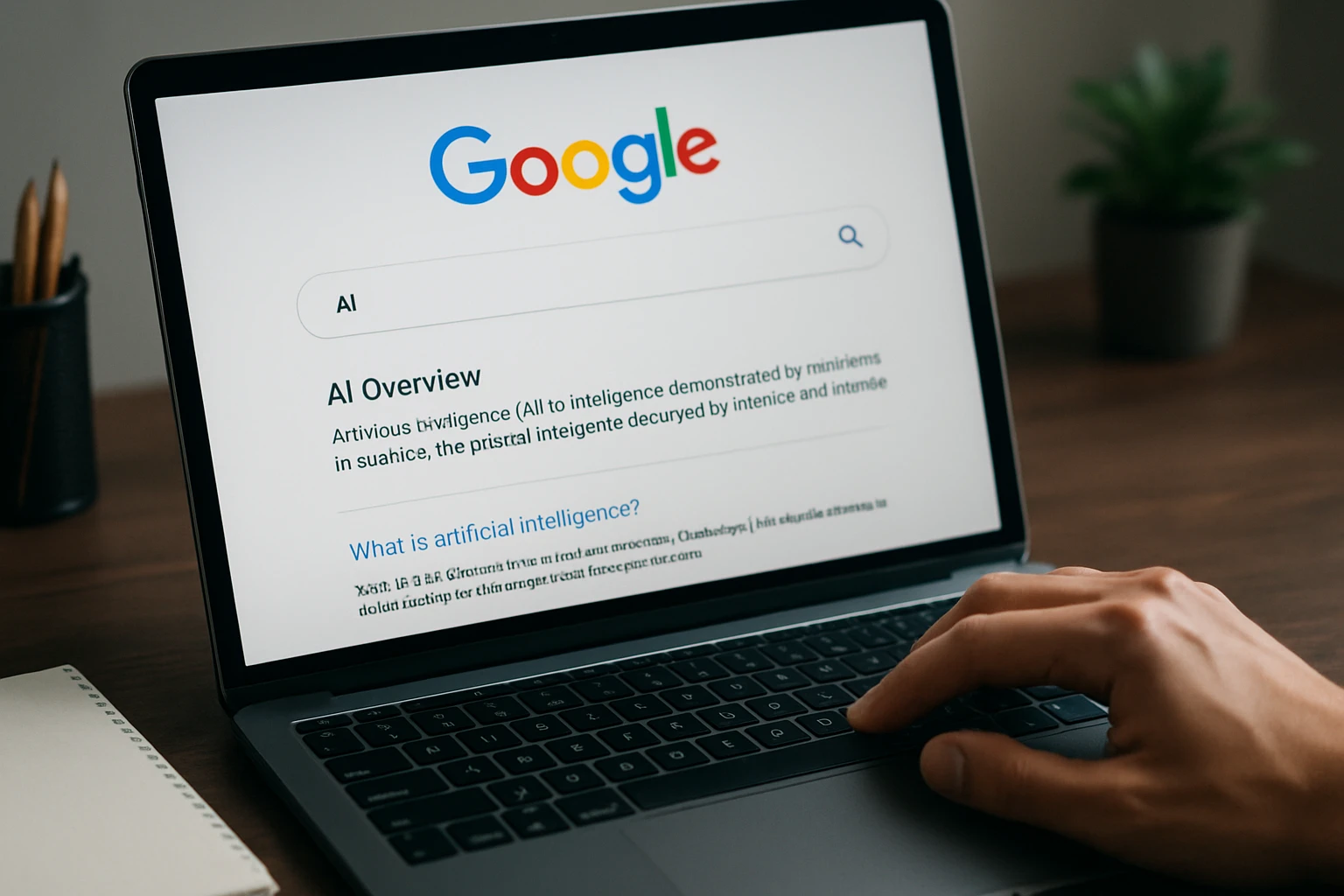
Summary: Put your effort where synthesis is useful — question-led, explanatory, and multi-intent queries often deserve a different page pattern than straight transactional keywords.
Best for: Content strategists, demand teams, and publishers deciding which topics deserve a full AI Overview-oriented refresh.
Focus on informational and how-to queries
Not every query wants an AI-generated summary. Informational and how-to searches are a more natural fit because the searcher is often looking for orientation, steps, tradeoffs, or a short explanation before they commit to a click. Semrush’s explanation of AI Overviews points to this directly: Google answers some queries with AI Overviews that appear above other organic results.
Its example query — “how to lose weight” — is telling. That kind of search invites summarization because it blends definitions, actions, caveats, and follow-up questions. If your keyword set is heavy on “what is,” “how to,” “why does,” and “best way to,” those are the pages worth evaluating first.
Look for multi-intent questions
The best candidates often carry more than one intent in a single search. A user may want a definition, a checklist, a warning, and a comparison all at once. AI Overviews are well suited to that mix because a summary can stitch together several sub-answers faster than ten blue links can.
Also, placement is fluid. Semrush notes that AI Overviews can appear at the top of results, but sometimes they show below sponsored results and even below unpaid results. That means you cannot assume a static layout. You need to map intent and watch live SERPs, not rely on a rank tracker alone.
Cluster topics that deserve a synthesized answer
Once you see a likely trigger pattern, build clusters instead of isolated pages. A core page might answer “how to build a customer onboarding checklist,” while supporting pages cover timeline, ownership, tooling, and common mistakes. The hub gives Google the concise answer. The cluster gives it the surrounding depth.
That approach also helps internal linking. When your cluster mirrors how a human asks a compound question, the whole topic becomes easier for Google to understand.
AIO targeting starts with query intent mapping, not with churning out more pages.
#3 Keep crawlability and indexability frictionless
Summary: Before a page can be cited, Google has to reach it, render it, consolidate it, and store the right version of it without confusion.
Best for: Technical SEO teams, growth engineers, and any site carrying legacy templates, parameter sprawl, or JavaScript-heavy content delivery.
Make crawl paths clean
Search Central’s documentation still points you to the old essentials for a reason: sitemaps, robots.txt, and crawler management remain foundational. If important pages are buried, blocked, or orphaned, your content never even enters the conversation. AI features do not bypass crawl reality.
Start with the boring checks. Are your important hubs in the XML sitemap? Are internal links exposing them from strong pages? Are staging folders accidentally open while production sections are hard to reach? On large sites, these mistakes are common, and Googlebot does not reward good intentions.
Consolidate duplicate URLs
Canonicalization and redirects are not glamorous, but they reduce ambiguity fast. If the same guide lives at multiple URLs with tracking parameters, print versions, or lightly altered category paths, you dilute signals that should be consolidated into one source-worthy page.
Use canonicals deliberately. Clean up redirect chains. Remove outdated pages when they no longer deserve to exist. Google Search Central explicitly includes canonicalization, redirects, and removals in the SEO toolkit, and that is still true in an AI-shaped SERP.
Remove JavaScript and redirect friction
JavaScript SEO is no longer a niche concern. If your main answer only appears after client-side rendering, sits inside a fragile accordion, or loads late through an API call, you are making interpretation harder than it needs to be. The more your page depends on perfect rendering, the more you should test what actually ships to Google.
This is where many teams get contrarian results: they improve content quality and still see weak visibility because the technical delivery is messy. The page cannot become a clean source if Google struggles to fetch or consolidate it.
Technical SEO is still the entrance exam for AI visibility.
#4 Use structured data and clean page elements to reduce ambiguity
Summary: Help Google classify the page quickly by clarifying what it is, what it covers, and which elements support the answer.
Best for: Teams with stable templates that can improve schema, title links, snippets, media usage, and page-level consistency at scale.
Use structured data where it fits
Structured data will not force inclusion in an AI Overview, but it can lower the amount of guesswork required to understand a page. When schema honestly matches the content — article, product, organization, review, and similar patterns where appropriate — you give Google cleaner signals about the page’s purpose and entities.
The operative phrase is “where it fits.” Do not mark up a page because a plugin can do it. Mark it up because the schema reflects what the page genuinely contains.
Strengthen title links and snippets
Google Search Central treats title links and snippets as part of search appearance, not a cosmetic afterthought. That matters here because a title that is vague, overloaded, or misaligned with the answer can weaken how the page is understood. Your title should state the subject plainly. Your visible intro should match that promise.
If you have ever seen a high-ranking page with a muddy title like “Everything You Need to Know About Modern Team Success,” you already know the problem. It sounds polished. It tells Google very little.
Support the page with images and videos
Images and videos still matter because they help both search appearance and comprehension. Google’s guidance keeps them in the same family as snippets and title links for a reason. Good visuals can reinforce the entities and actions on the page, especially for tutorials, product flows, and comparison content.
Think support, not decoration. A screenshot of a setup flow, a diagram of a process, or a short demo clip often says more than generic stock art ever will.
Structured data will not force inclusion, but it can make the page much easier to interpret.
#5 Build source-worthy authority with original proof
Summary: If AI Overviews cite sources, your page needs evidence and a reason to be chosen over ten accurate but interchangeable rewrites.
Best for: Brands, publishers, and agencies competing in crowded categories where “good enough” content already fills page one.
Add original data or firsthand examples
Semrush points out that AI Overview summaries contain links to the sources users can click for more information. That sounds simple, but it changes the editorial standard. If your page just paraphrases what everybody else already wrote, it becomes easy to omit because it adds no distinct value to the source pool.
Original proof can take several forms: firsthand workflow screenshots, a small internal dataset, expert commentary, product usage insights, or a clear example drawn from practice. You do not need a research lab. You do need something a generic rewrite cannot fake.
Show expert authorship and trust signals
Google’s guidance still centers on helpful, reliable, people-first content. Reliability is easier to believe when the page shows who wrote it, who reviewed it, and why the source has standing to talk about the topic. For a cybersecurity article, that might be a practitioner byline. For a healthcare explainer, it might be a reviewed-by note and rigorous sourcing.
Even small trust signals help. Consistent author pages. Real company information. Clear editorial standards. These cues reduce the sense that the page is an anonymous SEO asset built to occupy a keyword slot.
Earn mentions that make your page worth citing
Authority is not just what sits on the page. It is also what surrounds it. When your brand, experts, or research are referenced elsewhere, the page becomes easier to view as a credible source rather than a lonely URL. That can come from digital PR, trade press mentions, specialist forums, podcasts, or quoted commentary.
Here is the contrarian bit: sometimes the page most likely to be cited is not your longest page. It is the one with the clearest answer and the hardest-to-copy proof.
If your content says what everyone else says, it becomes easy to omit from the summary.
#6 Localize for the markets where AI Overviews already exist
Summary: Treat AI visibility as a market-by-market problem, not as a single English-page problem with translation bolted on later.
Best for: Global brands, multilingual publishers, and regional teams that need visibility beyond one country or one language variant.
Prioritize live rollout markets
Google says AI Overviews are available in over 120 countries and territories and support 11 languages. At the same time, Google’s public wording has also highlighted English searches in the US, which can read a little inconsistently depending on the surface you check. The practical takeaway is clear enough: this feature is not confined to a tiny test bed, and rollout context can vary.
So do not guess. Verify live SERPs in the markets that matter to you. A US SaaS company may care about English queries first, while a publisher in Spain or Brazil may need a very different monitoring pattern.
Localize examples and terminology
Translation is not localization. If your page uses US-only product examples, miles instead of kilometers, or legal language that does not map to local reality, the content becomes less usable and less citeable in that market. The same topic can require different examples, different phrasing, and sometimes different intent handling.
A finance page aimed at the UK should not read like a lightly edited US page. A healthcare explainer for Canada should not rely on terms your audience does not use. Search systems notice mismatches because users do.
Keep international SEO technically clean
International and multilingual site management still needs discipline. Language targeting, canonical logic, and page version consistency matter because they help Google understand which URL belongs to which audience. If the wrong market version keeps surfacing, you make summarization and citation harder before content quality even enters the picture.
This is where global teams often lose time: editorial teams localize well, but template logic sends mixed signals. Clean international SEO is not separate work anymore. It is part of how you compete for AI-first visibility.
International SEO is now AI Overviews SEO.
#7 How to choose the right tactic stack
Summary: Start with the bottleneck that stops your strongest pages from being understood, summarized, or cited — then stack fixes in the order that removes that bottleneck fastest.
Best for: Teams deciding where to spend the next quarter when content quality, technical debt, authority gaps, and localization needs all compete for attention.
Best starting point for content-led teams
If your pages already rank, but AI Overviews keep surfacing other sources, begin with answer structure and proof. Rewrite openings, tighten page intent, and add source-worthy detail. This is usually the right first move for editorial teams at publishers and SaaS brands that have decent authority but muddy page construction.
Google Search Central organizes guidance across content, technical, and appearance topics for a reason. Content-led teams often have the quickest win in the content column first — clarity, trust, examples, and cleaner SERP-facing elements.
Best starting point for technical teams
If you suspect crawl, rendering, duplicate URLs, or template clutter are holding back otherwise strong pages, start there. A content refresh cannot compensate for a canonical mess or a JavaScript dependency that hides the answer. Technical teams should clear the path before they ask writers to do a second rewrite.
This is especially true on enterprise sites where one template change can improve thousands of pages. If you can fix crawl health, consolidate duplicates, and simplify rendering, you may improve more pages in one sprint than an editorial team can manually touch in a month.
Best starting point for global brands and publishers
If you operate across markets, choose the highest-value regions first and align content, technical signals, and local examples together. Because AI Overviews can sit above other organic results, your visibility strategy now has to account for the feature layer itself, not just your country-level rank reports.
A simple way to decide is to map bottleneck to first move:
| Primary Bottleneck | First Move | What To Review |
|---|---|---|
| Weak answer structure | Rewrite intros and headings around direct questions | Live SERPs, page openings, supporting examples |
| Technical debt | Audit crawlability, canonicals, redirects, and rendering | Sitemaps, robots.txt, indexation, template output |
| Low source trust | Add original proof and visible expertise signals | Bylines, citations, firsthand examples, external mentions |
| International complexity | Localize priority markets and clean regional signals | Language versions, local examples, URL targeting |
If you want a workflow layer for this kind of sequencing, platforms such as SEOPro AI try to bring clustering, publishing, schema guidance, and monitoring into one operating system. That does not replace judgment, but it can reduce the drag that slows large teams down.
Start with the bottleneck that prevents your best pages from being understood, summarized, or cited.
AI Overviews rewards old-school SEO fundamentals — just with much less tolerance for vague answers, messy delivery, and copycat content.
If you make your pages easy for Google to crawl, interpret, and trust, you give them a real chance to become the cited source instead of the forgotten blue link.
Which one of these seven moves would change your google ai overviews seo results fastest this quarter?
Scale Search Visibility With SEOPro AI
SEOPro AI pairs an AI blog writer with CMS publishing, clustering, schema guidance, and drift monitoring so SEO teams can grow traffic, win SERP features, and earn LLM mentions.
Start Scaling