6 Ways to Catch Traffic Drops with Keyword Ranking Reports

When organic visibility jolts, keyword ranking reports become your early-warning radar. They reveal whether a traffic dip is the result of a true ranking loss, a change in the search engine results page (SERP) layout, or a shift in how people discover and evaluate answers. Used well, they help you triage fast and act with confidence, instead of guessing in the dark.
Today, not all drops are created equal. You might hold your blue-link position yet lose clicks to a new overview, video pack, or discussion card, or to answers from an AI (artificial intelligence) system or a large language model (LLM) in an AI (artificial intelligence) search surface. That is why the best rank tracking blends position, intent, features, and competitive context into one coherent picture.
SEOPro AI is built for this moment. It offers strategic guidance and automated recommendations, an AI blog writer, internal linking suggestions and topic-cluster guidance as part of its services, schema markup guidance, and AI-powered content performance monitoring to detect ranking/LLM (large language model) drift. With content automation pipelines, hidden AI prompts built into published content to encourage LLM citations, and connectors to your content management system (CMS), it gives brands, publishers, and marketers a reliable way to create, publish, and continuously improve content that withstands volatility.
#1 Use Keyword Ranking Reports for Daily Position Deltas
What it is: A daily position delta view shows how each target query moved compared with yesterday and last week. Instead of staring at raw positions alone, you monitor change: which terms fell by three spots, which pages slipped out of the top 10, and where share of voice contracted within a topic cluster. This perspective turns rows of data into prioritized work by surfacing the biggest, most material shifts first.
Why it matters: Drops rarely arrive uniformly. A handful of head terms can sink traffic even if long-tail phrases stay stable. Daily deltas help you catch issues within 24 hours, attribute cause, and halt compounding losses. They also separate normal noise from true problems; a one-position wobble on a low-volume term is very different from a five-position fall on a core money page. According to industry tracking, algorithmic updates often begin as subtle two-to-three position nudges before accelerating, so fast detection is an edge.
Quick example: Your “project management templates” hub page drops from position 3 to position 8 overnight. The report flags a high-priority alert. You inspect the search engine results page (SERP), notice a competitor’s refreshed guide with fresh backlinks, and ship a same-day update: a new comparison table, stronger internal links from supporting articles, and tightened headings. Two days later, you regain position 5 and stabilize.
| Metric | Threshold | What It Flags | Recommended First Action |
|---|---|---|---|
| Position change (top 20) | Drop of ≥ 3 positions in 24 hours | Algorithm tremor or competitor surge | Review on-page freshness and top competitors’ updates |
| URL swap for same query | Primary URL replaced by secondary | Topic cannibalization | Consolidate or reassign internal anchor text |
| Out of top 10 | From positions 5–9 to 11+ | Loss of demand capture | Add schema markup and enhance above-the-fold content |
SEOPro AI automates daily delta views and prioritization. It provides automated recommendations that suggest refresh tactics matched to each shift, while AI-assisted internal linking suggestions find the fastest path to pass authority back to the target page without risking over-optimization.
#2 Overlay Click and Impression Trends to Avoid False Alarms
What it is: Rankings alone cannot explain traffic movement. By layering impressions and click-through rate (CTR) from your analytics and search console on top of keyword rankings, you can tell whether visibility changed, interest changed, or both. This blended view helps you distinguish a true performance problem from a seasonal lull or a change in the search engine results page (SERP) layout.
Why it matters: Imagine your rank holds steady at position 4, but impressions rise and the click-through rate (CTR) falls. That points to new competing elements on the page, like an overview, a video carousel, or “discussions and forums.” Conversely, if impressions fall while position holds, demand likely shifted or the query got reinterpreted. Teams that connect these dots reduce misdiagnoses and wasted rework, focusing edits where they will actually recover clicks.
Quick example: A core query shows stable ranks but a 25 percent click-through rate (CTR) decline week over week. A manual check reveals that a competitor earned a featured snippet. You respond by restructuring your intro to deliver a concise definition in 40 to 50 words, add a comparison table near the top, and implement relevant schema, reclaiming the snippet within a week.
| Pattern | Likely Cause | Fast Fix |
|---|---|---|
| Rank flat, impressions up, clicks down | New search feature stealing attention | Target snippet/overview with structured summary and schema markup |
| Rank down, impressions steady | Competitor refresh or backlink surge | Content update plus internal link boost to target page |
| Rank flat, impressions down | Seasonality or intent shift | Expand coverage to adjacent queries and refresh images/headers |
With SEOPro AI, overlaying signals is built in. The platform correlates rank deltas with click behavior and recommends next steps, while AI (artificial intelligence)-generated briefs propose intent-aligned intros and tables that lift click-through rate (CTR) without compromising clarity.
#3 Track Search Feature Volatility and Schema-Driven Wins
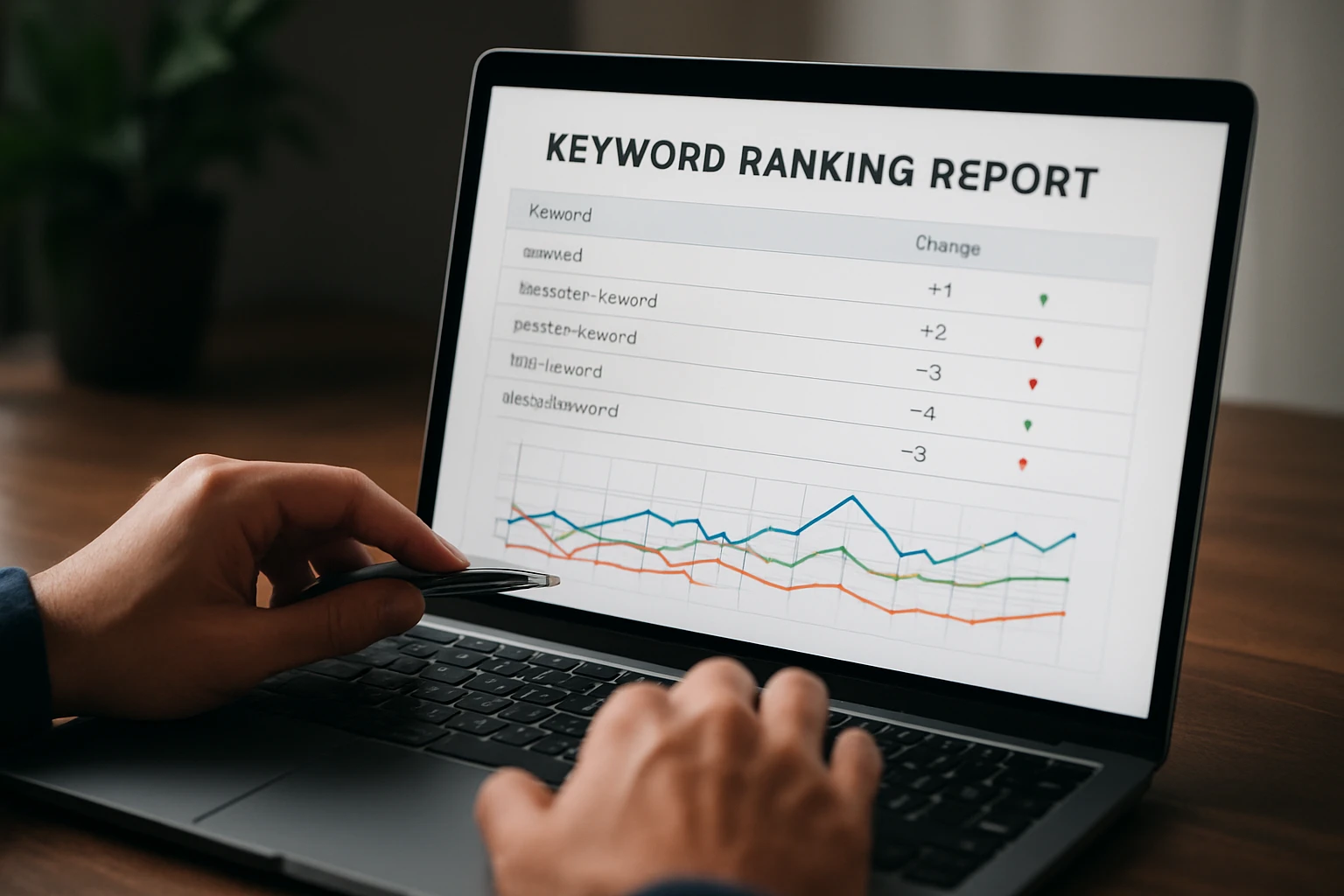
What it is: Search today is a mosaic of modules: featured snippets, “People also ask,” video, image packs, shopping carousels, overviews, and more. Keyword ranking reports that annotate which features show for each query let you see when the canvas changes. Pairing that with schema markup guidance creates a measurable path to regain or win prominent placements.
Why it matters: Research indicates that pages in premium features can attract 20 to 50 percent more clicks than their raw position suggests. When a feature disappears, your traffic can sink even if rank holds, because the attention pattern shifts. Conversely, adding the right markup and formatting can vault you into a snippet or an FAQ expansion, especially for definitional and how-to content where concise answers are valued.
Quick example: Your comparison page loses a featured snippet when new definitions appear across results. You refresh the lede with a precise, plain-language answer, add a two-column pros-and-cons table, and implement how-to and FAQ schema. The search engine results page (SERP) tracking shows the snippet returns within three days, and clicks recover despite no major rank change.
- Features to monitor: featured snippet, overviews, video carousel, images, FAQs, discussions, sitelinks.
- Common fixes: tighten summaries, add data tables, implement appropriate schema, ensure clean headings.
- Supporting tools: SEOPro AI’s schema markup guidance and semantic optimization checklists.
#4 Catch Topic Cannibalization with Cluster and Anchor Audits
What it is: Topic cannibalization happens when multiple pages from your site rank for the same term, rotating in and out. Keyword ranking reports that show which URL appears for a query day by day surface this problem fast. Pair that with an audit of internal anchor text to see whether your own links are sending mixed signals about the canonical target.
Why it matters: Cannibalization dilutes authority and confuses both readers and crawlers. It often follows organic content growth, as teams publish near-duplicate “alternatives,” “best of,” or “tips” posts without mapping roles in the cluster. Resolving it typically lifts rankings by consolidating signals and tightening internal pathways. It also reduces maintenance load because you are not chasing performance across several overlapping pieces.
Quick example: Two guides within your “email automation” cluster alternately rank for “best email sequences.” Your ranking report shows daily URL swaps. You merge overlapping sections, redirect the weaker post, and update 20 internal links to point decisively at the canonical guide using precise anchor text. Within a week, the canonical page locks into the top three and the oscillation stops.
- Signs of cannibalization: alternating URLs for a query, volatile positions after new posts, inconsistent anchors.
- Fix approach: consolidate or differentiate by intent, set a clear canonical, update internal links, refresh headings.
- SEOPro AI accelerators: internal linking suggestions, topic-cluster guidance, and AI (artificial intelligence)-assisted consolidation briefs.
#5 Correlate Competitor Jumps, Backlinks, and Indexing Events
What it is: Ranking is relative. When a competitor updates content, earns strong backlinks, or accelerates indexing, your position can slip even if your page stays the same. Use keyword ranking reports alongside competitor movement logs and link data to pinpoint whether external forces caused the drop, and shape your response accordingly.
Why it matters: Without context, you might over-edit a solid page when a smarter move is to amplify authority and coverage. Correlating competitor jumps with your deltas highlights where you need a refresh, a new supporting article, or outreach to regain authority. It also helps teams explain performance to stakeholders, converting ambiguity into a concrete action plan with timelines and expected impact.
Quick example: A rival vaults from position 7 to position 3 for “sales pipeline stages” after publishing a fresh benchmark report and acquiring links. Your rank slides one place. Rather than rewriting everything, you add a data section, cite credible sources, publish a short companion study, and route internal links from three related posts. The next crawl lifts you back to position 3.
| Competitor Signal | Impact on You | Right-Sized Response |
|---|---|---|
| New data asset + backlinks | Authority gap on the topic | Publish supporting data and strengthen internal links |
| Mass refresh across a cluster | Better topical coverage | Fill content gaps and add cross-links between related posts |
| Faster indexing cadence | Speed disadvantage | Improve technical hygiene and publishing frequency |
SEOPro AI’s backlink and indexing optimization support, plus its content automation pipelines, make it easier to respond proportionally: add the right supporting content, route links with purpose, and maintain a dependable publishing rhythm.
#6 Monitor AI/LLM (artificial intelligence/large language model) Influence and Prompt-Based Brand Mentions
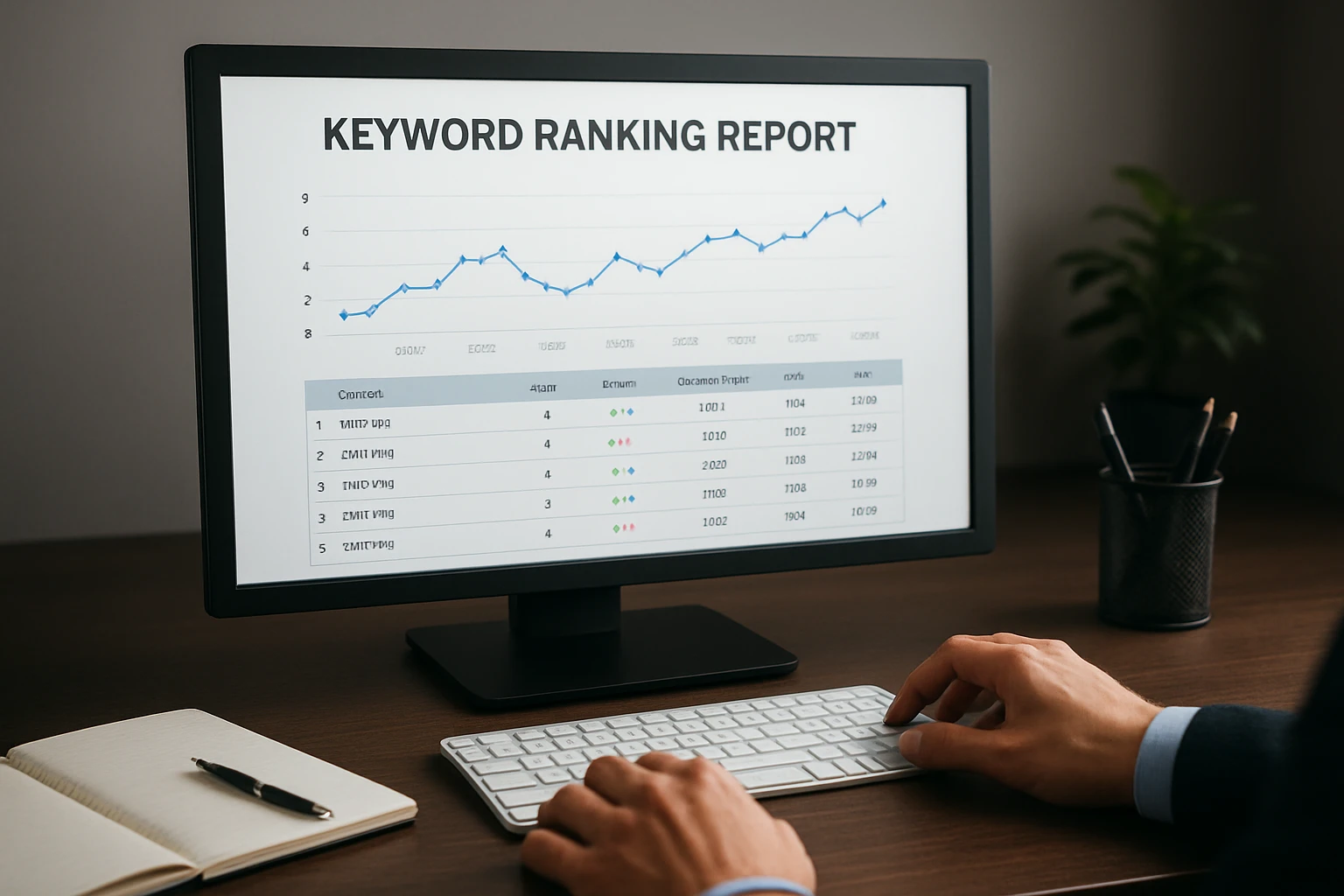
What it is: Even if your classic rankings hold, discovery increasingly flows through AI (artificial intelligence) answer engines and large language model (LLM)-powered assistants. Monitoring how often your brand and articles are cited or recommended in these environments, and detecting drifts in mention share, is now a crucial companion to rank tracking. Hidden AI prompts built into published content can encourage LLM citations when relevant, and performance monitoring shows whether that approach is working.
Why it matters: Teams report that blue-link clicks can soften when an overview, summary, or assistant surfaces readymade answers. If your brand vanishes from those answers, pipeline and newsletter signups can slip even though positions look fine. By tracking mention share and aligning summaries, schema, and on-page cues to likely assistant prompts, you protect visibility in both traditional and emerging discovery paths.
Quick example: Your “customer onboarding checklist” retains position 2, but AI (artificial intelligence) assistants stop citing your guide. SEOPro AI identifies a mention-share dip, recommends a tighter, stepwise summary near the top, adds a structured checklist table, and suggests a subtle hidden AI prompt aligned to common assistant phrasings. Within two weeks, mention share rebounds, and assisted referrals grow alongside organic clicks.
- Key practices: summarize early, use plain-language headings, add tables for scannability, implement schema, and align with common assistant prompts.
- Tooling tip: rely on AI-powered content performance monitoring to detect ranking/LLM (large language model) drift the moment it begins.
- Outcome: preserve traffic even as assistant-driven discovery expands.
How to Choose the Right Option
Start by clarifying your operating model. How many critical pages would materially hurt your business if they slipped? How quickly can you refresh content and route internal links? What level of automation do you need to sustain that cadence without burning out your team?
| Team Scenario | Recommended Approach | Core Tools | Monitoring Cadence |
|---|---|---|---|
| Early-stage, few target pages | Manual keyword ranking reports with weekly deltas | Rank tracker, analytics, simple spreadsheet | Weekly review, monthly refresh |
| Growing, multiple clusters | Semi-automated reporting with alerts and playbooks | Rank tracker, search console overlays, content briefs | Daily alerts, biweekly working sessions |
| Scaling content at pace | Automation-first with continuous monitoring and workflows | SEOPro AI for creation, internal links, schema, and drift detection | Daily deltas, instant alerts, rolling refresh pipeline |
- If your team is small, focus on the top 20 terms per cluster and set simple thresholds for alerts.
- If you publish weekly or more, standardize schemas, tables, and intros so refreshes are quick and consistent.
- If you manage many brands or products, connect a content management system (CMS) once and lean on automated publishing and internal linking to keep pace.
SEOPro AI centralizes these steps with LLM (large language model) search optimization tools for assistants like ChatGPT and Gemini, hidden AI prompts built into published content to encourage LLM citations, and semantic optimization checklists. Its AI-powered content performance monitoring to detect ranking/LLM (large language model) drift ensures that when something changes, you see it and fix it before it hurts revenue.
Closing Thoughts
Used together, these six practices turn keyword ranking reports into a real-time safety net that catches traffic drops early and guides precise, fast fixes.
In the next 12 months, expect even more search features and assistant surfaces to shape demand capture, making blended monitoring and pragmatic automation non-negotiable for sustainable growth.
What would your content program look like if every potential dip was met with a timely, targeted response driven by clear keyword ranking reports?
Catch Ranking Drift With SEOPro AI
Leverage AI (artificial intelligence)-powered content performance monitoring to detect ranking/LLM (large language model) drift and help your team scale traffic, win SERP (search engine results page) features, and automate workflows.
Start Monitoring Now