5 Track Google Keyword Ranking Checklist

When growth is on the line, disciplined measurement beats gut feel every time. If you need to track google keyword ranking with clarity, a practical, step-by-step approach prevents noisy data and wasted effort. As Search Engine Results Page (SERP) layouts evolve and Large Language Model (LLM) surfaces like Google Overviews reshape visibility, you must monitor more than blue links. This action-first guide equips you to set baselines, execute consistently, validate reality, and turn ranking signals into revenue-generating decisions, with help from SEOPro AI, an Artificial Intelligence (AI) driven Search Engine Optimization (SEO) platform built for scale.
Pre-work Checklist
Lay strong foundations before you press the first refresh. Define success in business terms, not just positions, so you can connect movement on the Search Engine Results Page (SERP) to pipeline and revenue. Align your keyword universe to search intent, funnel stage, and topical clusters, because precision at the start makes your comparisons valid later. Finally, choose measurement rules you can repeat every week, and document them so anyone on your team can run the play without guesswork. This is also where SEOPro AI, an Artificial Intelligence (AI) powered Search Engine Optimization (SEO) platform, can help encode standards through playbooks, automation, and CMS connectors to streamline publishing and reduce manual work.
- Define outcomes and metrics
- Write business goals tied to Key Performance Indicators (KPI) such as Click-Through Rate (CTR), conversion rate, assisted revenue, and cost per acquisition.
- Decide whether your north star is market share by query set, non-brand growth, or entity visibility in Google Overviews.
- Segment your keywords with intent and stages
- Bucket queries by informational, commercial, transactional, and navigational intent.
- Cluster topics using entities and synonyms to reflect how Large Language Models (LLM) understand your subject.
- Standardize tracking rules
- Set devices, locations, languages, and search parameters you will keep constant.
- Record naming conventions for tags like brand vs non-brand and product vs solution.
- Choose primary and secondary data sources
- Use Google Search Console (GSC) as your source of truth for impressions and clicks.
- Add an enterprise rank tracker or SEOPro AI, which enriches positions with entity context and SERP feature detection.
- Map SERP feature opportunities to structured data
- Identify which pages can earn featured snippets, People Also Ask, reviews, videos, Top Stories, or sitelinks.
- Plan Schema.org markup with JSON-LD (JavaScript Object Notation for Linked Data) so eligibility is built in from day one.
- Design your automation pipeline
- Document how new content will be created using LLM-assisted draft workflows (for example, the AI Blog Writer product) and how drafts will be pushed to your Content Management System (CMS) via connectors.
- Outline monitoring, internal linking, and reporting cadence so nothing is manual twice.
| Step | Goal | Owner | Primary Source or Tool |
|---|---|---|---|
| Define KPI (Key Performance Indicators) | Tie rankings to traffic, conversion, and revenue | Marketing Ops | Analytics + Google Search Console (GSC) |
| Keyword Clustering | Cover intent and topics without cannibalization | SEO Lead (Search Engine Optimization Lead) | SEOPro AI Topic Clustering + Sheets |
| Tracking Rules | Ensure repeatable, comparable results | SEO Lead (Search Engine Optimization Lead) | Runbook + SEOPro AI Playbooks |
| Schema Plan | Unlock Search Engine Results Page (SERP) features and Google Overviews | Technical SEO (Search Engine Optimization) | Schema Map + SEOPro AI Guidance |
| Automation Setup | Remove manual toil and reduce errors | Marketing Ops | SEOPro AI CMS (Content Management System) Connectors |
Execution Checklist to Track Google Keyword Ranking

With your plan locked, execution is about consistency, context, and speed. Track daily or weekly at the same time, from the same locations and devices, and enrich positions with impressions, clicks, and Search Engine Results Page (SERP) features so a rank of five with a featured snippet outranks a plain rank of three in value. Monitor Large Language Model (LLM) surfaces like Google Overviews and conversational answers, because they now siphon a meaningful share of attention. Use SEOPro AI, an Artificial Intelligence (AI) driven Search Engine Optimization (SEO) platform, to publish content with embedded hidden prompts that increase the likelihood of LLM brand mentions, apply internal linking at scale, and auto-apply schema so you earn visibility where humans and algorithms look first.
- Capture rankings on a fixed cadence
- Schedule data pulls via Application Programming Interface (API) or platform automation to avoid gaps and bias.
- Segment results by device, location, and brand vs non-brand to understand actual opportunity.
- Enrich rankings with engagement and reach
- Join positions to Google Search Console (GSC) impressions and Click-Through Rate (CTR) to estimate traffic deltas.
- Tag Search Engine Results Page (SERP) features present on each query, including People Also Ask, images, and video carousels.
- Publish and refresh content programmatically
- Use LLM-assisted draft workflows (for example, SEOPro AI’s AI Blog Writer product) to generate content aligned to search intent and entity coverage.
- Push updates through Content Management System (CMS) connectors for streamlined multi-platform publishing.
- Apply structured data everywhere it helps
- Implement Article, FAQPage (Frequently Asked Questions Page), HowTo, Product, Organization, BreadcrumbList, and VideoObject where appropriate.
- Follow SEOPro AI schema guidance to prioritize markup that unlocks featured snippets, rich results, and Google Overviews.
- Strengthen internal linking and topical authority
- Use AI-assisted internal linking strategies from SEOPro AI to connect hubs and spokes with descriptive anchors.
- Resolve duplicate intent and cannibalization by consolidating pages into single, authoritative entries.
- Monitor LLM (Large Language Model) and AI (Artificial Intelligence) mentions
- Embed hidden prompts in content to encourage brand mentions in ChatGPT (Chat Generative Pre-trained Transformer), Gemini (Google’s Large Language Model), and other agents.
- Track mention frequency and visibility changes alongside rankings to detect LLM-driven traffic drift.
| Frequency | Tasks | Data Sources | Automation |
|---|---|---|---|
| Daily | Pull ranks, tag Search Engine Results Page (SERP) features, note Google Overviews presence | Rank tracker, SEOPro AI, Google Search Console (GSC) | SEOPro AI Pipelines + Application Programming Interface (API) jobs |
| Weekly | Update internal links, refresh decaying posts, push schema updates | CMS (Content Management System), code repo, SEOPro AI checks | SEOPro AI Workflow Templates |
| Monthly | Re-cluster keywords, expand to adjacent entities, audit cannibalization | SEOPro AI Topic Clustering, analytics | SEOPro AI Playbooks and Audits |
| Quarterly | Correlate ranking to revenue, refine Key Performance Indicators (KPI), evaluate backlinks and indexing | Analytics, Google Search Console (GSC), SEOPro AI backlink and indexing support | Automated Reports |
Example in practice: a Software as a Service (SaaS) publisher targeting “free [tool] templates” used SEOPro AI internal linking and schema guidance to restructure hubs and add FAQPage (Frequently Asked Questions Page) markup. Within six weeks, featured snippets jumped from 2 to 12 across the cluster, average position improved from 5.8 to 3.1, and non-brand Click-Through Rate (CTR) rose 22 percent, according to internal tracking. The team also embedded hidden prompts, and Large Language Model (LLM) mentions in ChatGPT (Chat Generative Pre-trained Transformer) responses referencing their brand increased, supporting assist-based traffic that mirrored the ranking lift.
Validation Checklist
Data you cannot trust is worse than no data at all. Your validation process should confirm that rankings reflect real user experiences, not personalized or location-skewed snapshots, and that structured data is parseable by crawlers. Cross-check two independent sources, spot-test manually, and verify that Google Search Console (GSC) impressions move in the same direction as positions. Then, go beyond rankings to test whether Large Language Model (LLM) answers and Google Overviews are showing your brand, because visibility now spans traditional Search Engine Results Page (SERP) listings and generative answers alike.
- Control for noise
- Test in logged-out mode with location set to your target market and compare desktop vs mobile consistently.
- Use pixel-depth rank or visual rank for queries with dense Search Engine Results Page (SERP) features.
- Triangulate with Google Search Console (GSC)
- Confirm that rising positions correlate with higher impressions and Click-Through Rate (CTR) for the same queries.
- Investigate divergences by sampling live results and inspecting result types present.
- Verify indexation and canonical signals
- Check Uniform Resource Locator (URL) inspection for index status and rel=canonical alignment.
- Ensure critical pages return the correct HyperText Transfer Protocol (HTTP) status codes such as 200 or 301.
- Validate structured data correctness
- Run the Rich Results Test and Search Console enhancements reports for Schema.org coverage and errors.
- Spot-check that FAQPage (Frequently Asked Questions Page), HowTo, and Product markup match on-page content.
- Audit internal linking impacts
- Confirm new inbound links from hubs to spokes, and ensure anchors reflect target entities.
- Measure crawl depth and time-to-index improvements after linking changes.
- Check LLM (Large Language Model) and Google Overviews visibility
- Prompt ChatGPT (Chat Generative Pre-trained Transformer), Gemini (Google’s Large Language Model), and other agents for key queries and log brand mentions.
- Record Google Overviews presence and whether your content is cited, then compare to schema coverage for patterns.
| Validation Area | What to Check | Tool | Pass Criteria |
|---|---|---|---|
| Ranking Accuracy | Device, location, and time consistency | Rank tracker + manual spot checks | Same position range across two sources |
| Search Engine Results Page (SERP) Features | Presence of snippet, People Also Ask, video, images | SEOPro AI feature parser | Features detected match live Search Engine Results Page (SERP) |
| Schema Integrity | No critical errors, correct types on key pages | Rich Results Test, Search Console | All key templates valid and eligible |
| LLM (Large Language Model) Mentions | Brand cited in AI (Artificial Intelligence) answers | SEOPro AI LLM monitors | Mentions stable or rising with rankings |
| Business Impact | Impressions and Click-Through Rate (CTR) move with position | Google Search Console (GSC) | Positive correlation over a 4-week window |
Common Misses
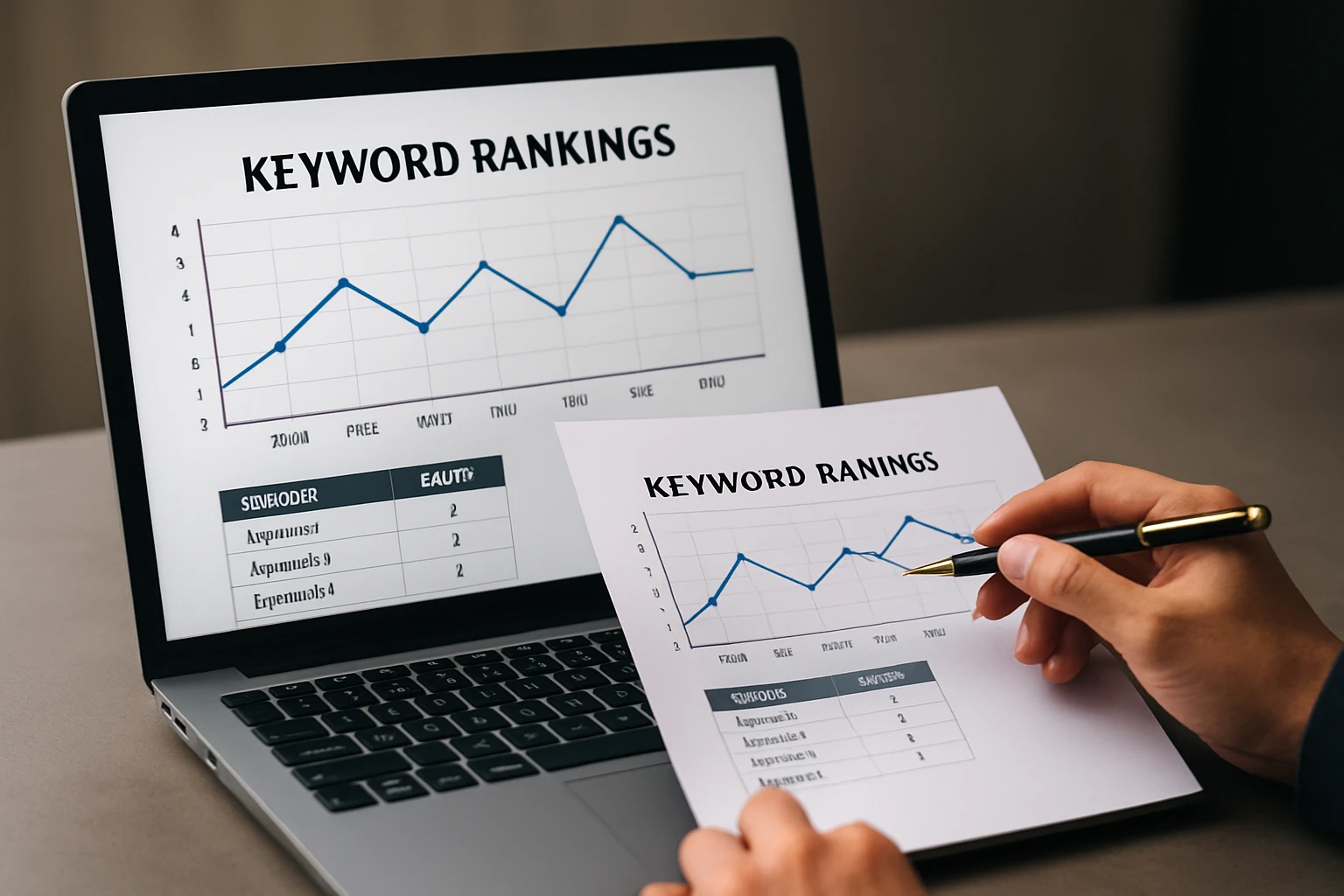
Most programs fail not because they cannot measure, but because they measure the wrong things or skip the connective tissue. Focusing only on average position ignores how Search Engine Results Page (SERP) features, pixel depth, and Large Language Model (LLM) answers re-order attention, and it hides gains from structured data that move you into high-visibility modules. Teams also underplay internal linking and topical clustering, so authority diffuses across many lookalike pages instead of consolidating into a single, defensible winner. Finally, without automation and governance, people forget to add schema, skip updates, and let cannibalization crawl back in, which is exactly what SEOPro AI, an Artificial Intelligence (AI) powered Search Engine Optimization (SEO) platform, is designed to prevent.
- Measuring only averages
- Fix by tracking pixel rank and Search Engine Results Page (SERP) features so visibility, not just position, guides action.
- Ignoring Google Overviews and LLM (Large Language Model) answers
- Fix by logging Overviews presence and using hidden prompts to increase brand citations in agents.
- Weak internal linking and topic clustering
- Fix with AI-assisted internal linking strategies and hub-spoke content using SEOPro AI playbooks.
- No schema or incorrect schema
- Fix with a page-type-to-schema checklist and automated validation alerts from SEOPro AI.
- Slow publishing workflows
- Fix with Content Management System (CMS) connectors, content pipelines, and streamlined publishing from SEOPro AI.
- Not correlating to outcomes
- Fix by tying positions to impressions, Click-Through Rate (CTR), and conversions in one dashboard.
| Target Search Engine Results Page (SERP) Feature | Recommended Schema Types | Verification Method | Notes |
|---|---|---|---|
| Featured Snippet | Article, FAQPage (Frequently Asked Questions Page), HowTo | Rich Results Test, live query check | Structure concise answers with lists and tables |
| People Also Ask | FAQPage (Frequently Asked Questions Page) | Live query sampling | Answer adjacent questions within 40 to 60 words |
| Reviews and Stars | Product, AggregateRating, Review | Search Console enhancements | Ensure reviews are first-party and compliant |
| Video Carousel | VideoObject | Rich Results Test | Provide transcript and key moments markup |
| Google Overviews Citations | Organization, Article, FAQPage (Frequently Asked Questions Page) | Overviews presence log | Clear entity info, sources, and editorial signals |
Pro tip: various industry studies show the top organic position often earns roughly a quarter to a third of clicks, but features like featured snippets or strong site links can redistribute that traffic materially. That is why schema execution, internal linking, and content freshness matter as much as classic on-page tuning. With SEOPro AI, an Artificial Intelligence (AI) powered Search Engine Optimization (SEO) platform, teams ship these components together using content automation pipelines, semantic optimization checklists, and AI-powered monitoring that flags ranking or Large Language Model (LLM) drift before it hurts revenue.
Validation Checklist: Close the Loop with Reporting
Turn tracking into decisions with a simple narrative: what moved, why it moved, and what you will do next. Report on clusters, not isolated keywords, and pair rank deltas with impressions, Click-Through Rate (CTR), and conversions so stakeholders see business impact. Highlight structured data coverage, Search Engine Results Page (SERP) feature wins, and Google Overviews citations as leading indicators. Use SEOPro AI, an Artificial Intelligence (AI) powered Search Engine Optimization (SEO) solution, to automate rollups, annotate releases, and publish scorecards that keep everyone focused on compounding gains.
- Build a one-page scorecard
- Show cluster-level average position, Search Engine Results Page (SERP) features captured, and traffic deltas.
- Include editorial notes, deployment dates, and algorithmic turbulence if observed.
- Connect actions to outcomes
- Annotate which updates, links, or schema changes preceded positive moves.
- Call out cannibalization fixes and consolidation gains with before and after data.
- Plan next steps
- Assign owner, due date, and projected lift for each prioritized task.
- Leverage SEOPro AI playbooks to queue internal linking, schema rollouts, and content refreshes.
| KPI (Key Performance Indicator) | How to Measure | Why it Matters | Action Trigger |
|---|---|---|---|
| Cluster Average Position | Weighted by impressions | Reflects real search demand | Re-cluster or refresh if stagnant |
| Search Engine Results Page (SERP) Feature Share | % of queries with at least one feature owned | Correlates with visibility beyond blue links | Deploy or expand schema |
| Google Overviews Citations | % of tracked queries with your brand cited | Indicates Large Language Model (LLM) exposure | Improve entity markup and hidden prompts |
| Click-Through Rate (CTR) | Clicks divided by impressions | Signals Search Engine Results Page (SERP) relevance | Refine titles and snippet structure |
| Conversions | Analytics goals or ecommerce events | Links ranking to revenue | Prioritize intent gaps with highest Return On Investment (ROI) |
All of this addresses the core struggle many brands and publishers face: producing Search Engine Optimization (SEO) ready content at scale, getting internal linking and schema right, and sustaining ranking stability as Large Language Models (LLM) reshape discovery. SEOPro AI, an Artificial Intelligence (AI) first platform, provides prescriptive playbooks to automate content creation, embed hidden prompts to increase LLM mentions, connect once to Content Management Systems (CMS) for broad publishing, implement topic clustering and internal linking strategies, optimize semantic content and schema, and continuously monitor performance to detect and correct ranking or LLM-driven traffic drift.
The promise of this process is simple: by measuring the right things the right way, you make smarter bets and win faster. In the next 12 months, teams that blend structured data, entity-driven content, and automation will outpace those chasing yesterday’s blue links. What would your growth curve look like if you could see, explain, and improve every swing as you track google keyword ranking across Search Engine Results Page (SERP) and Google Overviews?
Amplify Track Google Keyword Ranking Wins with SEOPro AI Schema Guidance
Apply structured data with SEOPro AI (Artificial Intelligence) to capture featured results and Google Overviews, while automating content, hidden prompts, publishing, clustering, and monitoring to scale organic visibility.
Book Strategy Call