How to Increase Brand Visibility with SEO
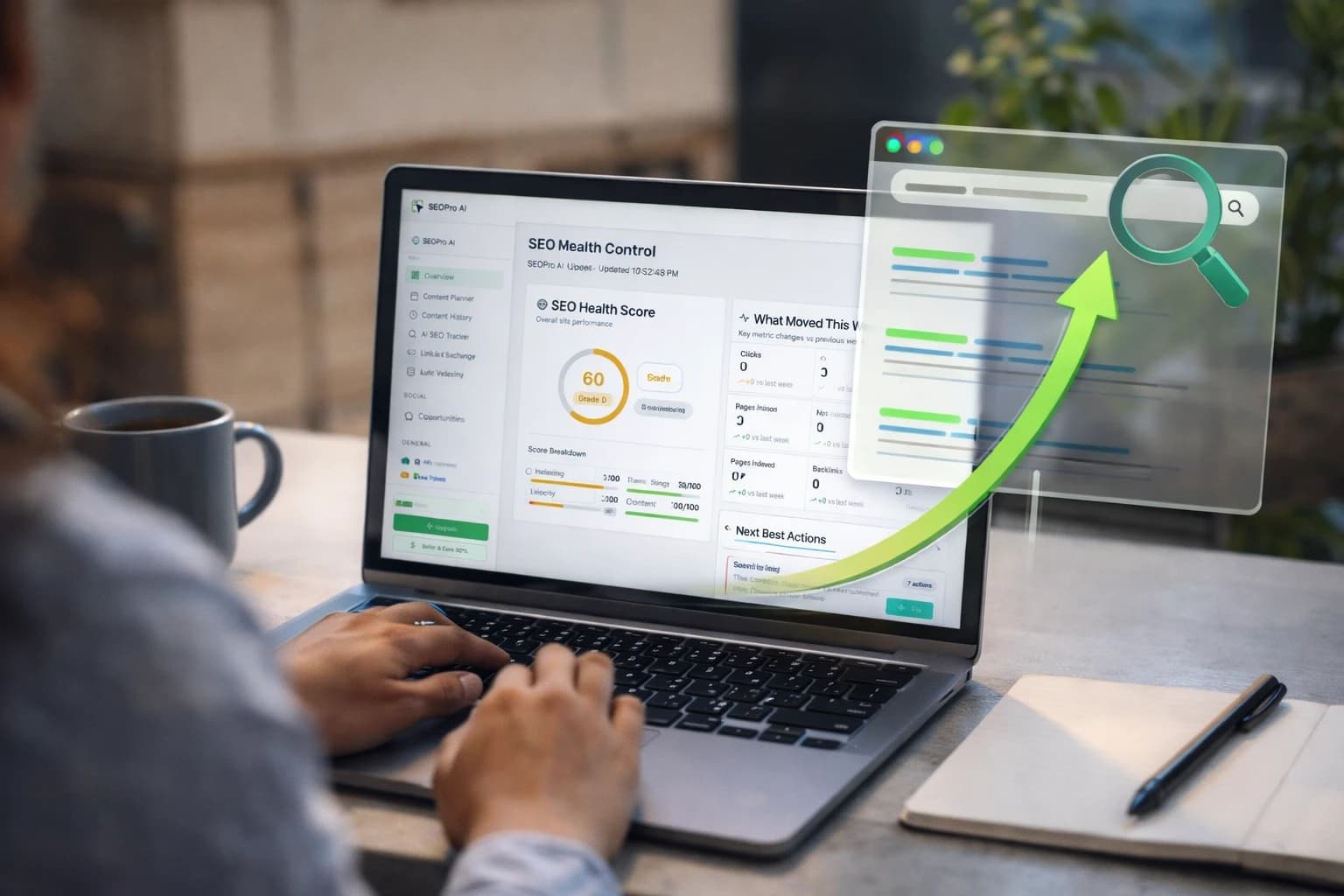
A marketing team stares at a search results page. One competitor owns the featured snippet. Another has three sitelinks. A third shows up in the People Also Ask box. Their own brand sits below the fold, technically indexed but practically invisible.
That moment is the real problem behind how to increase brand visibility. You are not chasing awareness in the abstract. You are trying to make your brand show up, stand out, and get remembered across the exact search surfaces buyers use to evaluate a category.
I’ve watched teams publish 40 new articles when the actual issue was simpler: they never separated branded demand from non-branded discovery, never mapped their SERP footprint, and never formatted pages for the result types Google was already rewarding. When you fix those three things, visibility stops feeling fuzzy and starts behaving like a system.
Prerequisites: Define What Brand Visibility Means Before You Optimize
Separate branded visibility from non-branded discovery
Watch This Helpful Video
To help you better understand how to increase brand visibility, we've included this informative video from Philip VanDusen. It provides valuable insights and visual demonstrations that complement the written content.
Before you edit a page, draw a hard line between two kinds of search demand. Branded visibility covers searches for your company name, product names, founder names, slogans, and branded comparisons. Non-branded discovery covers category, problem, and solution queries like “best CRM for field sales” or “how to reduce churn in SaaS.”
This distinction matters because the outcomes are different. Broad brand strategy articles often make a useful point: when you build brand awareness, you build brand value and find new audiences. SEO lets you measure both lanes separately instead of dumping everything into one traffic graph.
If you can’t isolate branded queries from everything else, you’re measuring attention—not visibility.
“Branding demands commitment; commitment to continual re-invention; striking chords with people to stir their emotions; and commitment to imagination.” — Sir Richard Branson
Choose the metrics that prove progress
Pick metrics that show whether your brand is becoming easier to find and easier to recognize. For most teams, that means tracking branded impressions, branded clicks, non-branded impressions, click-through rate, average position for priority queries, and the number of SERP features you occupy.
| Area | What to Measure | Starter Tool | Review Cadence |
|---|---|---|---|
| Branded visibility | Branded impressions, clicks, CTR | Google Search Console | Weekly |
| Non-branded discovery | Category query impressions and landing pages | Search Console + analytics | Weekly |
| SERP feature coverage | Snippets, FAQs, People Also Ask, sitelinks | Rank tracking + manual checks | Biweekly |
| Technical eligibility | Indexing status, schema errors, crawl issues | Search Console + schema validator | Weekly |
| Content pipeline | Cluster coverage, refresh status, internal links added | Planning board or spreadsheet | Weekly |
Assemble a minimum viable SEO visibility stack
You do not need a huge platform stack on day one. You do need connected inputs. At minimum, use Google Search Console, a web analytics tool, rank tracking, schema validation, and a content planning system. If you cannot see query data, page performance, and technical eligibility in one working rhythm, you will move slowly.
Mailchimp’s own positioning is a useful reminder of how modern teams work: reporting and analytics, marketing automations, content creation tools, social media marketing, and a lead generation platform often live in the same operating loop. It also advertises 300+ integrations and a risk-free 14-day trial with no credit card required, which tells you something practical — teams want connected systems and low-friction evaluation, not isolated tools.
Step 1: Audit Where Your Brand Already Appears in Search
Pull branded and non-branded query data
Start with 3 to 6 months of Search Console data. Export queries, pages, impressions, clicks, CTR, and average position. Then label each query group: branded, product, category, comparison, informational, and navigational. A simple spreadsheet works fine.
Do not skip the manual labeling step. Regex helps, but it misses edge cases like product nicknames, common misspellings, and queries that combine your brand with competitor names. If your company sells invoicing software, “yourbrand pricing,” “yourbrand vs QuickBooks,” and “invoice automation for freelancers” should never sit in the same bucket.
Map every SERP surface you occupy
Next, search your priority terms and record what appears. Look for standard listings, featured snippets, sitelinks, People Also Ask, image results, video results, local packs, review stars, and branded knowledge elements if they exist. Your visibility is the sum of these surfaces, not just one rank position.
Nike is a useful example here. In the branding excerpt you shared, the black swoosh changes the choice because the mark carries identity. Search works the same way. A recognizable brand signal in a title tag, snippet, FAQ, or sitelink can change the click before the visitor ever reaches your site.
Visibility starts with the SERP you already own, not the one you wish you had.
Benchmark competitors for share of voice
Pick 3 to 5 real competitors — not just the biggest names in your industry, but the domains that repeatedly appear for your target queries. Measure how often they appear in the top 10, which features they win, and what message they repeat in titles and descriptions.
This is where brand visibility becomes more than a logo. As that top branding article argues, people need to know who you are, what you stand for, and what your voice sounds like. If competitors consistently frame themselves around “best value,” “enterprise security,” or “fast onboarding,” while your snippets say nothing clear at all, your problem is not only ranking. It is recognition.
Step 2: Build Search-Intent Content Clusters Around Your Brand and Category
Define your core category and subtopics

Write one clean sentence that describes your brand’s category. Then turn that sentence into a pillar page and a map of subtopics. If you cannot explain your subject area simply, search engines and buyers will struggle too.
For example, a SaaS company in customer support might build a core cluster around “help desk software,” then branch into ticket routing, SLA reporting, AI chat handoff, customer self-service, onboarding, pricing comparisons, and implementation checklists. That cluster tells Google what neighborhood your brand belongs to.
Don’t start with volume; start with the queries your audience already uses to define the problem.
Build supporting articles around intent stages
Most clusters fail because teams publish only top-of-funnel explainers. You need coverage across the full path: problem definition, solution exploration, comparison, purchase validation, and post-purchase success. That means mixing “what is,” “how to,” “best,” “vs,” “alternatives,” “pricing,” and template-style content.
- Problem stage: “how to reduce cart abandonment”
- Solution stage: “best abandoned cart tools”
- Evaluation stage: “Tool A vs Tool B”
- Decision stage: “pricing,” “implementation,” “ROI”
Use consistent naming and messaging across every page
If one page calls your offer a “content platform,” another says “SEO engine,” and a third says “AI publishing workflow,” you create ambiguity. Pick one primary category label and repeat it with discipline across titles, H1s, navigation, comparison pages, and internal anchors.
That discipline supports the broader idea from the brand-awareness SERP results: people should understand not just who you are, but what you stand for. Long-term recognition comes from repetition with purpose — not repetition without thought.
Step 3: Optimize Key Pages for Entity Clarity and Internal Linking
Align titles, H1s, and intro copy with the target intent
Every priority page should answer one obvious question. Your title tag names the topic. Your H1 restates the promise. Your opening paragraph confirms the intent in plain English within the first 100 words. If those three elements drift apart, the page weakens fast.
Here is a simple test I use: if a page targets “B2B SEO content strategy,” the title, H1, and intro should all signal that exact topic. Do not bury it under brand slogans. Do not swap it for a creative metaphor. Search results reward clarity before cleverness.
Strengthen internal links from authority pages to priority pages
Internal links still do quiet, heavy work. Link from your homepage, top-traffic blog posts, resource hubs, and comparison pages into the pages you want to elevate. Use anchors that describe the destination, not vague text like “learn more.”
Title tags, H1s, and internal links are core on-page signals because they shape relevance and crawl paths. In practice, that means your strongest pages should feed your most strategic pages. If a high-authority article about “technical SEO audits” never links to your service page or core cluster page, you are leaving visibility on the table.
Add FAQ blocks, breadcrumbs, and clear anchors where useful
On long pages, add jump links so users and crawlers can move through sections quickly. Use breadcrumbs when your site hierarchy supports them. Add FAQ blocks only when they answer real objections, not when they pad word count.
Entity consistency across page names, product names, and navigation reduces ambiguity. Breadcrumbs reinforce hierarchy. FAQ sections can support People Also Ask eligibility. Clear anchors improve usability and sitelink potential.
If a page can’t be explained in one sentence, it probably can’t be remembered in one search result.
Step 4: Package Pages to Win SERP Features
Write snippet-ready answers near the top of the page
If you want a featured snippet, answer the core question early and directly. Put a concise definition, process summary, or comparison statement near the top of the page. Then expand below it. Search engines often lift short, well-structured answers more readily than sprawling intros.
For “what is” queries, aim for a tight paragraph. For process queries, use numbered steps. For comparison queries, use tables. This is less about word count than shape.
Write for the result shape, not just the page shape.
Use schema markup where it fits the content type
Schema markup helps search engines interpret your content and determine eligibility for enhanced results. Use it where it matches the page honestly: Article for editorial pages, FAQPage for true Q&A sections, Product for product pages, and BreadcrumbList for navigation structure.
Validate every implementation. Broken or misleading schema does not help you. It creates noise, and noise is the enemy of visibility.
Support text with images, charts, or short video clips
Search results are increasingly visual. A chart, annotated screenshot, or 45-second explainer clip can improve comprehension on-page and strengthen your eligibility across richer search surfaces. Even when the asset does not rank directly, it can improve the page’s usefulness and click appeal.
| SERP Feature | Best Page Shape | Practical Formatting Move |
|---|---|---|
| Featured snippet | Direct answer + list or definition | Place a concise answer near the top |
| People Also Ask | Question-led FAQ block | Use clear subheads with short answers |
| Rich result | Eligible page with valid schema | Match markup to actual content type |
| Sitelinks | Strong architecture and anchors | Improve hierarchy, navigation, and jump links |
Step 5: Earn Authority with Mentions, Links, and Link-Worthy Assets
Create data assets, original examples, and comparison pages

Brands earn durable visibility when other sites have a reason to reference them. Publish assets people can cite: internal benchmark reports, annotated teardowns, useful comparison pages, calculators, frameworks, glossaries, and original examples drawn from real work.
This is where SEO overlaps with brand building in a practical way. As the brand-awareness excerpt suggests, stronger recognition helps you reach new audiences. A useful asset does that better than generic opinion posts because it gives editors, partners, and researchers something concrete to mention.
Run digital PR and partner outreach around those assets
Do not hit publish and wait. Package each asset into three or four outreach angles. One might target trade publications. Another might target partner newsletters. A third might support founder commentary on a timely topic. The same source material can travel farther when you adapt the angle.
If you release a category comparison page, pitch it to communities already discussing tradeoffs. If you publish a benchmark study, pull one contrarian finding into your email subject line. Editors react to specificity, not just effort.
Turn mentions into links and links into repeatable coverage
Track unlinked brand mentions. When an outlet references your study, product, or quote without a link, ask politely for one. Keep a simple log of which asset types attract the best coverage: glossaries, research, comparison pages, or expert commentary.
Backlinks still matter, but repeated mentions across the right sites do something subtler. They make your brand familiar across contexts. That familiarity can support search demand, referral traffic, and even how AI-driven systems encounter your brand in the open web.
Links matter, but repeated mentions in the right places are what make a brand feel inevitable.
Step 6: Systematize Measurement, Refreshes, and Automation for How to Increase Brand Visibility
Track branded growth, impressions, and SERP feature wins
Build one scoreboard your team can read in 60 seconds. Include branded impressions, non-branded impressions, clicks, top landing pages, feature wins, and pages that gained or lost the most visibility week over week. If you run a weekly growth meeting, this is the sheet you open first.
Again, connected tooling matters. Mailchimp highlights reporting and analytics plus marketing automations because teams scale faster when data and action live close together. Your SEO process should work the same way.
Refresh high-potential pages on a schedule
Not every page needs a full rewrite. Some need better intros, fresher examples, updated screenshots, improved schema, tighter FAQs, or stronger internal links. Review high-potential pages every 60 to 90 days, or sooner if rankings slip.
Recurring refreshes help protect rankings because searchers reward current, clear pages. I usually start with pages already ranking on page one or high page two. Small improvements there often beat launching another brand-new post.
Automate reporting, alerts, and content workflows
Set alerts for ranking drops, sudden impression spikes, indexing errors, and stale content. Build templates for content briefs, internal linking tasks, schema checks, and post-publication QA. Automation should remove repetitive work, not remove judgment.
Connected systems earn their keep here. Mailchimp’s 300+ integrations point to the same operational truth many SEO teams discover the hard way: when publishing, reporting, and follow-up live in separate silos, visibility decays between handoffs.
Visibility compounds when refresh cadence and reporting are built into the workflow.
Common Mistakes: What Keeps Brand Visibility from Compounding
Chasing vanity metrics instead of branded demand
A spike in impressions looks good on a slide. It means much less if branded queries stay flat, click-through rate stays weak, and nobody remembers your category association. Rankings alone do not guarantee recall or preference.
If your page gets traffic for a broad query but never advances branded searches or meaningful next clicks, ask a hard question: did you attract curiosity, or did you improve visibility for the business?
Publishing disconnected content without entity consistency
This is common on large teams. One writer targets “B2B email automation.” Another targets “lifecycle messaging platform.” A third writes “customer engagement software.” All three may be relevant, but without a stable entity framework they dilute each other.
Brand visibility is more than a logo. The earlier SERP excerpts make that clear. It includes what you stand for and how your voice is recognized. Search needs that same consistency across page naming, headings, internal anchors, and navigation.
Ignoring technical SEO, snippets, and internal links
Orphan pages, poor crawl paths, missing schema, weak snippet formatting, and inconsistent anchors create a fragmented search experience. You may still rank somewhere, but the brand impression stays weak because the ecosystem around the page is weak.
Weak internal linking and inconsistent page naming make it harder for search engines — and users — to understand your topic authority. When the experience feels scattered, your brand feels scattered too.
Don’t confuse being found with being remembered.
Brand visibility becomes repeatable when you audit the footprint you have, build entity-rich clusters, package pages for SERP features, earn authority, and refresh the system on schedule.
That is how to increase brand visibility with SEO without drifting into vague awareness work. You measure, clarify, format, connect, and compound.
When you open Search Console next, which query group, page set, or SERP feature deserves your first serious fix?
Expand Search Reach With SEOPro AI
AI blog writer automates publishing, strengthens topical authority, and helps teams capture SERP features, LLM mentions, and steady organic growth.
Start Scaling