7 Topical Authority Checker Tools to Try

At 8:17 a.m., you open a content audit and feel that small drop in your stomach. One page is ranking for a valuable query, yet the brief behind it skipped half the expected subtopics — pricing, setup steps, common objections, examples, and internal links to supporting pages.
That is when a free SEO audit tool becomes useful. Not because it hands you a pretty score, but because it helps you see whether your page or cluster actually covers the subject in a way Google and AI systems can parse.
Search results make this messier than it should be. Look up an SEO audit tool and you will often get domain authority tools, website authority tools, and a few genuine semantic-depth tools mixed together. They can all help. They are not measuring the same thing.
| Tool | Best first use | Main lens | Watch-out |
|---|---|---|---|
| Free technical SEO audit tool | Find technical issues and prioritized fixes | Site health | Not a topical-depth report |
| SEOPro AI AI visibility tracking | Review AI visibility gaps | AI-answer-engine visibility | Directional, not guaranteed |
| Semrush Website Authority Checker | Get a quick site-level baseline | Broad authority view | Not a pure topical-depth report |
| Ahrefs / Letaido Website Authority Checker | Monitor authority with mentions and rankings | Index plus real-time visibility data | Broader than content coverage alone |
| Semrush AI Visibility Checker | Track AI-answer presence | AI recommendation visibility | Needs content context |
| Semrush Prompt Research | Map real AI query language | Prompt patterns | Still needs editorial judgment |
| Semrush SEO Checker | Catch on-page and technical blockers | Site health and optimization | Does not replace semantic gap analysis |
#1 Free technical SEO audit tool
What it is
Watch This Helpful Video
To help you better understand topical authority checker, we've included this informative video from Learn With Shopify. It provides valuable insights and visual demonstrations that complement the written content.
This is the closest match to what most people actually need when they ask for a free SEO audit tool. The tool helps identify technical SEO issues and prioritize fixes rather than providing a topical authority score. That distinction matters.
It is especially useful when you want to inspect a whole site structure or zoom in on a page that looks thin. The audit itself focuses on crawlability, headings, metadata, links, performance, content quality, security, and social metadata, which is the right kind of caveat for this category.
Why it matters
If your real problem is technical friction, you need a tool that looks for technical friction. Too many “authority” tools tell you how strong a domain appears overall, then quietly avoid the harder question: does this page actually have the structure and signals search engines can use?
If a tool cannot show technical blockers, it is probably measuring authority loosely, not site health.
I like this option for editorial audits because it stays close to the brief. You can check whether a pillar page has the right metadata, headings, internal links, images, and crawlable structure that help content perform.
Quick example
Say you run content for a payroll SaaS site. Your “small business payroll compliance” guide mentions tax filings and automation, but misses state-specific issues, onboarding steps, deadline tables, and links to related setup articles. In an audit, you can spot those gaps fast. Then you tighten one page before you rewrite the whole hub.
#2 SEOPro AI AI visibility tracking
What it is
SEOPro AI takes a wider view. Instead of focusing only on technical site health, it also tracks citation and mention visibility across Google, ChatGPT, Claude, Gemini, and Perplexity. That makes it more of an AI visibility workflow than a pure page-level checker.
Its projection is based on research, content generation, indexing, and visibility tracking, which is useful if your team needs prioritization rather than another dashboard full of red and green dots.
Why it matters
If your SEO program now has to answer for ChatGPT, Claude, Gemini, and classic search at the same time, a broader diagnostic can help. SEOPro AI also notes that AI responses vary by query and that visibility changes over time. Good. That is honest. AI visibility is messy, and any tool pretending otherwise should make you nervous.
AI visibility is directional, not deterministic.
Another practical detail: SEOPro AI supports scheduled reporting, content planning, and performance tracking as you publish and earn coverage. That cadence makes sense. Visibility compounds slowly. One new page rarely changes the whole picture.
Quick example
Imagine a cybersecurity brand building a zero-trust cluster. The articles are decent, yet AI answers still prefer larger vendors. An SEOPro AI-style workflow can help you see whether the weak spots sit in coverage, authorship, original research, or other visibility signals. You fix the bottom three first, publish supporting proof points, then reassess a quarter later instead of guessing every week.
#3 Semrush Website Authority Checker
What it is
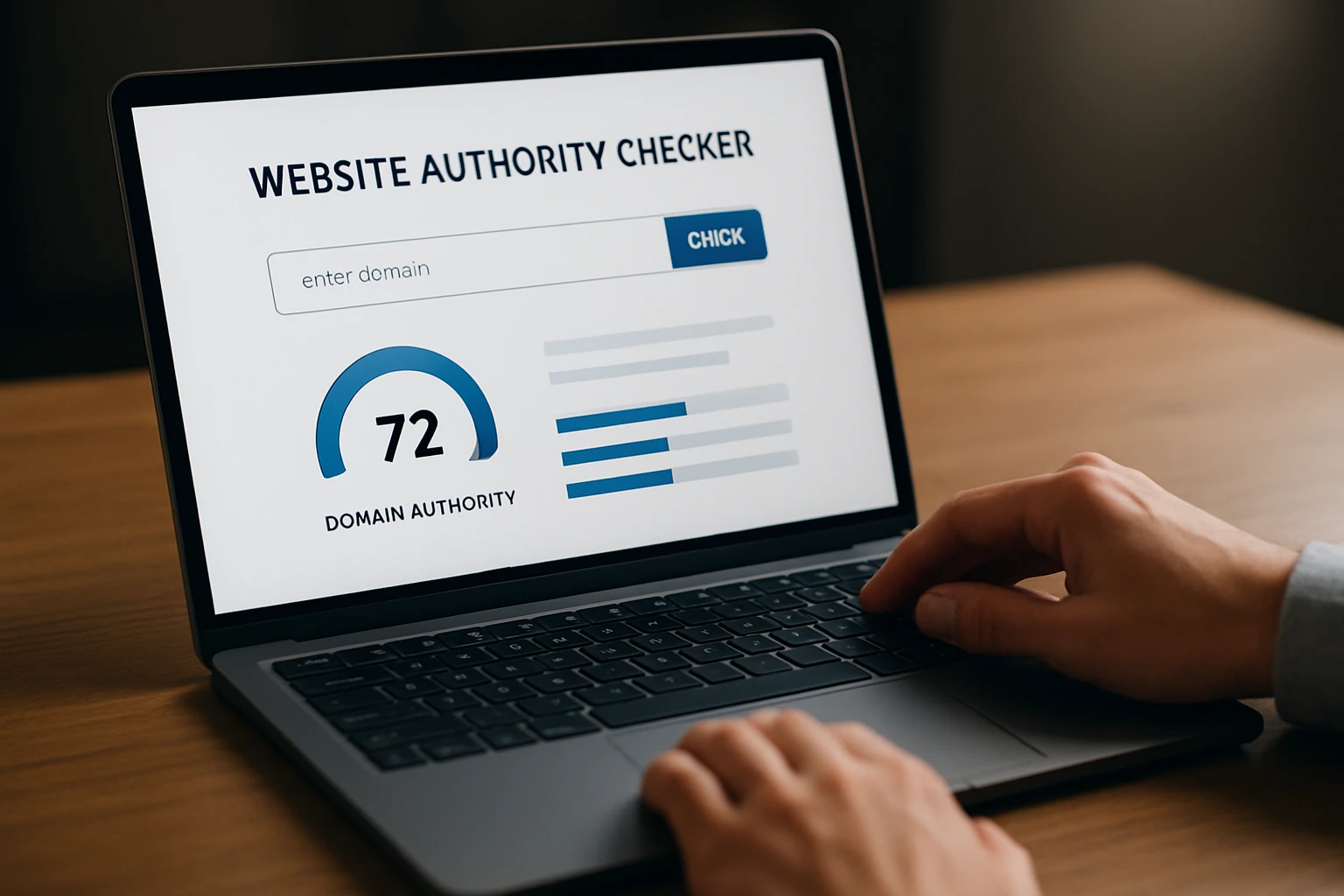
Semrush lists Website Authority Checker among its free tools, alongside AI Visibility Checker, SEO Checker, Keyword Tool, Backlink Checker, and Top Websites by Traffic. So this is less a single-purpose topical tool and more an easy entry point inside a broad SEO ecosystem.
Semrush also organizes its platform around areas like Keyword Research, Backlink Analysis, Rank Tracking, and AI Visibility. If you already live in that environment, starting here is friction-free.
Why it matters
This tool is useful when you want a fast site-level read before you branch into deeper workflows. Semrush positions its product around use cases such as growing search visibility and getting recommended by AI, which matches how many teams now work across both SERPs and answer engines.
Use this as a starting screen, not the final word on topical authority.
That warning matters. Website authority is not the same as topical depth. A site can look strong overall and still publish a weak article on CRM migration, local SEO, or medical billing.
Quick example
Let’s say you compare your domain against a competitor in Semrush and notice their site-level authority looks stronger. That is useful context. Then you move into Keyword Tool and Rank Tracking to see where they own the conversation, and you pair that with a real coverage audit to learn which subtopics your cluster still misses.
#4 Ahrefs / Letaido Website Authority Checker
What it is
Ahrefs describes Letaido as an AI marketing platform built on Ahrefs’ proprietary web index. That matters if you want authority work tied to a large, familiar data layer rather than a standalone checker with limited surrounding context.
The broader promise here is not just scoring a site. It is monitoring. The platform can track brand mentions and competitor updates in real time, which shifts authority analysis closer to day-to-day market visibility.
Why it matters
Authority work gets easier when you can watch rankings, mentions, and prompts in the same place. The Ahrefs/Letaido description also says it can monitor rankings in search engines and Google Search Console, plus track brand visibility in LLMs. That is a wider operating view than most single-score tools.
Authority work gets easier when the checker also watches mentions and rankings in one place.
Tim Soulo, CMO at Ahrefs, frames the product simply: the AI marketing platform they needed did not exist, so they built it. I read that less as a slogan and more as a sign of where the category is moving — toward integrated visibility systems, not isolated authority widgets.
Quick example
Suppose your team launches a new HR software cluster in June. With an Ahrefs/Letaido-style setup, you can watch whether competitor updates change the SERP, whether brand mentions rise after launch, whether Google Search Console shows early movement, and whether LLM visibility follows. That will not replace a technical or content audit, but it can tell you whether the cluster is gaining real traction across channels.
#5 Semrush AI Visibility Checker
What it is
Semrush lists AI Visibility Checker among its free tools. That alone makes it worth testing if your stakeholders keep asking a question that barely existed two years ago: “Are we being cited by AI answers yet?”
Semrush frames AI visibility as part of its broader push to help brands get recommended by AI while also growing search visibility. That combination feels realistic. Most teams still need both.
Why it matters
A page ranking in the top 10 does not guarantee a mention in an AI-generated answer. We are already seeing that gap in sectors like travel, SaaS, and health publishing. AI systems may compress the answer space and surface only a handful of brands, sources, or examples.
If AI tools do not mention you, your topic coverage is still not doing enough.
This is where an AI visibility checker adds pressure-testing. It helps you see whether your content is merely indexed and ranking, or whether it is also memorable and structured enough to be pulled into synthesized answers.
Quick example
Think about a finance publisher ranking well for “business expense categories.” In Google, that might be fine. But if AI answers keep naming Intuit-style examples, IRS language, or rival templates instead of your brand, you have a visibility problem that ordinary rank tracking will miss. That is the gap this tool is built to expose.
#6 Semrush Prompt Research
What it is

Semrush includes Prompt Research as a platform module. That may sound adjacent to authority rather than central to it, but prompt language is quickly becoming part of the visibility puzzle.
The Ahrefs/Letaido material makes a similar point when it talks about tracking the AI prompts that matter most. A topic cluster that matches search keywords but misses prompt phrasing can feel oddly invisible in AI environments.
Why it matters
Prompt-level research helps you align content with how people actually ask AI systems for answers. That usually means longer, more specific language: constraints, comparisons, edge cases, and desired outcomes all bundled into one request.
Write for prompts, not just keywords, if you want AI-era visibility.
I do not mean you should spin up a new page for every ChatGPT phrasing variation. I mean your briefs should reflect prompt logic. A strong page on “CRM onboarding checklist” should probably address migration timeline, team size, training sequence, tool integrations, and reporting expectations — because real prompts often include all of that.
Quick example
Instead of optimizing only for “SOC 2 checklist,” you map prompts such as “How do I prepare a 20-person SaaS company for SOC 2 in 90 days?” That changes the outline immediately. You add milestones, role owners, evidence examples, and timeline tables. Suddenly the page reads like an answer, not a keyword container.
#7 Semrush SEO Checker
What it is
Semrush includes SEO Checker in its free tools list, and it places related work under broader areas like Technical Site Health and Create and optimize content. This makes it the companion audit in your stack, not the semantic judge.
That distinction is healthy. A good checker for content should tell you whether the page is structured well enough to perform. A good SEO checker should tell you whether the site structure lets that content perform.
Why it matters
A cluster can look smart on paper and still underperform because of technical or on-page issues. Weak title tags, poor internal linking, thin templates, indexing mistakes, or messy page architecture can stop strong content from landing.
A content score can look healthy while the site still has structural issues.
This is why I rarely trust a coverage score by itself. SEO is partly semantic, yes. But it also depends on whether the content is crawlable, connected, and presented in a way search engines can absorb without friction.
Quick example
Picture an ecommerce help center with solid pages on shipping times, returns, exchange windows, and sizing. The coverage is there. Yet traffic stalls because half the articles are orphaned and the main return policy page does not point to any of them. An SEO checker catches the plumbing problems before you waste another sprint rewriting copy that was already good enough.
How to choose the right option
Choose by primary goal
Start with the job, not the brand. If you need technical SEO depth, begin with the Free technical SEO audit tool because it is built around prioritized fixes and site health. If you need multi-signal AI visibility diagnostics, SEOPro AI is structured around visibility tracking across major AI answer engines. If prompt-level research is the missing piece, Semrush includes Prompt Research. If you need broad platform coverage, both Semrush and Ahrefs/Letaido extend far beyond a single score.
| Your first question | Best starting tool | Best follow-up |
|---|---|---|
| What technical issues are holding this page or site back? | Free technical SEO audit tool | Semrush SEO Checker |
| Why are AI answers still skipping our brand? | SEOPro AI or Semrush AI Visibility Checker | Semrush Prompt Research |
| How strong are we compared with competitors overall? | Semrush Website Authority Checker | Keyword Research or Rank Tracking |
| Can we monitor mentions, rankings, and visibility together? | Ahrefs / Letaido | Dedicated technical audit or content workflow |
Choose by workflow stack
If your team already works in Semrush, its checker, AI visibility tools, prompt module, and SEO checker reduce context switching. That alone can save hours across a month. If your workflow revolves around Ahrefs-style index data, competitor monitoring, and Search Console reporting, Letaido is a better fit for unified visibility tracking.
Still, broad platforms can blur the line between site authority and technical health. That is the recurring trap in this category. A domain-level score is useful context. It is not a replacement for a content or technical diagnosis.
Choose by team maturity
A solo consultant or lean content lead usually needs two things first: one tool for technical issues and one for visibility tracking. A bigger in-house growth team may add AI visibility tracking and prompt research. A publisher or agency with multiple sites running at once will often want monitoring, competitor alerts, and a review cadence every 90 days.
Do not buy an SEO checker that only gives you a number; you need a next step.
If I had to reduce the choice to one rule, it would be this: technical depth first, AI visibility second, broader workflow third. Get the brief right before you build a reporting cathedral around it.
A good SEO audit tool should expose technical blockers, prompt mismatches, and workflow issues before another thin brief slips into production.
The strongest options here do one job especially well: measure technical health, diagnose AI visibility, or connect SEO work to a larger marketing stack. Which tool fits the blind spot you need to fix next?
Strengthen Topic Clusters With SEOPro AI
Internal linking, topic clustering, publishing, and monitoring workflows help SEO teams scale organic growth and win more AI mentions with less manual work.
See It Live