7 AI Overviews Google Search Myths Debunked

At 8:17 on a Tuesday, you type “best CRM migration checklist” into Google. Before your eyes reach the first blue link, a summary box takes the top spot. You scroll once, then twice. The familiar results are still there, but the page no longer behaves the way it did six months ago.
That small jolt explains why ai overviews google search has turned into such a noisy topic for SEO teams. One headline says the feature is gone. Another promises a way to turn it off. A third warns that organic traffic is finished. Most of that noise comes from treating one kind of SERP as if it were every SERP.
A calmer read is more useful. AI Overviews change layout, attention, and citation patterns. They do not erase search, and they do not behave the same way on a “HubSpot login” query as they do on a research-heavy question.
#1 AI Overviews replace organic results entirely
What it is
Watch This Helpful Video
To help you better understand ai overviews google search, we've included this informative video from Julian Goldie SEO. It provides valuable insights and visual demonstrations that complement the written content.
Google launched AI Overviews in 2024, and they appear at the top of results for questions that need a roundup from several sources. That top-of-page placement can make the rest of the SERP feel hidden, especially on a laptop screen where the first organic listing drops below the fold.
Top-of-page does not mean full replacement.
Why it matters
If you assume organic results have been wiped out, you will make bad decisions fast. In practice, AI Overviews reshape attention more than they delete opportunity. Your page can still appear in standard rankings, earn a citation inside the summary, show up in People Also Ask, or catch the click after a user wants proof.
Quick example
Think about a query like “best ways to pack for a road trip,” one of the examples often used to explain the feature. You may see a neat summary first, then source links, then regular results. If your article ranks fourth, it has not vanished. It just lost some screen real estate — and that changes how you compete.
#2 AI Overviews in Google Search show up on every search
What it is
This myth comes from seeing the feature a few times in a row and assuming it is universal. It is not. AI Overviews are query-dependent, and they appear most naturally when Google believes the search calls for synthesis from several sources rather than a single direct destination.
Think intent first, keyword second.
Why it matters
You should not audit a branded login query the same way you audit a mid-funnel educational topic. Informational, research-style searches are where AI Overviews are most noticeable because those are the searches that benefit from a stitched-together answer. Navigational terms, brand queries, and many transactional searches often behave very differently.
Quick example
Compare “Ahrefs pricing” with “how to build a topical map for SaaS SEO.” The first has a clear destination. The second asks Google to assemble guidance, examples, and next steps. One is a direct route. The other invites an overview.
#3 Good content automatically earns a citation
What it is

Good writing helps, but it does not guarantee anything. AI Overviews are often described as blending search results into one smarter answer. That means Google is not simply rewarding the prettiest article on the page; it is selecting pieces that contribute to the combined answer for that exact query.
Write for being selected, not just ranked.
Why it matters
I have seen strong pages miss citation opportunities for a simple reason: the answer was buried. A crisp section header, a direct two-sentence explanation, and a well-organized follow-up list can be more useful to a synthesis system than a dramatic 1,500-word introduction. Structure matters. So does extractability.
Quick example
Imagine a 2,500-word guide on site migrations. If the only direct answer to “when should you use a 301 redirect?” appears halfway through section seven, Google has to work harder to pull it out. A competitor with a cleaner subsection — definition, use case, warning, next step — may win the citation even if your page ranks nearby.
#4 AI Overviews are just featured snippets with a new label
What it is
They look related, but they are not the same format. A classic featured snippet usually pulls a short answer from one page. An AI Overview is a broader summary layer at the top of the SERP that can pull from several sources and offer multiple paths for the searcher to explore.
| Aspect | Featured Snippet | AI Overview |
|---|---|---|
| Source pattern | Usually one page excerpt | Multi-source summary with citation links |
| Best-fit query | Short definition or simple step | Broader question needing synthesis |
| Optimization focus | Precise answer block | Breadth, clarity, and quotable passages |
| User expectation | Fast fact | Fast summary plus deeper options |
Different format, different optimization playbook.
Why it matters
If you optimize for AI Overviews as though you are chasing only a featured snippet, you can make your content too thin. A snippet may reward a single tidy answer. An Overview often needs a page that explains the answer, frames the tradeoffs, and connects nearby subtopics without wandering off into fluff.
Quick example
“What is a canonical tag?” can fit neatly into a featured snippet. “How do canonical tags affect duplicate content, migrations, and crawl signals?” pushes Google toward synthesis. Same topic family. Different SERP behavior.
#5 You can turn AI Overviews off and return to ‘normal’ search
What it is
You can see the demand right in the results: people actively search for ways to turn AI Overviews off. That tells you plenty about user frustration, but it does not create a reliable SEO tactic. AI Overviews are a Google Search feature, not a separate app your audience downloaded and can uninstall.
There is no SEO switch that removes a SERP feature for everyone.
Why it matters
Teams lose time when they plan around a fantasy version of the SERP. Even if some users find temporary workarounds, you still have to perform in the live environment most people see. Search has always changed its layout — ads, maps, snippets, shopping modules, video packs. This is another layer of that reality.
Quick example
A stakeholder sees a “turn off Google AI Overviews” headline and asks whether you can do the same for your most valuable keywords. You cannot. What you can do is improve your pages so they remain useful when the summary appears above them — or so they become part of the summary itself.
#6 AI Overviews always destroy clicks and organic traffic
What it is
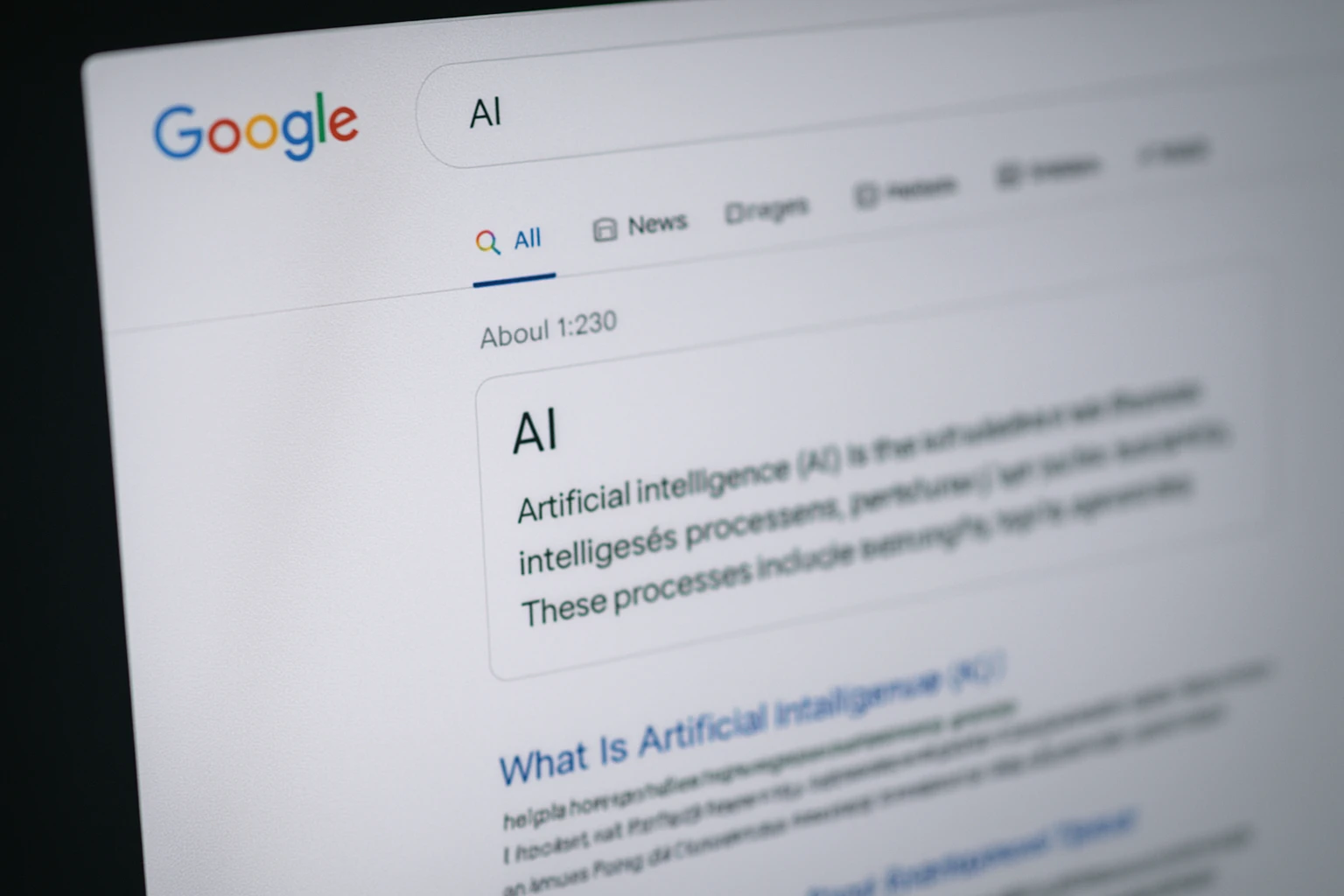
This is where panic usually outruns evidence. The titles ranking around this topic focus on how AI Overviews change search results, which is the right starting point. Change does not equal automatic collapse. On some queries, the summary satisfies enough curiosity that clicks drop. On others, it sparks the next click because users still want depth, proof, or a template.
Measure by query cluster, not by sitewide panic.
Why it matters
When you lump glossary pages, product pages, how-to guides, and branded searches into one traffic chart, you blur the real pattern. Segment your data in Google Search Console and analytics. Watch definitions separately from tutorials, comparisons, support content, and commercial investigations. That is where the signal lives.
- Simple definition queries are more exposed to zero-click behavior.
- Complex tasks still create room for follow-up clicks.
- High-trust topics often send users to source pages for verification.
Quick example
A page targeting “what is EBITDA” may lose casual visits if the overview gives the searcher enough. A page targeting “GA4 event migration checklist” can still pull clicks because nobody wants to carry out a technical migration from a two-sentence summary. Intent changes the outcome.
#7 AI Overviews are gone, dead, or too temporary to matter
What it is
The rumor cycle is part of the problem. One top result can declare, “Hey, so, Google AI Overview is gone,” while another explains how the feature is changing SEO. Both reactions can appear because availability shifts by query, location, device, and testing state. A missing Overview on one search does not settle the bigger question.
Rumor is not strategy.
Why it matters
You should acknowledge the variance without letting it fool you. AI Overviews launched in 2024. That alone makes them more than a one-week experiment. If your audience uses Google for research, and your business relies on educational discovery, you need an operating plan instead of wishful waiting.
Quick example
Search “best CRM for nonprofits,” then “CRM for nonprofits comparison,” then “how to choose a CRM for a nonprofit team.” One query may show no overview, the next may show a short one, and the third may present a fuller synthesis. That unevenness is real. It is also exactly why myths spread so quickly.
How to choose the right ai overviews google search response strategy
Prioritize pages by intent
Start with informational pages, because AI Overviews most often appear for questions that need a roundup from several sources. That makes educational content, buyer-guides, support docs, and high-funnel comparison pages your first review set. After that, sort by business value. A low-converting glossary page and a category-defining comparison guide should not get the same attention.
If a query can be answered in one breath, expect Overview competition; if it needs depth, build the page to be the source Google quotes.
Choose between refresh, expansion, or consolidation
Not every page needs a rewrite. Some need cleaner answer blocks. Some need broader coverage. Some are split across too many overlapping URLs and would perform better as one stronger asset.
| Situation | Best move | What to change | What to watch |
|---|---|---|---|
| Page ranks but loses attention on simple informational queries | Refresh | Tighten headings, add direct answer sections, improve internal links, clean up formatting | CTR, impressions, citation presence |
| Page covers the topic lightly and misses nearby subtopics | Expansion | Add missing context, examples, FAQs, and relevant schema where appropriate | Impression growth, broader keyword reach |
| Several pages overlap and dilute authority | Consolidation | Merge competing URLs, redirect wisely, strengthen one primary resource | Rank stability, crawl clarity, assisted conversions |
Track visibility beyond blue-link clicks
You still care about traffic, of course. But blue-link clicks alone no longer tell the whole story. Add a lightweight SERP review process for your most valuable query clusters. Track whether an Overview appears, whether your brand or URL is cited, whether impressions rise while CTR shifts, and whether downstream actions — demo requests, trials, newsletter signups — remain healthy.
This is where disciplined monitoring beats hot takes. For some teams, that means a manual review sheet every Friday. For others, it means a platform that automates content updates, internal linking, publishing, and performance checks so the response is not trapped in a spreadsheet. The tool matters less than the habit: review the SERP at the query level, then respond on purpose.
AI Overviews are a SERP feature to adapt to, not a monster to fear.
When you treat ai overviews google search as a query-level visibility problem, the noise fades and the work gets clearer: audit intent, improve extractable content, and measure by cluster instead of headlines.
If you checked your most valuable informational SERPs this afternoon, which myth would break first?
Sharpen Search Growth With SEOPro AI
SEOPro AI’s AI blog writer automates content creation, streamlines publishing, and helps teams pursue stronger overview visibility, SERP features, and LLM mentions.
See Platform