Best 5 AI Search Visibility Checkers 2026

At 8:12 on a Tuesday, a growth marketer opens the weekly report and gets two stories at once. The homepage still ranks well in Google for a money term. But the AI answer box names two competitors, and the chatbot response reads like your brand never existed.
If you are looking for an AI search visibility checker, that split view is usually the reason. This guide is for SEO professionals, content marketers, agencies, publishers, and SaaS teams that need to see where visibility lives now: in classic rankings, in AI answer layers, and inside tools like ChatGPT and similar assistants.
I chose these five options by job, not by novelty. Some help you answer a simple first question in five minutes. Others help you benchmark total search presence, isolate answer-layer visibility, or figure out whether weak authority is dragging down your AI mentions. If you brief a CMO on Monday and rewrite pages on Wednesday, that distinction matters.
Selection criteria
Coverage across the major AI surfaces
A useful shortlist has to show AI search presence directly. Otherwise you are just looking at another ranking report with a new label on it. The clearest public descriptions in this space focus on visibility across ChatGPT and similar assistants, plus answer-layer experiences that affect discovery.
When a tool only reports blue-link rankings, you miss the layer where discovery is changing. A B2B software company can still rank for “best CRM for startups” and lose attention if the AI summary cites HubSpot, Pipedrive, and Zoho instead.
If a tool only shows rankings, it misses where clicks are being intercepted.
Mentions, prompts, and opportunities—not vanity metrics
I also screened for whether the tool surfaces the right evidence. A good checker analyzes prompts, mentions, and opportunities to improve visibility. That is a much better fit for actual diagnosis than a vague visibility score with no explanation. You want to know which prompts trigger mentions, where your brand is absent, and what kind of gap you are looking at.
That practical framing is what separates a checker from a dashboard ornament. If your brand appears in 2 out of 20 relevant prompts, that tells you something. If your score is “41,” not so much.
Fast checks first, deeper benchmarking second
Good workflows start with speed, then move into context. A broader benchmark view can combine familiar SEO signals such as backlinks with AI visibility signals. That is the right second step after a quick AI presence check: first confirm the problem, then measure how broad it is.
One note of caution: public detail is much fuller for some tools than for others. Where the excerpts are thin, I treat the positioning conservatively and describe the use case rather than inventing features.
| Option | Main job | Best when you need | What it does not replace |
|---|---|---|---|
| Fast AI Visibility Checker | Quick AI presence snapshot | A quick read on ChatGPT and similar assistant visibility | Deeper competitive or SEO benchmarking |
| Unified SEO and AI Reporting | Combined reporting | One dashboard for ongoing stakeholder updates | A narrow answer-layer-only investigation |
| Answer Layer Checker | AI answer-layer tracking | Specific monitoring of answer-style results | Cross-platform AI visibility |
| AI Visibility Index | Market benchmarking | Category context over time | Page-level diagnostics |
| Backlink Checker | Authority diagnosis | Explaining why visibility may be weak | Direct AI mention tracking |
#1 Fast AI Visibility Checker — best for a quick, no-sign-up snapshot
Summary: This is the quickest way to answer the blunt question most teams have first — are we showing up in AI search at all?
Watch This Helpful Video
To help you better understand semrush ai search visibility checker, we've included this informative video from Kevin Stratvert. It provides valuable insights and visual demonstrations that complement the written content.
Best for: Early audits, client discovery calls, one-off brand checks, and teams that need an immediate read before they build a larger workflow.
What it checks in one pass
The public description is unusually clear. It requires no sign-up and checks visibility across ChatGPT and similar assistant experiences. It also says the tool analyzes prompts, mentions, and opportunities to improve visibility.
That combination is strong because it gives you both reach and clues. You are not just seeing whether a brand appears. You are seeing the prompt environment around that appearance. For a publisher or SaaS team, that is the difference between “we are invisible” and “we show up only in branded prompts, not category prompts.”
Why it works well for first-time audits
Low friction changes behavior. When a tool does not ask for a sign-up first, you are far more likely to use it during a live working session — before a content sprint, during a quarterly review, or while an agency and client are screen-sharing. That makes it a practical front door.
Best first step when the real question is, “Are we visible in AI search yet?”
I like this type of checker for first-pass discovery because it keeps the scope honest. If the brand is already missing from all relevant surfaces, you do not need a giant deck. You need a baseline and a plan.
Where it fits in a broader workflow
Use it at the beginning, not the end. A fast snapshot tells you whether there is a visibility problem; it does not explain every cause. If you see weak mentions across ChatGPT and similar tools, then move into broader benchmarking and authority analysis.
That sequence matters. Otherwise teams waste hours debating title tags when the real issue is broader brand absence in AI-generated answers.
#2 Unified SEO and AI Reporting — best for teams that need SEO and AI visibility in one dashboard
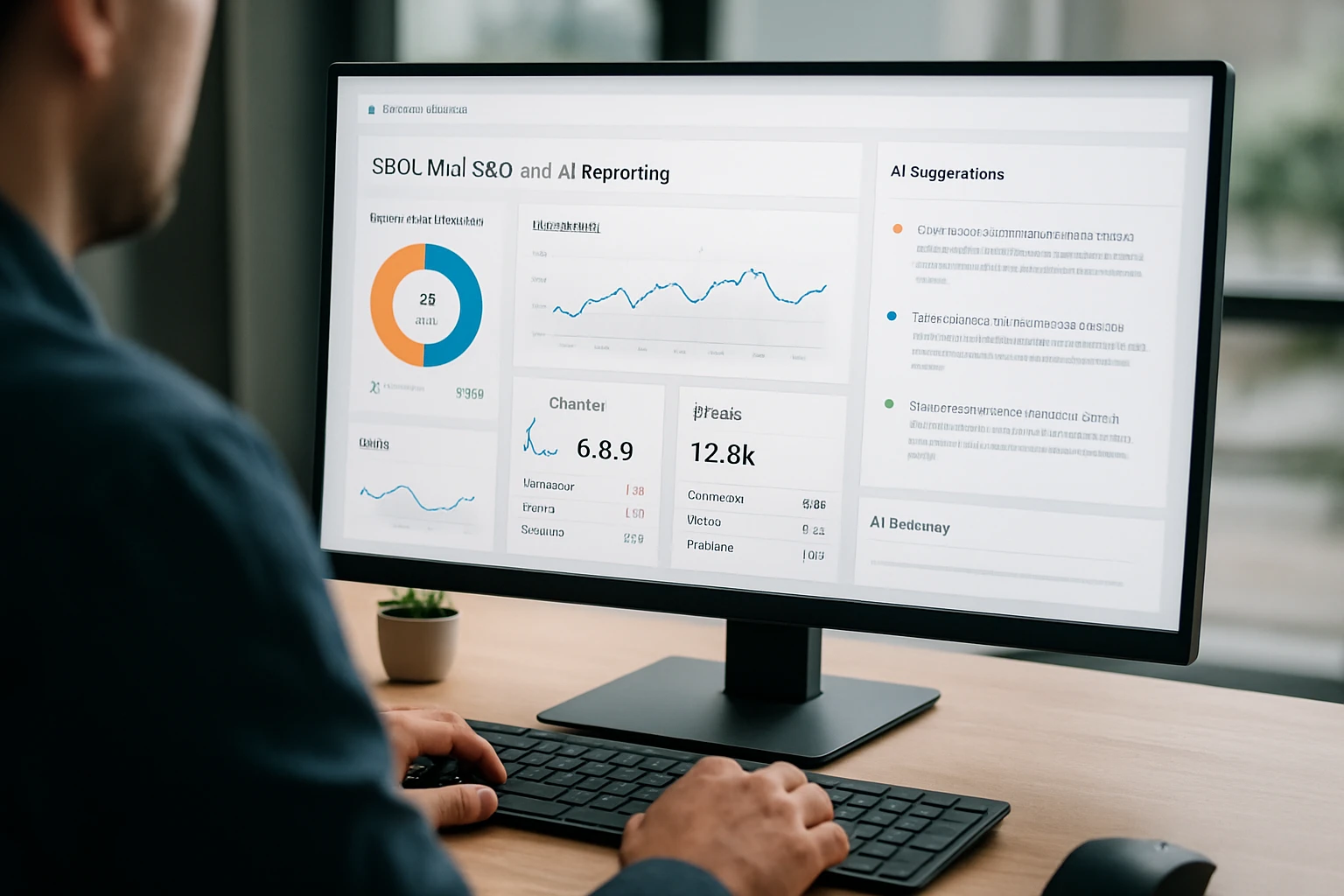
Summary: This is the strongest fit when you want classic SEO reporting and AI visibility signals living in the same workflow.
Best for: In-house teams with multiple stakeholders, agencies building recurring reports, and anyone tired of stitching screenshots from four places into one update.
Two toolkits in one platform
The public description for unified reporting says it combines SEO reporting and AI visibility tracking. That framing matters because AI visibility does not replace traditional SEO reporting. It sits beside it. You still care about links, structure, and authority. You just also need to know whether those strengths are translating into AI discovery.
For a growth team, unified reporting means fewer blind spots. Your organic lead, content manager, and demand gen manager can look at the same environment instead of arguing over separate dashboards.
Overview as the benchmark screen
According to the published overview, the dashboards connect traditional SEO performance with AI visibility data, and the overview screen is presented as a quick answer to how visible a brand is across search right now. It also pulls in familiar SEO signals like backlinks.
That is a sensible benchmark layer. If your AI visibility drops at the same time your backlink profile stalls, you have a very different problem than if performance is steady but mentions vanish. Same symptom on the surface. Different diagnosis underneath.
Strong rankings are useful, but they do not guarantee AI discovery.
Best for teams managing multiple stakeholders
This is where the unified setup earns its keep. A content lead wants prompt-level clues. A director wants trend lines. A client wants a simple answer to “how visible are we?” The overview screen is positioned as that quick benchmark, which makes it useful in weekly and monthly reporting cadences.
If you have ever run a Friday review with Search Console in one tab, a backlink report in another, and ChatGPT results in a third, you already know why a single benchmark screen is attractive.
#3 Answer Layer Checker — best for answer-layer-specific visibility
Summary: Choose this when your biggest worry is the answer layer itself, not general AI discovery across every platform.
Best for: SEO teams defending high-ranking pages from click loss, publishers watching top-of-funnel traffic, and marketers validating whether page changes affect answer-layer presence.
Track visibility inside the answer layer
The public evidence here is thinner than it is for the first two tools, so it helps to stay precise. The product title positions this as an answer-layer checker that tracks visibility in AI-driven results. That alone makes the use case clear: this is about monitoring the layer above or alongside the organic results.
That narrower scope is not a weakness. It is useful specialization. Answer-layer behavior is its own problem set, and a cross-platform dashboard will not always answer it.
Spot click-intercept risk on high-ranking pages
AI visibility messaging often warns that answer layers can intercept clicks even when a site has strong rankings. It also warns that when people ask AI platforms about an industry, competitors may appear while your brand is missing or misrepresented. Those two risks meet here: strong rank, weak mention, lower click share.
Imagine a page ranking second for “best payroll software.” If the answer layer cites Gusto, Rippling, and ADP before the user ever sees your snippet, the traffic story changes fast.
Answer-layer visibility is not the same thing as a blue-link win.
Use it to validate page-level changes
This kind of checker is most useful after you change something. You add clearer definitions, tighten page structure, improve source citations, revise FAQ content, or clean up schema markup. Then you watch whether answer-layer visibility shifts on the queries that matter.
That makes it a good fit for tactical SEO work. It is not trying to explain your entire brand footprint. It is telling you whether answer-layer systems are acknowledging your pages.
#4 AI Visibility Index — best for market-level benchmarking
Summary: Use this when you need context, not just a single-brand snapshot.
Best for: Category leaders, challenger brands, agencies comparing competitors, and teams that need to know whether a change is specific to them or happening across the market.
Why benchmark before you optimize
The public excerpt does not spell out the mechanics of the AI Visibility Index in detail, but it does show that the broader ecosystem includes an index-style benchmarking view. It also frames AI visibility as part of a larger shift from traditional SEO to AI discovery. That is enough to make the likely role clear: benchmarking visibility at a market or category level.
That perspective is easy to undervalue until a bad month hits. If your brand is down, but everyone in your category is down across the same surfaces, you may be looking at a market shift rather than an isolated execution failure.
How to separate brand issues from category shifts
Benchmark-style views help you tell whether the problem is yours, your competitors’, or the entire category’s. That is common-sense analytics, and it matters even more in AI search because answer generation can shift quickly. A finance publisher and a travel site may both see volatility for completely different reasons.
Benchmarks tell you whether the problem is your brand, your category, or the market.
Without that context, teams often overreact. One missed mention becomes a site-wide panic, when the real story is a broader change in how AI systems are summarizing a topic.
When an index view is more useful than an audit
A single audit is good for diagnosis. An index view is better for prioritization. If you are planning content investment across six competitors, or defending budget in a quarterly meeting, category context is often more persuasive than a single screenshot from ChatGPT or similar assistants.
Use the audit to find the wound. Use the benchmark to decide how serious it is.
#5 Backlink Checker — best for authority signals that support AI visibility
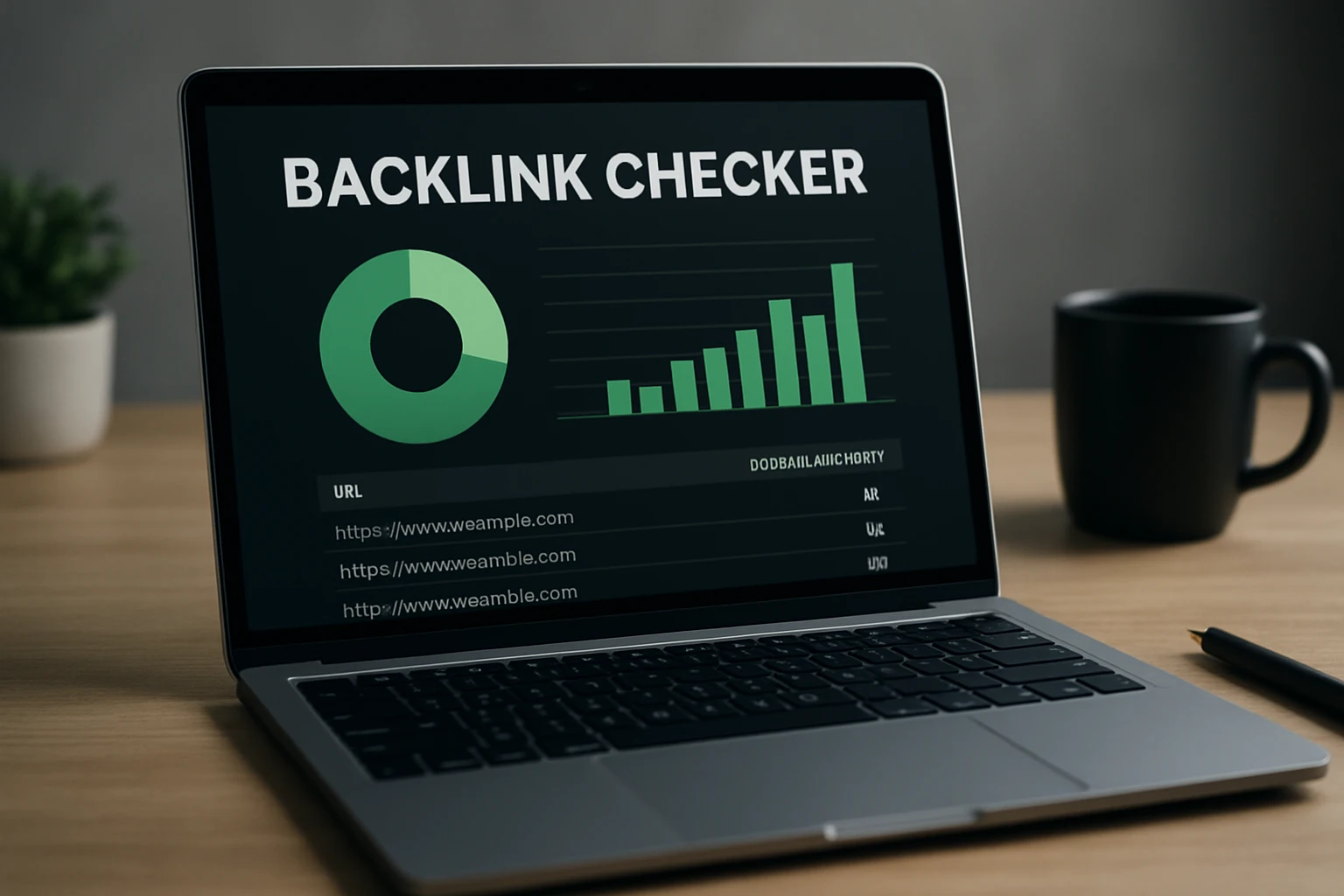
Summary: This is the supporting diagnostic tool when you suspect the visibility problem is not only about prompts or content structure, but also about authority.
Best for: Explaining why similar pages get different treatment, comparing trust signals against competitors, and adding hard SEO context to AI visibility findings.
Check the link profile behind visibility
Backlink Checker appears among the free tools in the public materials, and backlinks are explicitly listed as one of the core metrics used in broader search benchmarking. That is a strong hint about how the ecosystem fits together: AI visibility does not live in a vacuum.
Backlinks are still a core authority signal in SEO. If a page has thin external support while competitors are cited across industry blogs, review sites, and news coverage, that trust gap is worth examining.
Find authority gaps versus competitors
This is especially helpful when the content quality looks comparable. If your guide is well written but the competitor has stronger referring domains, more brand mentions across the web, or a deeper link profile, that may help explain why they show up more often in answer-driven discovery.
Think of a publisher comparing two nearly identical “best project management software” pages. One has links from TechCrunch, G2, and major niche blogs. The other has very little. That difference is not cosmetic.
If the web does not trust the page, AI systems have less reason to cite it.
Pair it with AI visibility checks for a fuller read
On its own, Backlink Checker will not tell you whether ChatGPT or similar assistants mentioned your brand yesterday. Pair it with an AI visibility check, though, and it becomes much more useful. You can move from “we are absent” to “we are absent, and the authority gap may be part of why.”
That is a cleaner workflow than guessing. First see the mention gap. Then inspect the trust signals behind it.
How to choose the right AI search visibility checker
Pick by task. That sounds obvious, but teams often buy or adopt the broadest tool first and then use 10% of it.
Choose by use case, not by feature count
If you need a fast answer, start with the free checker. The no-sign-up requirement makes it the quickest entry point, and it covers the AI surfaces named most clearly in the public material: ChatGPT and similar assistants.
If you need an operating system for recurring reporting, move to unified reporting. If the answer layer is the problem, use the specialized tool. If leadership keeps asking whether the whole category is shifting, benchmark with the index. If the real question is trust and authority, inspect backlinks.
| Your situation | Start here | Then add |
|---|---|---|
| You need a five-minute read on AI presence | Fast AI Visibility Checker | Overview or Backlink Checker |
| You report weekly to several stakeholders | Unified SEO and AI Reporting | Answer Layer Checker for deeper analysis |
| Your top pages rank but clicks feel softer | Answer Layer Checker | Backlink Checker and page updates |
| You need market context before changing strategy | AI Visibility Index | Fast checker for prompt-level confirmation |
| You suspect authority is the bottleneck | Backlink Checker | AI visibility checkers to confirm mention gaps |
Match the tool to team size and reporting cadence
A solo SEO consultant may be perfectly served by a snapshot tool plus periodic backlink checks. A 20-person marketing team usually needs a benchmark screen that can support weekly standups, monthly executive summaries, and quarterly planning. That is where unified SEO and AI reporting becomes more valuable.
Start free, then graduate to unified reporting once AI visibility becomes a recurring KPI.
The reporting rhythm matters as much as the feature list. Daily troubleshooting and monthly benchmarking are different jobs.
Build a workflow that moves from checking to improving
A sensible workflow looks like this: run a fast AI visibility check, benchmark total search presence, isolate answer-layer issues if needed, compare authority signals, then update content and supporting assets. That sequence keeps diagnosis ahead of execution.
It also helps you avoid the common trap of treating AI visibility as a separate channel. It is tied to the same things SEO teams already work on — topic coverage, brand recognition, citations, links, structure, and page quality — just viewed through a different lens.
Conclusion
Recap the top pick for each use case
These five tools give you a practical way to see where AI search notices your brand — and where it skips you.
Why this matters now
Use the free checker for a fast read, unified reporting for ongoing updates, the answer-layer tool for Google-style answer results, the index for market context, and Backlink Checker for authority diagnosis.
Next step
AI discovery now sits beside classic SEO, not after it, so which AI search visibility checker fits your workflow best: a five-minute snapshot, a weekly benchmark, or a deeper trust audit?
Advance Visibility With SEOPro AI
SEOPro AI combines an AI blog writer with publishing, internal linking, schema, and monitoring workflows so teams grow organic traffic and increase LLM mentions.
See Platform