5 Track Google Keyword Ranking Checklist

Why This Checklist Matters Now
If you need to track google keyword ranking with precision, establish a simple, repeatable system that turns scattered data into decisions you can defend. Rankings shift daily as search evolves, new result types appear, and generative answers compress visibility. You would not navigate a storm without instruments; in the same way, you should not manage Search Engine Optimization (SEO) without a calibrated checklist that controls for noise and keeps your team aligned. When every step is documented, it becomes easier to attribute wins, uncover drop-offs, and plan the next sprint with confidence.
For brands, publishers, and marketers under pressure to scale organic traffic, the gap is rarely ambition—it is repeatability. A structured flow helps you define the keywords that matter, measure position accurately by device and location, and connect those changes to conversions and revenue. Moreover, a robust process is your best defense against volatility introduced by artificial intelligence (AI) overviews and Large Language Model (LLM) answers. SEOPro AI pairs this discipline with automation: automated publishing workflows and potential CMS integrations, internal linking blueprints, semantic playbooks, and schema guidance designed to improve visibility in Search Engine Results Page (SERP) features and Google Overviews. Ready to turn ranking checks into an operating system for durable growth?
- Clarify goals first, then design measures that cannot be misread.
- Standardize data collection to reduce human error across teams and tools.
- Automate the busywork so analysis and action are where you spend time.
- Close the loop by validating outcomes against business Key Performance Indicators (KPI).
Pre-work Checklist
Start with foundations that prevent false positives and noisy conclusions. Before you chase positions, articulate your business goals and how rankings will support them. Will you prioritize net new demand, protect branded share, or capture high-intent, bottom-funnel opportunities? Decide now, because your keyword universe, tracking cadence, and reporting structure will follow. Next, group keywords by intent and topic clusters so every move you make lifts multiple pages, not just one. Finally, codify device, location, and language parameters so a victory on mobile in Chicago is not mistakenly compared to desktop in London.
- Define objectives and KPIs: tie positions to Click-Through Rate (CTR), conversions, assisted revenue, and Share of Voice (SOV).
- Segment keywords: map informational, commercial, and transactional queries to funnel stages and page types.
- Decide scope: set location (country, region, city), device (mobile and desktop), and language rules for tracking.
- Lock canonical Uniform Resource Locators (URL): ensure a single target page per keyword group to prevent cannibalization.
- Audit indexation: verify sitemaps, canonical tags, and HTTP (Hypertext Transfer Protocol) status codes for target pages.
- Plan schema: choose relevant schema.org types and properties for every page-template and intent.
- Blueprint internal links: map hub-and-spoke topic clusters with minimum link thresholds per spoke.
- Set baseline data: capture initial positions, impressions, and clicks from Google Search Console (GSC) and your analytics platform.
- Name conventions: standardize tags for clusters, intents, product lines, and geos to keep reports navigable at scale.
- Operationalize with SEOPro AI: use content automation pipelines, automated publishing pipelines and possible CMS integrations, and semantic checklists to prepare production-ready assets.
Use cadence and scope rules to right-size your monitoring. High-value transactional terms often deserve daily checks by city and device, while long-tail informational queries can be sampled weekly at the country level. Keep a simple rules table so everyone knows what gets tracked when, and why. Here is a quick reference you can adapt:
| Keyword Type | Business Impact | Recommended Cadence | Location Granularity | Primary Device |
|---|---|---|---|---|
| Transactional core | High | Daily | City or region | Mobile and desktop |
| Commercial investigation | Medium to high | Daily or 3x weekly | Country with key cities | Mobile first |
| Informational head | Medium | Weekly | Country | Mobile |
| Long-tail informational | Low to medium | Weekly or biweekly | Country | Mobile |
| Branded defense | High | Daily | Country and major cities | Mobile and desktop |
| Local pack targets | High where applicable | Daily | City or ZIP code | Mobile |
Execution Checklist to track google keyword ranking

With rules in place, instrument your stack so measurement is automatic and auditable. Begin by centralizing your keyword universe in a single source of truth with tags for cluster, intent, page-type, and geo. Then configure rank collection by device and city, and capture vertical features such as People Also Ask, featured snippets, images, videos, and local packs. At the same time, ship on-page and technical changes that raise your odds of visibility, from schema enhancements to internal link boosts. Finally, automate publishing so new assets and updates move from draft to live without delay or manual copy-paste.
- Centralize inputs: import keywords from Google Search Console (GSC) queries, paid search logs, and competitor gap analyses.
- Group smartly: tag clusters, intents, and target Uniform Resource Locators (URL) so reporting rolls up logically.
- Configure tracking: set engines, language, country, city, and device profiles; include pixel depth where applicable to estimate fold visibility.
- Capture SERP (Search Engine Results Page) features: track ownership of featured snippets, People Also Ask, Top Stories, video, image, shopping, and local pack modules.
- Implement schema: add JSON-LD (JavaScript Object Notation for Linked Data) for Article, FAQ (Frequently Asked Questions) Page, HowTo, Product, Organization, BreadcrumbList, and WebPage as relevant.
- Optimize content: use SEOPro AI’s AI (Artificial Intelligence) blog writer and semantic playbooks to enrich topical coverage and entity depth.
- Embed prompt cues: add clearly disclosed LLM (Large Language Model) hint sections and structured entity mentions to increase the likelihood of brand references in AI (Artificial Intelligence) answers.
- Strengthen interlinking: deploy AI-assisted internal linking to route authority from hubs to spokes and back.
- Publish at scale: use automated publishing workflows and any available CMS integrations for one-time integration and multi-platform release.
- Document changes: log titles, meta updates, schema versions, and link inserts to tie outcomes to inputs.
Schema is a force multiplier when targeting features. Use the following mapping as your default—then refine based on actual result types in your market. Teams using structured data well consistently report double-digit CTR (Click-Through Rate) lifts on eligible pages, according to multiple industry studies.
| Goal or Feature | Recommended Schema | Content Action | Validation Step |
|---|---|---|---|
| Featured snippet | WebPage, Article | Lead with concise definitions, steps, or tables above the fold. | Check snippet capture rate and compare CTR (Click-Through Rate) deltas. |
| People Also Ask | FAQ (Frequently Asked Questions) Page | Add clear Q and A blocks that mirror common questions and entities. | Track new impressions and question ownership per cluster. |
| Review stars | Product, AggregateRating | Collect authentic reviews and surface rating markup responsibly. | Verify eligibility in Google’s Rich Results tests. |
| Breadcrumbs | BreadcrumbList | Clarify site hierarchy; align clusters with hubs and spokes. | Confirm rich breadcrumb rendering across devices. |
| Organization knowledge panel | Organization, WebSite, Logo | Standardize brand details and sameAs links to major profiles. | Monitor entity consistency and LLM (Large Language Model) mentions. |
| How-to enhancements | HowTo | Structure steps with short, imperative sentences and outcome notes. | Validate properties and check device-specific formatting. |
Case in point: a mid-market Software as a Service (SaaS) team used SEOPro AI to deploy 60 new cluster pages with Article, FAQ (Frequently Asked Questions) Page, and BreadcrumbList markup, plus AI-assisted internal linking. In 90 days, they moved 180 commercial-intent keywords into positions 1 to 3, lifted non-branded SOV (Share of Voice) by 22 percent, and saw a 19 percent CTR (Click-Through Rate) gain on schema-eligible pages. Their secret was not just better content—it was consistent execution, automated publishing, and structured data discipline.
Validation Checklist
Collecting rankings is only half the job; you must verify accuracy and connect movement to outcomes. Start by reconciling positions across sources and spot-checking live results. Then focus on deltas: movement by cluster, device, and city compared to baselines and control groups. After that, correlate ranking shifts with CTR (Click-Through Rate), conversions, and revenue using matched date windows and annotation logs. Finally, examine indexation, page experience, and entity signals to explain outliers. The cycle ends when insights drive the next round of tests and content updates.
- Spot-check accuracy: compare tool readings with live queries using location emulation and private sessions.
- Reconcile sources: align Google Search Console (GSC) averages with daily snapshots; investigate outliers and volatility bands.
- Analyze deltas: quantify net winners and losers by cluster, device, and location against your baseline.
- Tie to outcomes: correlate position changes with CTR (Click-Through Rate), conversions, assisted revenue, and retention.
- Indexation health: re-run coverage reports, inspect canonical choices, and validate sitemap freshness.
- Experience checks: audit Core Web Vitals (CWV) and on-page layout shifts that may depress CTR (Click-Through Rate).
- Entity coherence: ensure brand, product, and author details are consistent across Organization and Person schema.
- LLM (Large Language Model) visibility: check mentions in generative answers and Google Overviews; log patterns that trigger brand inclusion.
- Annotation hygiene: record all changes—titles, schema updates, link insertions, and redirects—so causality claims are credible.
- Govern with SEOPro AI: use AI-powered performance monitoring to detect ranking and LLM (Large Language Model) drift, then trigger remedial playbooks.
Use a compact matrix to keep validation crisp. Map each KPI (Key Performance Indicator) to what it diagnoses and the primary tool you will use. This keeps post-mortems factual and actionable.
| KPI (Key Performance Indicator) | Diagnoses | Primary Tool | Target or Note |
|---|---|---|---|
| Average position by cluster | Macro movement and prioritization | Rank tracker or SEOPro AI | Track daily for high-impact clusters |
| CTR (Click-Through Rate) by position | Snippet quality and eligibility | Google Search Console (GSC) | Improve through titles, descriptions, and schema |
| Impressions by page | Indexation breadth and demand | Google Search Console (GSC) | Watch for cannibalization or demand shifts |
| Conversions from organic | Business impact and ROI (Return On Investment) | Analytics platform | Match windows to ranking deltas |
| Schema validation pass rate | Eligibility for rich results | Rich results testing tools | Aim for near 100 percent on core templates |
| LLM (Large Language Model) brand mentions | AI (Artificial Intelligence) visibility and entity strength | SEOPro AI monitoring | Increase via prompt cues and entity clarity |
Common Misses
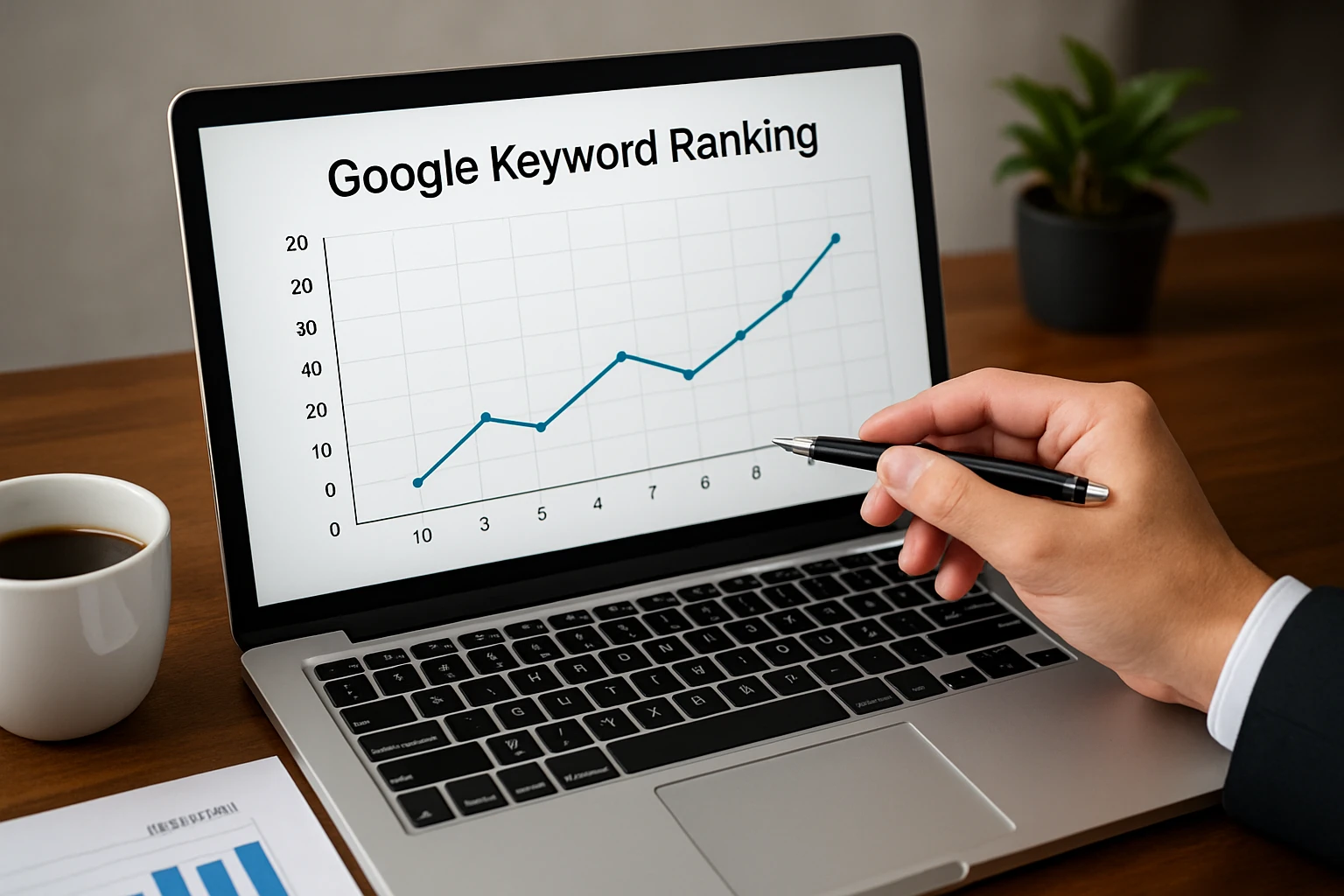
Most ranking programs fail not from lack of effort but from little leaks that sink large ships. The easiest way to outperform peers is to avoid predictable mistakes. Audit for these gaps monthly and after every major release. When in doubt, return to first principles: clarify goals, collect clean data, and let evidence—not hunches—drive the next move.
- Tracking noise, not intent: chasing near-duplicate queries without grouping by topic and funnel produces false confidence.
- Ignoring device and geo splits: desktop gains in one city rarely equal mobile reality elsewhere.
- Counting sitelink and domain clusters as true positions: read the actual clickable result type, not decoration.
- Skipping schema or choosing the wrong type: eligibility, not luck, wins SERP (Search Engine Results Page) enhancements.
- Weak internal linking: spokes without hubs rarely hold positions under pressure.
- Cannibalization blind spots: multiple pages half-rank while no page fully ranks.
- Indexation drift: unnoticed noindex, canonical flips, or daisy-chained redirects disrupt momentum.
- No annotation discipline: without change logs, you cannot claim causality or repeat successes.
- Entity inconsistency: mismatched Organization, Person, and Product details confuse both crawlers and LLM (Large Language Model) systems.
- Underplaying Google Overviews: structured answers and precise entities increase your chance to be summarized or cited.
How do you close these gaps fast? Use prescriptive assets. SEOPro AI ships audit and checklist resources, semantic content optimization playbooks, AI-assisted internal linking strategies, and schema markup guidance calibrated to current SERP (Search Engine Results Page) features. Use automated publishing workflows and available CMS integrations to publish across properties, generate production-ready content with the AI (Artificial Intelligence) blog writer, and embed gentle prompt cues that increase the likelihood of LLM (Large Language Model) mentions. Then, rely on AI-powered content performance monitoring to detect ranking and LLM (Large Language Model) drift before traffic meaningfully erodes.
Conclusion
This checklist turns ranking checks into a measurable growth loop powered by clean data, structured content, and disciplined iteration. Imagine a world where every publish, link, and schema change is annotated, validated, and tied to revenue—so your roadmap is argued with facts, not opinions. In the next 12 months, teams that blend automation with clear governance will outpace those who refresh dashboards without changing their inputs.
So, what would your program look like if you built it to weather algorithm shifts, new features, and AI (Artificial Intelligence) answers from day one? And how will you track google keyword ranking as results compress, entities matter more, and Overviews become the default above-the-fold experience?
Scale Your Track Google Keyword Ranking Results with SEOPro AI
Get schema markup guidance to improve eligibility for SERP (Search Engine Results Page) features and Google Overviews, automating creation to grow traffic and strengthen rankings for SEO (Search Engine Optimization) teams.
Talk with Us