What Is Topical Authority in SEO, Exactly?
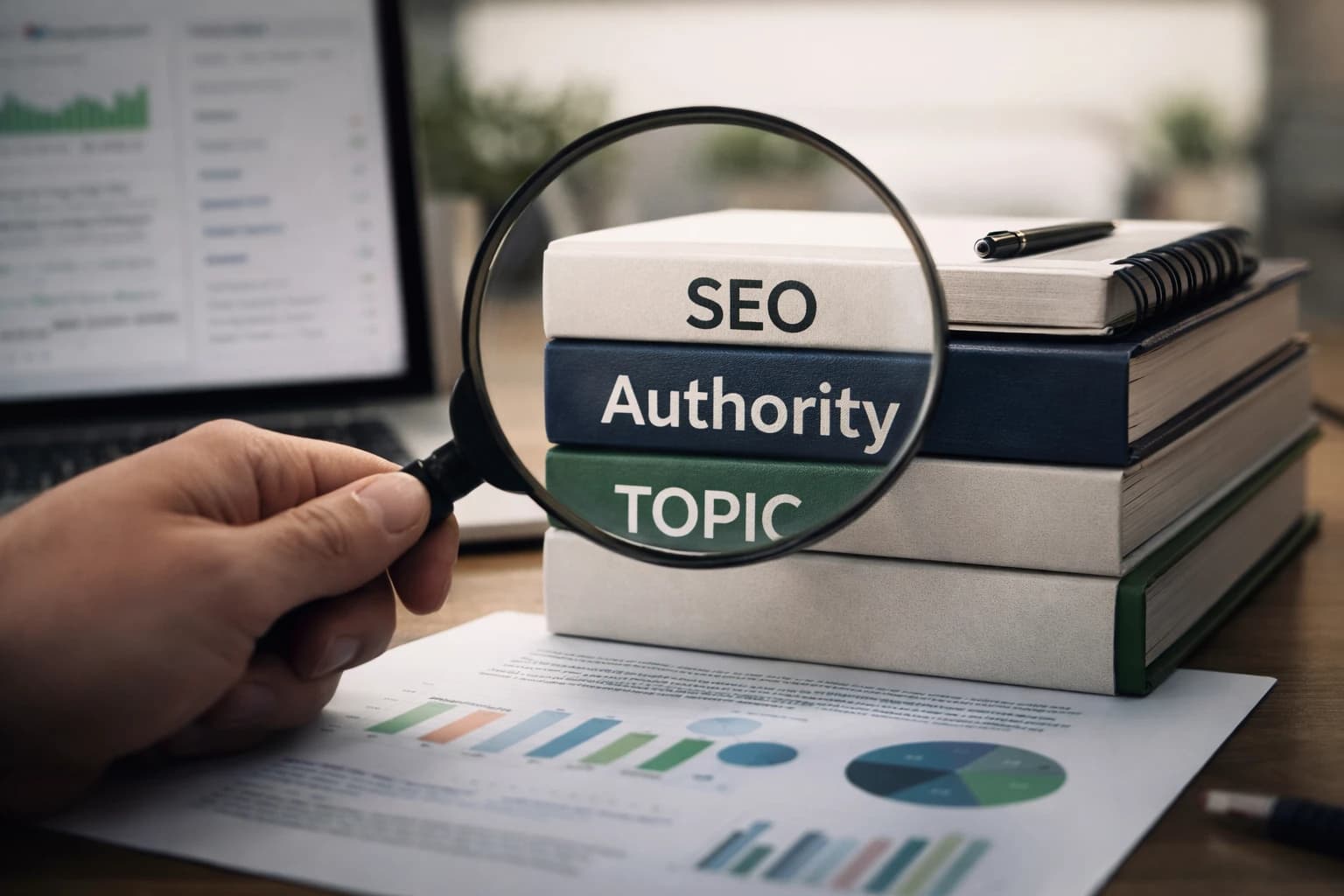
At 8:17 on a Tuesday, an SEO lead opens Search Console and sees a pattern that is hard to ignore. One site ranks for puppy biting, crate training, recall, leash manners, and barking. Another shows up for one scattered article, then vanishes. Same market. Same audience. Completely different search footprint.
That is usually the moment you ask what is topical authority in SEO, exactly. Why does one site seem to own a subject while another only lands a few isolated wins? The short answer is simple: search engines do not just evaluate whether one page matches one keyword. They also evaluate whether your site looks like a trustworthy source on the broader subject.
If you work in SEO, content, growth, publishing, or SaaS marketing, this distinction changes how you plan content. It shifts the job from “rank this post” to “earn trust across the topic.” Semrush and Ahrefs both frame it that way, and the difference shows up fast in real search results.
What is topical authority in SEO, exactly?
Topical authority vs. domain authority
Topical authority refers to a website’s expertise and credibility on a particular subject. That definition lines up with the Semrush explanation in the search results you reviewed. In plain English, it means your site has become a dependable source on one area — dog training, payroll compliance, technical SEO, or any other focused topic.
That is different from domain authority. Semrush explicitly separates the two: topical authority is subject-specific, while domain authority describes a site’s overall trustworthiness and influence across all subjects. One asks, “Are you strong on this subject?” The other asks, “How strong is this website in general?”
| Concept | What It Measures | Scope | Practical Example |
|---|---|---|---|
| Topical authority | Expertise and credibility on a specific subject | Narrow and subject-led | A pet site consistently ranks across dog training questions |
| Domain authority | Overall trust and influence of a site | Broad and sitewide | A large publisher has strong visibility across many categories |
You can have one without fully having the other. A giant media site may have broad domain strength but thin subject coverage in B2B cybersecurity. A smaller specialist site may dominate “SOC 2 readiness” because every related page is sharper, deeper, and better connected.
Why “owning a topic” matters more than one keyword
Ahrefs describes topical authority as search engines recognizing your site as the expert source on a specific subject, not just for individual keywords. That is the real shift. You are no longer chasing a single phrase like “dog training.” You are showing that you understand sit training, recall, puppy socialization, leash pulling, barking triggers, and what beginners need next.
Semrush uses The Spruce Pets as a practical example. In its Keyword Overview, the site is shown with topical authority listed as “High” for the term “dog training.” That matters because the signal is not vague branding. It is observable at the keyword or topic level.
Topical authority is about being the obvious source for a subject, not the site with the most pages.
A site with 300 random articles can still look weak. A site with 25 tightly connected, genuinely useful pages can look authoritative fast. Coverage beats clutter.
What an authoritative site looks like in practice
In practice, an authoritative site has a clear content center of gravity. You can usually spot it in five minutes. The site has a pillar page, strong supporting articles, helpful comparisons, updated how-to pieces, and internal links that make sense. The content answers beginner, intermediate, and high-intent questions without repeating itself.
Think about a payroll software company. An authoritative cluster would not stop at “what is payroll software.” It would also cover direct deposit timing, W-2 vs. 1099 handling, overtime rules, payroll calendars, onboarding forms, state withholding, and payroll mistakes. When those pieces work together, your site stops looking like a keyword collection and starts looking like an operating manual for the subject.
Why does topical authority matter for SEO?
Trust from users and search engines

Semrush says building topical authority helps establish expertise and credibility, which can earn audience trust, improve rankings, and possibly drive more conversions. That rings true in the field. When readers land on one useful article, then find three more strong pages from the same site, trust compounds. Fast.
Google responds to that pattern too. Semrush also says strong topical authority improves search performance because Google generally trusts authoritative sources and ranks them higher in the SERPs. Search engines want reliable answers. If your site repeatedly satisfies related searches, you give them a safer bet.
If the site is trusted on the topic, it can win both rankings and resilience.
Ranking and conversion benefits
The ranking benefit is straightforward: broader subject coverage creates more entry points. Instead of hoping one article carries the load, you can rank across informational, comparative, and transactional queries. That matters in crowded categories like email marketing, SaaS security, and home improvement, where users search in layers before they buy.
The conversion benefit is just as real. A strong cluster catches people earlier, educates them better, and moves them forward through internal links. Someone who lands on “how to reduce churn” may later visit “customer success playbook,” then “best customer health score metrics,” then your demo page. Topic ownership supports the whole funnel.
| SEO Effect | What Changes When You Build Authority |
|---|---|
| Visibility | You rank for more related queries, not just one head term |
| Traffic quality | Visitors arrive with clearer intent and more context |
| Engagement | Internal links keep readers exploring related pages |
| Conversion path | Content supports discovery, evaluation, and decision stages |
Why it matters for AI search and algorithm updates
Ahrefs makes another useful point: stronger topical authority can improve visibility in AI search results and help a site weather algorithm updates. That tracks with what many teams now see in Google’s AI-heavy results and answer engines like ChatGPT and Gemini. Systems that summarize the web tend to prefer sources with consistent, repeated expertise signals.
This does not mean authority makes you bulletproof. Nothing does. But if one article dips after an update, a strong cluster often keeps the topic alive through other pages. You are not staking your traffic on a single URL. You are building a deeper search asset.
How does topical authority work?
From ranking pages to ranking topic coverage
Ahrefs says Google used to rank individual pages that targeted the right keywords, but now it increasingly features sites that own the right topics. That shift explains why page-level tactics feel weaker than they did a decade ago. One optimized article can still rank, but it is harder to sustain when competing sites cover the full topic.
Topical authority is what separates those outcomes. If you publish one solid piece about “customer onboarding,” you may earn a few impressions. If you also cover kickoff call agendas, onboarding checklists, product adoption milestones, training plans, and common failures, search engines can infer you understand the full territory.
| Approach | Focus | Likely Result |
|---|---|---|
| Page-level SEO only | One keyword, one page | Scattered rankings that are harder to defend |
| Topic-level SEO | Cluster of related intents and queries | Broader visibility and stronger trust signals |
How search engines infer expertise
No public, universal topical authority score decides your fate. Search engines infer expertise from patterns. You can think of it as a footprint rather than a grade.
- Broad coverage of relevant subtopics
- Depth that actually answers the query, not shallow rewrites
- Internal links that connect related pages logically
- Consistency of language, entities, and subject focus
- Freshness when the topic changes, like tax rules or product-led growth tactics
- Supporting signals such as citations, mentions, and links from relevant sources
Google does not need a flashing badge that says “expert.” It reads your structure, your relevance, and your coverage. When those signals line up across dozens of related searches, the site begins to look reliable at the subject level.
Why related queries matter
Related queries are where this becomes visible. Ahrefs frames topical authority around recognition for the full range of related queries on a subject. That means the head term is only part of the story. Search engines watch the neighborhood around it.
If your site ranks for “email deliverability,” “SPF vs DKIM,” “why emails go to spam,” and “how to warm up a domain,” the pattern tells a richer story than one ranking alone. The same applies in healthcare, finance, B2B SaaS, or pet care. Query relationships create subject relationships.
Do not optimize only for the head term; search engines read the whole topic footprint.
How do you build topical authority?
Map the topic universe before writing

Start with a map, not a draft. Before you write the first article, list the core subject, the major subtopics, the audience questions, and the intent behind each query. Group them into clusters. Decide which page is the pillar and which pages support it.
This is the most common planning mistake I see: teams publish three articles, then realize later they overlap, miss key subtopics, and fail to connect. A better process looks more like architecture than brainstorming.
Write the cluster before you write the first article.
| Step | What You Do | Why It Helps |
|---|---|---|
| 1. Define the core topic | Pick the subject your brand can credibly own | Keeps content aligned with business relevance |
| 2. Map subtopics | List problems, comparisons, how-tos, and adjacent questions | Builds full query coverage |
| 3. Assign pillar and support pages | Create a hub-and-spoke structure | Makes internal linking clearer |
| 4. Publish with intent separation | Give each page a distinct job | Reduces duplication and cannibalization |
| 5. Refresh and expand | Update pages as the SERP changes | Protects relevance over time |
Semrush is right on the core principle here: building topical authority through high-quality content is a powerful way to establish expertise and credibility on subjects relevant to your business. The “relevant to your business” part matters. A SaaS brand does not need to cover everything. It needs to cover the right things completely.
Cover subtopics with depth, not duplication
Depth does not mean writing 15 near-identical posts with tiny keyword variations. It means answering the full range of user needs around the topic. Ahrefs’ framing implies comprehensive coverage, and that is the standard I would use in planning.
- Define the topic clearly for beginners.
- Answer the common how-to questions.
- Cover comparisons and alternatives.
- Address implementation, troubleshooting, and edge cases.
- Keep commercial pages connected to educational ones.
Take “dog training” again. One page on “how to train a dog” is not enough. You need subtopics like puppy biting, crate routines, positive reinforcement, recall, barking, socialization, and leash pulling. The Spruce Pets example is useful because it shows authority can be observed at the keyword or topic level, not just as a fuzzy brand aura.
Good clusters feel complete. Thin clusters feel repetitive.
Use internal links and refreshes to reinforce the cluster
Internal linking, content clusters, and regular updates are standard SEO tactics for a reason. They reinforce relevance. Your pillar page should link down to support articles. Support articles should link back up, and sideways where the user needs the next step. That structure helps readers and clarifies relationships for search engines.
Refreshes matter too. A strong cluster published in 2023 can look stale by late 2026 if the SERP changed, the examples aged out, or the product landscape shifted. Update titles, add missing subtopics, improve comparisons, tighten internal links, and merge overlapping pages when needed.
If you want to scale this work, the systems matter as much as the writing. Editorial calendars, update cycles, internal-link checks, schema reviews, and AI-assisted workflows can keep a cluster coherent instead of letting it drift.
What are the most common questions about topical authority?
Is topical authority the same as domain authority?
No. Topical authority is about one subject. Domain authority is about the site overall. Semrush makes that distinction directly, and it is one of the most useful clarifications in this whole discussion.
That means a strong domain does not automatically win every niche. A large publisher may have big reach, but a smaller specialist can still beat it on a tightly defined subject if the coverage is better, deeper, and more connected.
Can a small site have topical authority?
Yes — and this is where many teams misjudge the opportunity. A smaller site can absolutely build topical authority in a narrow niche. In fact, that is often the smartest route. You are not trying to outpublish Wikipedia. You are trying to become the best answer in one focused lane.
A seven-page site about “HIPAA compliance for therapists” may outperform a much larger business blog that mentions HIPAA only occasionally. The smaller site has clearer focus, tighter intent match, and more concentrated expertise.
A smaller site can win a narrow niche if it covers the subject better than bigger competitors.
How do you know when you have it?
You usually know through patterns, not one metric. Common signs include ranking across many related queries, earning branded mentions, and becoming a go-to reference in a niche. Ahrefs also notes that topical authority can influence AI search visibility and resilience beyond classic blue-link SEO, so watch those surfaces too.
- Your site earns impressions and clicks across a whole query family, not just one article.
- Multiple URLs from your domain appear for related searches.
- New pages in the topic start ranking faster than they used to.
- Other sites mention or cite your content when discussing the niche.
- You show up in AI-driven summaries, answer layers, or topic overviews more often.
If you want a practical test, search your last 20 articles by theme. Do they form a clear system around one subject, or do they read like disconnected bets placed by quarter? That answer is usually brutally honest.
What is topical authority in SEO? It is subject ownership earned through useful coverage, smart connections, and trust that compounds across related searches.
You do not build it by publishing a pile of isolated posts. You build it by mapping the topic, covering the hard edges, linking the pieces, and keeping the cluster current as search behavior shifts.
If you looked at your last 20 articles side by side, would they read like a coherent expertise system or a stack of one-off keyword wagers?
Grow Topic Coverage With SEOPro AI
SEOPro AI gives teams LLM SEO tools for ChatGPT, Gemini, and other agents, plus automation for clustering, publishing, linking, schema, monitoring, and wider mentions.
See Platform