What Is Brand Visibility Meaning?
Fluorescent lights hum above a crowded supermarket aisle. A shopper slows down, scans a wall of nearly identical packages, spots one familiar design, and reaches for it without reading the fine print.
If you searched for brand visibility meaning, that small moment is the clearest answer. People often choose what they notice and recognize first. A LinkedIn example about the detergent aisle makes this vivid: after seeing a brand again and again, it starts to feel like the safe default, whether the shelf sits in Target or anywhere else.
That matters far beyond retail. Your brand competes for attention in Google results, LinkedIn feeds, newsletters, review sites, podcasts, local listings, trade publications, and now AI answers from tools like ChatGPT and Gemini. Visibility is not a vanity term. It is the practical question of whether your audience runs into you often enough to remember you when a decision arrives.
What does brand visibility meaning actually mean?
It means how often, how clearly, and in how many relevant places people can see and recognize your brand.
Watch This Helpful Video
To help you better understand brand visibility meaning, we've included this informative video from Brand Master Academy. It provides valuable insights and visual demonstrations that complement the written content.
A plain-English definition
Brand visibility is the degree to which people can encounter your brand across the places they already pay attention. Product Media makes a useful point here: visibility is not limited to social media. It includes every channel your audience trusts or checks regularly — search engines, trade media, local maps, online communities, email, events, partner sites, and AI-generated summaries.
Put simply, visibility answers this: when your market looks around, do you show up? If a buyer searches Google, asks an AI assistant, scrolls LinkedIn, or opens an industry newsletter, your brand should be present enough to register.
Brand visibility vs. brand awareness
RTB House separates these ideas in a helpful way. Visibility is exposure. Awareness is what happens after exposure sticks. One is about being seen; the other is about being known, remembered, and associated with something specific.
That distinction matters for SEO and content teams. You can rank for a category query, appear in a podcast mention, and show up on page one for your brand name — all signs of visibility — while still having weak awareness if buyers cannot say what makes you different.
| Question | Brand Visibility | Brand Awareness |
|---|---|---|
| What does it measure? | Whether people can see and encounter you | Whether people know, recall, and understand you |
| Main signals | Impressions, SERP presence, mentions, reach | Recall, recognition, branded search, associations |
| Typical channels | Google, LinkedIn, PR, directories, newsletters | Memory built from repeated encounters across those channels |
| What weak performance looks like | You are hard to find | You are seen but not remembered |
RTB House also describes branding as a coherent, thoughtful process of creating a company’s image and the emotions or associations tied to it in consumers’ minds. That is awareness territory. Visibility supports that process, but it does not replace it.
Why repeated exposure matters
Repeated exposure reduces uncertainty. When someone has seen your brand in a Google result, then in a trade article, then in a trusted creator’s post, you stop feeling unfamiliar. Familiarity does not close every sale, but it earns you consideration.
The detergent-aisle example from LinkedIn works because it mirrors real behavior. Under time pressure, most people do not audit every option. They reach for the one they recognize. In B2B, the same thing happens faster than teams like to admit — a known vendor gets the short list before a better but invisible competitor.
If people never see you, they never get the chance to remember you.
That is the practical heart of brand visibility meaning. Visibility is not decoration. It is the precondition for memory, preference, and eventual choice.
Why does brand visibility matter?

It matters because familiarity shapes choice, strengthens market position, and compounds over time.
It affects market position
RTB House says that improving brand visibility and brand awareness can strengthen market position and positively affect company performance in the long run. That aligns with what most operators see in practice. The brands that appear consistently in search, press, and social discussion start to feel established — even when a newer competitor has a better feature list.
If you run growth for a SaaS company, you can watch this happen in plain sight. The brand that ranks for category terms, earns review-site mentions, and keeps surfacing in LinkedIn conversations usually gets more first calls than the one hiding on page three of Google.
It builds familiarity and trust
People rarely trust what they have never encountered. Seeing a name several times does not guarantee belief, but it lowers the mental barrier to clicking, subscribing, replying, or booking a demo. That is why the familiar option often feels safer during quick decisions.
Think about branded search. When a buyer types your company name after first seeing you in an article or on YouTube, visibility has already done its job. You moved from “unknown” to “worth checking.” Common knowledge backs this up: brands that are easier to recall are more likely to be considered during search and purchase decisions.
Visibility without relevance is just noise.
That warning matters. A million untargeted impressions on Instagram do less for you than a modest number of appearances in the places buyers actually trust — Google, trade publications, peer communities, review platforms, and expert newsletters.
It supports growth over time
Visibility compounds because every channel can reinforce the next. A PR mention can drive branded search. A blog post can earn links. A podcast appearance can increase direct traffic. A strong presence in Google can improve click confidence when your name later appears on LinkedIn or in an AI answer.
Over time, this creates resilience. You are not relying on one paid campaign, one algorithm, or one viral hit. You build a wider discovery system, and that system keeps working even when one source cools off.
- More chances to enter the consideration set
- Higher odds of being recalled during a fast decision
- Stronger support for organic search and referral traffic
- Better transfer from one channel to another
How does brand visibility work across channels?
It works by showing up consistently where your audience already looks for information and validation.
Search and SERP presence
Search is usually the most durable visibility layer because it captures existing intent. When you appear for your brand name, category terms, comparison queries, and local modifiers, you are visible at the exact moment someone is trying to learn or decide.
Thrive’s service structure is a good reminder of how broad this work is in practice. Visibility-related work shows up under SEO, local SEO, technical SEO, AI SEO services, link building, digital PR, social media marketing, and content marketing. That list is useful because it reflects reality: brand visibility is a system, not a single tactic.
| Channel | What Visibility Looks Like | What Often Goes Wrong |
|---|---|---|
| Search | Rankings, branded queries, rich results, local pack presence | Focusing only on non-branded keywords |
| PR and Media | Mentions, quotes, backlinks, executive citations | One-off outreach with no landing pages or follow-up content |
| Social | Consistent reach and repeated recognition on LinkedIn, X, Instagram | Confusing impressions with market traction |
| Owned Content | Useful articles, comparison pages, newsletters, video clips | Publishing without distribution |
| AI Answers | Brand mentions or citations in assistant responses | Weak entity signals and inconsistent naming |
Content, PR, and social distribution
Content creates surfaces where your brand can be discovered. PR adds borrowed credibility. Social keeps repetition alive. When these channels work together, your audience sees the same brand in different trusted contexts — a Google result on Tuesday, a podcast mention on Wednesday, and a founder post on LinkedIn on Thursday.
Product Media is right to push against a social-only frame. If you treat visibility as “post more on Instagram,” you miss the wider map. For many B2B teams, the high-value places are Google, Reddit, niche Slack groups, trade sites, newsletters, review platforms, and conference agendas. Social can help, but it rarely carries the whole load.
Don’t treat brand visibility as a social-only problem.
Distribution is where many teams stumble. They publish a solid article, then stop. Strong visibility usually comes from repurposing the same core message into multiple formats: a blog post, a short LinkedIn insight, a quote pitch for journalists, an email snippet, and a partner mention.
Why AI/LLM mentions are now part of the picture
Buyers no longer discover brands only through blue links. They also ask ChatGPT, Gemini, and other AI systems to summarize categories, compare vendors, or suggest tools. If your brand is absent from those answers, that is now a visibility gap.
Common knowledge gives us a working rule: mentions in AI answers depend on strong entity signals, authoritative mentions, clear brand naming, and crawlable content. If your site buries core facts, uses inconsistent terminology, or lacks supporting citations across the web, you make it harder for AI systems to connect and retrieve your brand.
This does not replace classic SEO. It extends it. Clean information architecture, helpful content, digital PR, internal linking, and structured brand signals all help your visibility across both search engines and AI-mediated discovery.
How do you measure brand visibility?
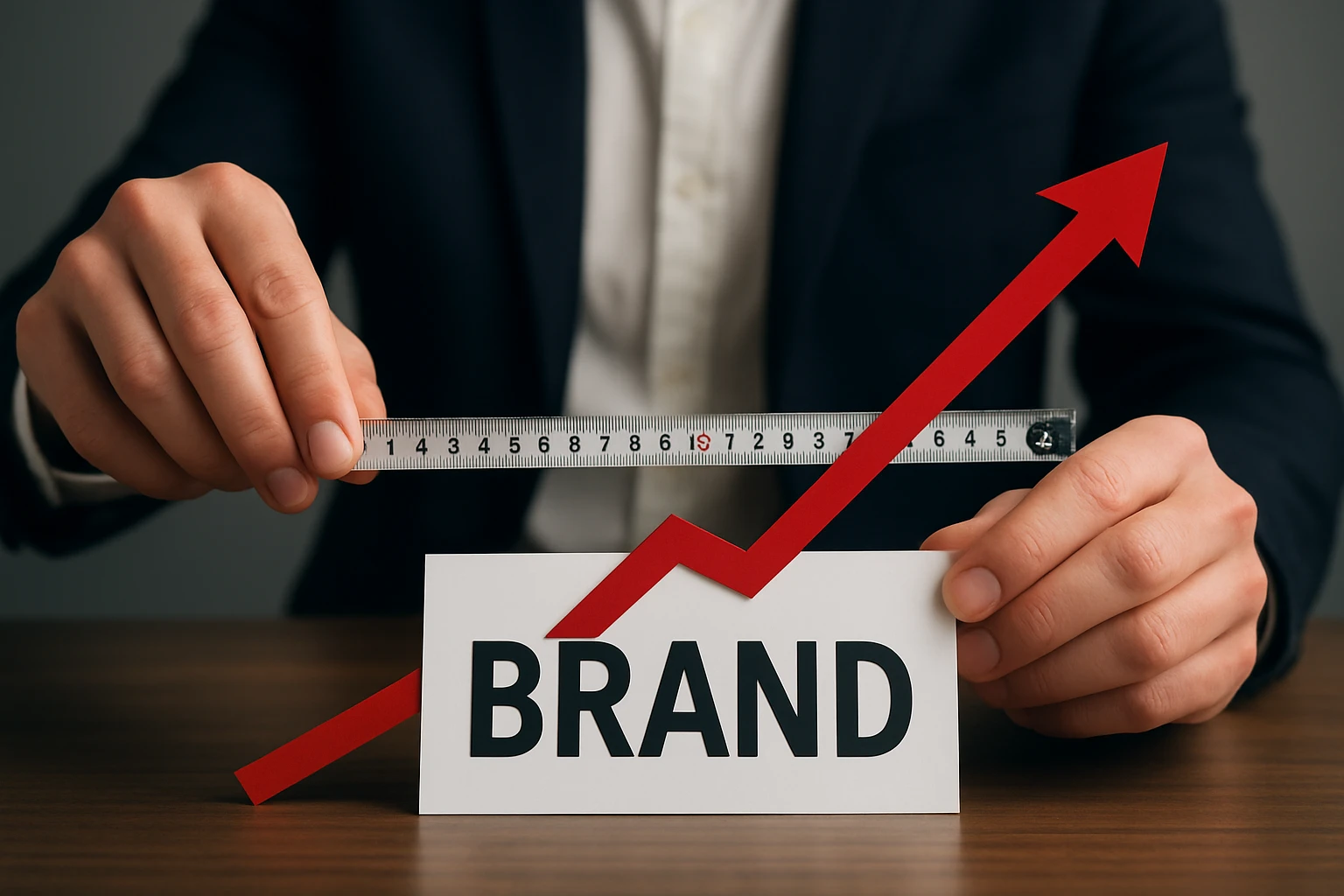
You measure it with a mix of exposure and retrieval signals, not with one vanity metric.
What to track
Product Media treats measurement as a core part of the topic, and RTB House asks directly how to measure branding effectiveness and progress. That is the right mindset. If you cannot track whether more people are seeing and recalling you, you are guessing.
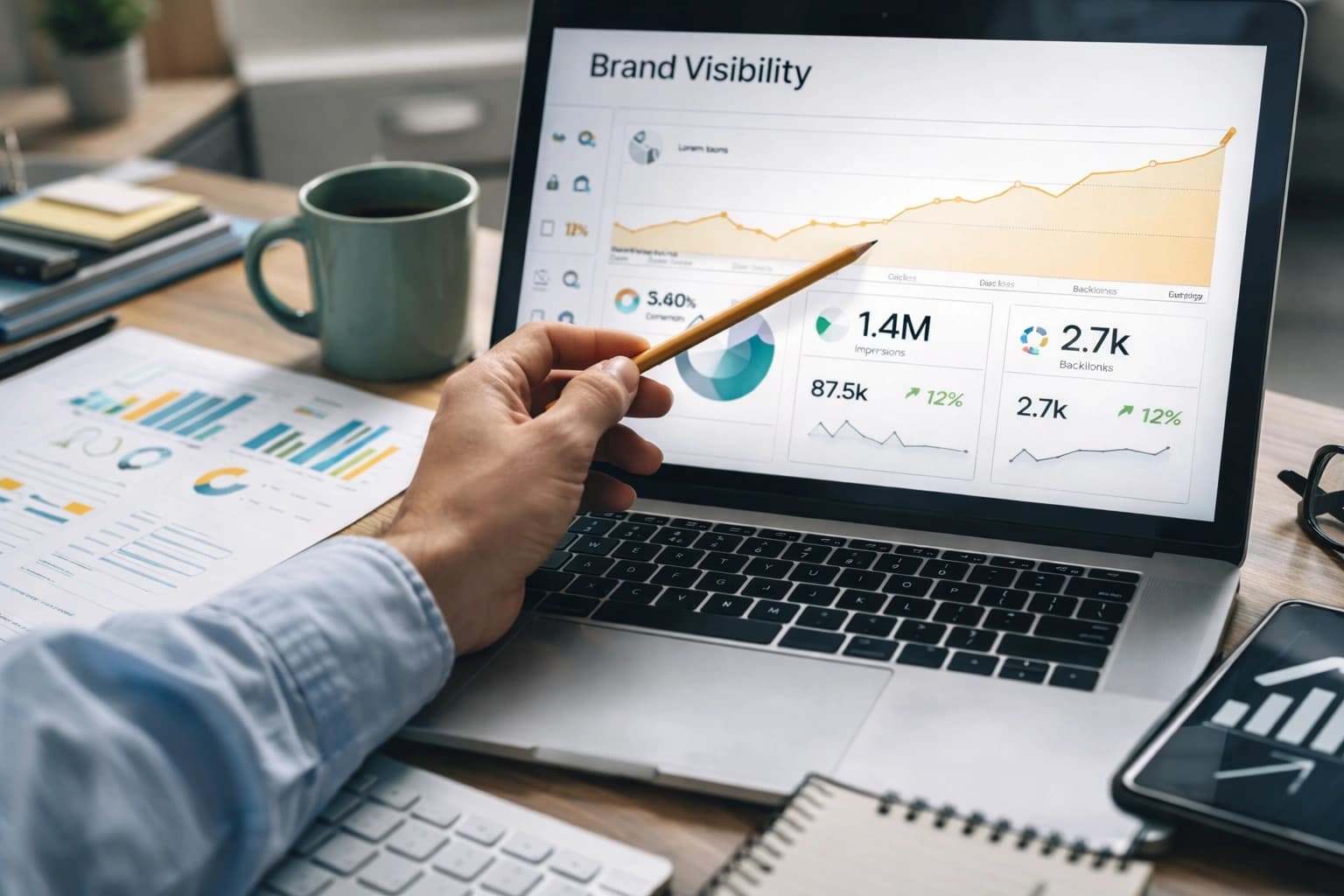
Useful signals usually include branded search volume, share of voice, direct traffic, referral mentions, SERP features, social reach, and AI or LLM mentions when relevant. No single number tells the whole story.
| Metric | What It Tells You | Why It Matters |
|---|---|---|
| Branded search volume | How often people look for you by name | Strong sign that exposure is turning into recall |
| Share of voice | How visible you are compared with rivals | Shows whether you are present in category conversations |
| Direct traffic | How often people come straight to your site | Often rises when recognition increases |
| Referral mentions | Where other sites, media, or partners cite you | Extends visibility into trusted third-party environments |
| SERP features | Whether you appear in rich results, local results, or answer surfaces | Improves prominence even without the top blue link |
| Social reach | How often content is seen in networks like LinkedIn or X | Good for repetition, weak if judged alone |
| AI/LLM mentions | Whether assistants surface your brand in relevant prompts | Tracks emerging discovery behavior beyond search results |
Channel-level vs. blended metrics
Measure each channel on its own first. Search should answer search questions. PR should generate mentions and authority. Social should expand repeated exposure. If you mash everything together too early, you cannot tell what is actually working.
Then look at the blended picture. If LinkedIn impressions rise but branded search stays flat, you may have attention without memory. If media mentions increase and direct traffic follows, that is stronger evidence that visibility is transferring across channels. Good measurement connects the dots instead of celebrating isolated spikes.
What good visibility looks like
Good visibility feels broad and consistent, not flashy. Your brand appears when people search the category. Your homepage and core pages are easy to find. Journalists or partners already recognize the name. Branded searches do not disappear between campaigns. AI assistants surface you in relevant comparisons instead of skipping past you.
For most teams, the real test is retrieval. Can a buyer remember you later? Can they find you again without effort? Likes and raw impressions can help explain exposure, but they are not enough on their own.
Measure visibility by exposure and retrieval, not likes alone.
- Your brand name appears in search behavior, not just social reporting
- More discovery comes from multiple channels, not one traffic source
- Third-party mentions reinforce what your own site says
- People can find you again easily after the first encounter
What are the most common questions about brand visibility?
Most questions come down to three things: how visibility differs from awareness, whether small teams can improve it, and which mistakes do the most damage.
Brand visibility vs. brand awareness
You do not have to choose between them. RTB House frames the topic directly as brand visibility versus brand awareness, but the better way to think about it is sequence. Visibility creates the opportunity. Awareness is what grows after repeated, relevant exposure.
You do not have to choose between visibility and awareness—they work together.
If your brand shows up in Google but nobody remembers it, visibility is ahead of awareness. If people know your name in a small circle but rarely encounter you outside it, awareness exists but visibility is limited. Strong brands work on both.
Can smaller teams improve visibility?
Yes — usually faster than they think, if they focus. A small SaaS team does not need to be everywhere. It needs to be highly visible in a few places that matter: Google for core topics, LinkedIn for repeated expert presence, review sites for validation, and one or two trade publications or newsletters for borrowed trust.
Start with a tight operating plan:
- Own your brand SERP and core category pages.
- Publish content that answers real comparison and decision questions.
- Repurpose each useful piece into social, email, and outreach assets.
- Earn mentions from credible third parties.
- Track branded search, referral mentions, and direct traffic every month.
The detergent-shelf lesson still applies here. You do not need a billion impressions. You need enough relevant repetition that the right people recognize you when choice shows up.
What mistakes to avoid
Product Media includes a section on common mistakes to avoid, and the pattern is familiar. Teams often mistake activity for visibility. They post constantly on one network, ignore search, skip PR, publish pages that never get indexed, or change their brand language so often that Google, journalists, and AI systems cannot connect the dots.
The most expensive mistakes are usually these:
- Being visible in the wrong places instead of where buyers actually look
- Publishing without distribution or follow-up promotion
- Using inconsistent brand names, product terms, or positioning
- Ignoring technical basics like crawlability, internal linking, and clear page structure
- Judging success by likes alone instead of recall, mentions, and branded demand
A contrarian truth helps here: sometimes the fastest visibility win is not more content. It is better signal clarity. One strong category page, three trusted mentions, and a clean brand SERP can beat a pile of unfocused posts.
Brand visibility meaning, once you strip away the jargon, is straightforward: be consistently seen in the right places often enough to become familiar, trusted, and easier to choose.
When you treat visibility as a cross-channel discipline, your search presence, PR mentions, content, and AI discovery signals start reinforcing each other.
If your ideal buyer searched Google, scanned LinkedIn, asked ChatGPT, and compared options this week, where did your brand appear — and where was it missing?
Expand Organic Reach With SEOPro AI
SEOPro AI combines hidden prompts that encourage AI/LLM brand mentions with publishing, clustering, schema, and monitoring for teams scaling search visibility.
See Platform