7 Ways to Understand Ads in Google AI Overviews
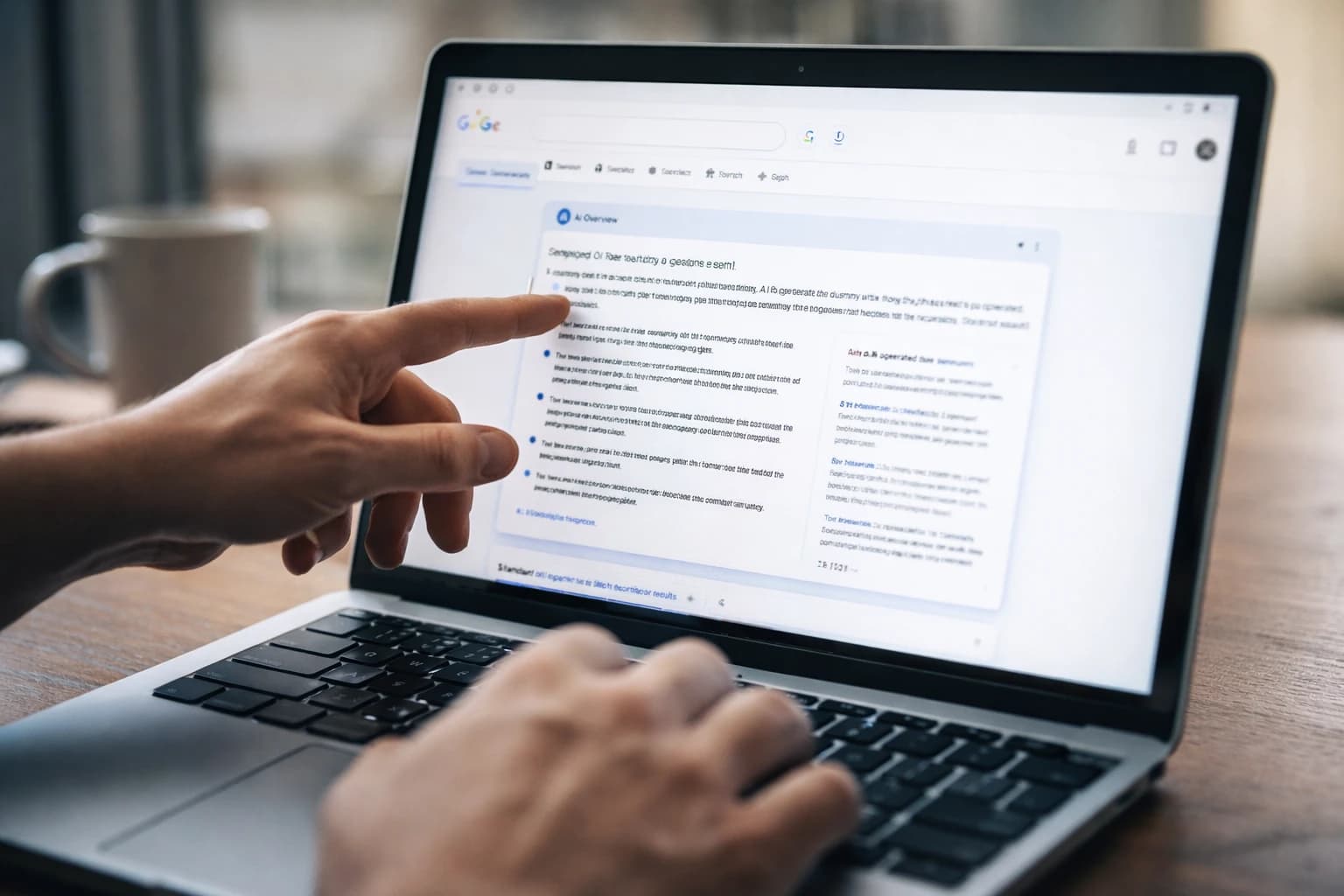
You type a high-intent query into Google before your first coffee — something like “best project management software for architects.” You expect the usual rhythm: a few paid results, ten blue links, maybe a shopping unit. Instead, an AI summary takes the top of the page, and the links you planned to audit are suddenly lower than your eye expects.
That is the new tension around ads in google ai overviews. You are not just competing for rank or bid position anymore. You are competing with a machine-written answer that can summarize, recommend, and reshape what gets seen first.
If you run SEO, PPC, or both, the smartest approach is practical, not dramatic. Treat this as a moving SERP condition — one that varies by market, query type, and layout.
#1 Understand what ads in Google AI Overviews actually are
What it is
Watch This Helpful Video
To help you better understand ads in google ai overviews, we've included this informative video from Travis Marziani. It provides valuable insights and visual demonstrations that complement the written content.
Start with the placement itself. These are not simply standard search ads dropped into a new wrapper. They are ads shown within or around an AI-generated summary, which means the paid message appears inside an answer-led search experience rather than beside a plain list of links.
That distinction matters. Google is weaving paid results into AI-generated search summaries, so the ad is influenced by the surrounding answer, recommendations, and follow-up context. In practice, that changes how a person reads the page.
| Element | Standard Search Ad | Ad in AI Overview Context |
|---|---|---|
| Placement | Usually above or below classic results | Within or adjacent to an AI-generated answer |
| User mindset | Scanning options | Reading an answer before choosing a next step |
| Main competition | Other ads and organic links | The summary itself, then other ads |
Why it matters
AI Overviews occupy prime real estate at the top of the SERP. That pushes traditional organic listings lower on the page, and sometimes standard paid placements move down too. So visibility is no longer just a rank report or an average position issue. It is a page-shape issue.
If the first screen is now an answer, your ad is competing with a summary before it competes with other ads.
That is why teams get confused. They may still be “present” on the query, yet the first impression the user gets belongs to the overview, not the ad or the organic listing.
Quick example
Think about a query like “how to remove red wine from carpet.” Instead of showing only links, Google can display an AI explanation with product recommendations. A paid placement there behaves differently from a plain text ad because the user has already received advice before your message appears.
#2 Track the rollout by market before you judge performance
What it is
The rollout has been staggered, not universal. Google first deployed AI Overviews in the United States in mid-2024. The UK saw AI summaries arrive in August 2024, but ad integration there was still limited while Google gathered engagement data. By early-to-mid 2025, the feature had expanded to more than 100 countries.
That timeline tells you something simple but easy to ignore: you cannot treat one screenshot, one country, or one quarter as the final state of the feature.
| Market stage | Timing | What it suggested |
|---|---|---|
| United States | Mid-2024 | Earliest live reference point for AI Overviews |
| United Kingdom | August 2024 | Summaries present, with minimal ad integration at first |
| Global expansion | Early-to-mid 2025 | Feature spread to 100+ countries, with uneven maturity |
Why it matters
If you judge performance too early or too broadly, you can misread what is happening. A CTR shift in the US may reflect an AI-heavy layout, while the same keyword in the UK during an earlier phase may still behave more like a traditional results page.
A screenshot from one country is not a universal rule for how the placement works everywhere.
For international brands, this matters fast. A SaaS team with campaigns in the US, UK, Canada, and Australia should expect a staggered experience, not a single template.
Quick example
Say your US campaign for “best payroll software for restaurants” starts showing weaker click-through rates in Q1, while the UK account looks normal. If you skip the rollout context, you might blame the copy. If you check the SERP first, you may find the market is simply at a different stage of AI Overview visibility.
#3 Focus on the query types most likely to trigger the placement
What it is
Not every query deserves your attention first. The most useful place to watch is high-intent, product-led, and recommendation-style searches — the ones where a person is clearly trying to choose. Common examples include “best,” “top,” “vs,” “for,” and category-plus-need searches.
That lines up with how AI summaries can include product recommendations. If Google sees a user asking for help selecting an option, it has a stronger reason to generate a guided answer and potentially place paid messages inside that experience.
Why it matters
Teams often start with volume because it is easy to export. That is backwards here. A 20,000-search informational keyword may matter less than a 900-search commercial comparison query if the second one produces an AI Overview, clearer purchase intent, and better downstream conversion quality.
Don’t start with volume; start with intent. If the query is already asking for help choosing, it is a better candidate to monitor.
The other reason to stay flexible is that query behavior can evolve as the rollout matures. A trigger you do not see in October can appear in January, especially as Google tests richer commercial experiences.
Quick example
Compare “what is endpoint security” with “best endpoint security software for remote teams.” The first query may attract an answer and end there. The second invites comparison, recommendations, and next-step clicks — exactly the kind of environment where ads in an AI-led result become more relevant.
#4 Understand how the placement changes visibility and clicks
What it is
This is the geometry problem. AI Overviews can change what gets seen first, even when your keyword coverage, bids, or ranking logic stay the same. On desktop, the first screen may be dominated by the summary. On mobile, the effect can feel even harsher because the fold arrives sooner.
That means “position” is no longer a single tidy number. A result can still be technically prominent and yet visually delayed.
Why it matters
AI Overviews push traditional organic results further down the page, and sometimes standard ads too. Traditional paid placements can end up playing second fiddle to the AI response because the summary captures attention first. If you only read a dashboard and never inspect the live SERP, you will miss the reason click patterns changed.
Position is no longer a single number. On an AI-heavy SERP, the fold matters as much as the ranking.
This is where SEO and PPC teams often talk past each other. One side says rankings held. The other says CTR fell. Both can be right because the interface, not the underlying demand, changed.
Quick example
Imagine your ad still qualifies near the top for “best CRM for field sales teams,” but on an iPhone the user must scroll past the AI summary before they see it. Same query. Same account. Different click reality.
#5 Measure performance with the right KPIs
What it is
You need a measurement stack that separates visibility, engagement, and conversion. If you collapse everything into one headline metric, you will confuse layout changes with demand shifts or landing-page problems.
A practical setup starts with impressions and impression share, then moves to clicks and CTR, then finishes with conversion rate, CPA, revenue, pipeline, or whatever business metric your team actually manages. In other words, diagnose in layers.
| Layer | Metrics to watch | What the change may mean |
|---|---|---|
| Visibility | Impressions, impression share, top-of-page presence, SERP screenshots | The layout or market exposure changed |
| Engagement | Clicks, CTR, CPC | The ad is being seen differently or read differently |
| Conversion | Conversion rate, CPA, ROAS, lead quality | The landing page or offer may be the issue — or the traffic got more qualified |
| Context | Market notes, device splits, query clusters | Explains why one country or intent bucket behaves differently |
Why it matters
Because AI Overviews sit at the top of the page and can push other results lower, click behavior can change even when search demand stays steady. A CTR dip is not automatically bad news. Sometimes fewer people click because the page is filtering curiosity and leaving you with more serious visitors.
Do not overreact to a CTR dip before you know whether the placement changed, the intent changed, or the landing page changed.
This is also where market-by-market baselines earn their keep. If Canada and the US move at different speeds, compare each against its own history first, then compare markets.
Quick example
Suppose impressions stay flat for a software query in March, clicks drop 12%, but demo requests stay level. That is not the same story as impressions flat, clicks down 12%, and demos down 30%. The first may reflect a new SERP layout. The second may signal a real message or experience problem.
#6 Adapt ad copy and landing pages to the AI-summary context
What it is
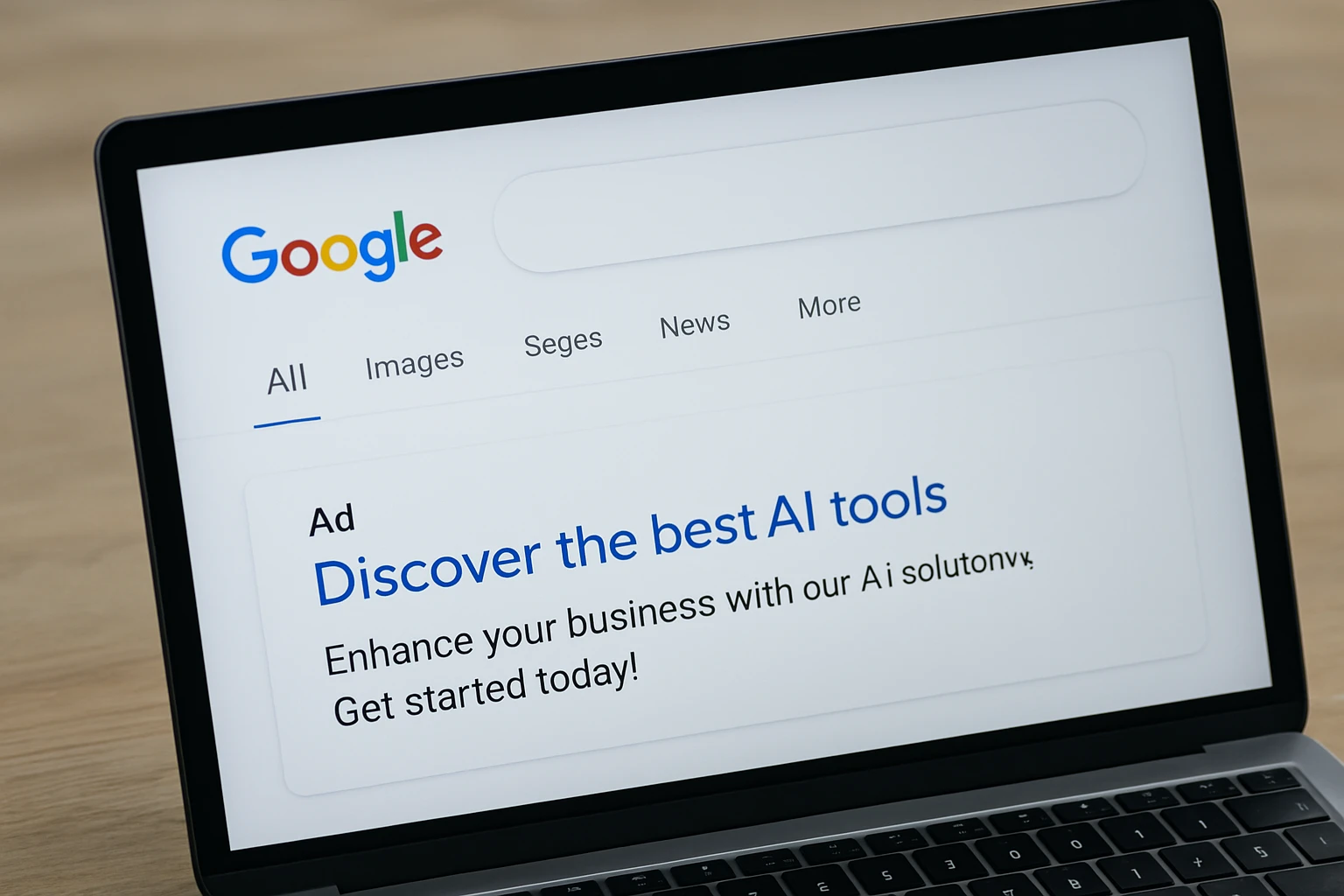
When your ad appears around an AI-generated answer, generic messaging weakens fast. The user has already seen a summary, and sometimes recommendations, before your headline gets a chance. So your copy needs to do one of three things quickly: clarify fit, sharpen differentiation, or promise a concrete next step.
That usually means tighter language, fewer broad claims, and stronger category cues. If the overview already explained the topic, your ad should not repeat the textbook version.
Why it matters
Product clarity matters more in this environment because AI summaries can include guidance and recommendations. If your ad then says “Leading Solution for Modern Teams,” you are asking the user to do extra interpretation work. Many will not bother.
Write for a user who has already seen a machine-generated answer and is deciding whether to trust your next sentence.
The landing page matters just as much. If your ad promises “CRM for outside sales reps,” the first screen of the page should confirm that promise immediately — not force a visitor through vague brand language or a generic homepage hero.
Quick example
A weak message says, “Top-Rated Project Software.” A stronger one says, “Project Software for Architects — Gantt Templates, Budget Tracking, 14-Day Trial.” When the click lands, the page should repeat those same terms and prove them with screenshots, pricing cues, or customer evidence.
#7 Build a repeatable testing workflow across SEO and PPC
What it is
You do not need a giant operating model to start. You need a repeatable one. Pick a defined set of queries, markets, and devices. Capture live SERP screenshots on a schedule. Log whether an AI Overview appears, whether ads show within that experience, and how performance moves against the last clean baseline.
Because the rollout expanded to more than 100 countries and progressed in stages, ongoing monitoring beats one-time auditing. The same keyword can behave differently over time — and across markets — even when your campaign settings stay stable.
Why it matters
This works best when SEO and PPC share the same evidence. SEO teams often see which informational or commercial clusters are earning AI summaries. PPC teams see the monetized side — impressions, CTR, CPC, and conversion response. Put those views together and you get a fuller picture of the SERP.
Treat the feature like a moving SERP condition, not a one-time launch event.
If you already use automation for content and monitoring, this is one place it helps. A platform such as SEOPro AI can support the content-side discipline around topic coverage and performance drift, while your paid team tracks query-level exposure and creative response.
Quick example
A simple weekly loop works well:
- Every Monday, capture the live SERP for 20 to 30 high-intent queries across key markets.
- Every Wednesday, compare visibility notes with PPC metrics by device and country.
- Every Friday, decide one controlled test — new copy, revised landing page, or a tighter query cluster.
That cadence sounds modest. Good. Modest systems survive longer than heroic audits.
How to choose the right option
Start with markets where the rollout is active
Begin where the feature is visible and meaningful. AI Overviews launched in the US first, then expanded to the UK and eventually to more than 100 countries, so availability still varies by market. If you spread attention too widely, you will waste time auditing places where the placement is weak or inconsistent.
Prioritize high-intent query clusters
Pick query groups where visibility shifts have commercial consequences: comparison terms, “best” terms, category-plus-use-case phrases, and recommendation-led searches. A small cluster of 25 high-intent terms usually teaches you more than a giant export of low-intent keywords.
Expand only after the reporting is stable
Do not widen testing until your baseline is trustworthy. That means you can explain changes in impressions, clicks, and conversions without guessing. Once reporting is stable, expand to new devices, markets, and landing-page tests. If it is not stable, keep the footprint small and the notes meticulous.
| Decision step | Best first move | Reason |
|---|---|---|
| Market selection | Choose countries where AI Overviews are clearly active | Rollout maturity changes the SERP |
| Keyword selection | Choose high-intent commercial clusters | Those queries are more likely to surface recommendations |
| Scaling | Expand only after KPI tracking settles | You need clean baselines before reading performance shifts |
That is the whole framework. Start where the placement exists, focus where intent is strongest, and scale only when your reporting stops lying to you.
Ads in Google AI Overviews make more sense when you see them as a changing search surface, not a mysterious new ad unit.
Teams that win here watch markets carefully, target intent before volume, and judge performance with more than rank alone. How are you tracking ads in google ai overviews across your most valuable queries right now?
Sharpen AI Search With SEOPro AI
SEOPro AI gives teams an AI blog writer for automated content creation, plus publishing and monitoring workflows that strengthen visibility around ads in google ai overviews.
See It Work