5 Topic Clustering Tools to Win AI SERP Features
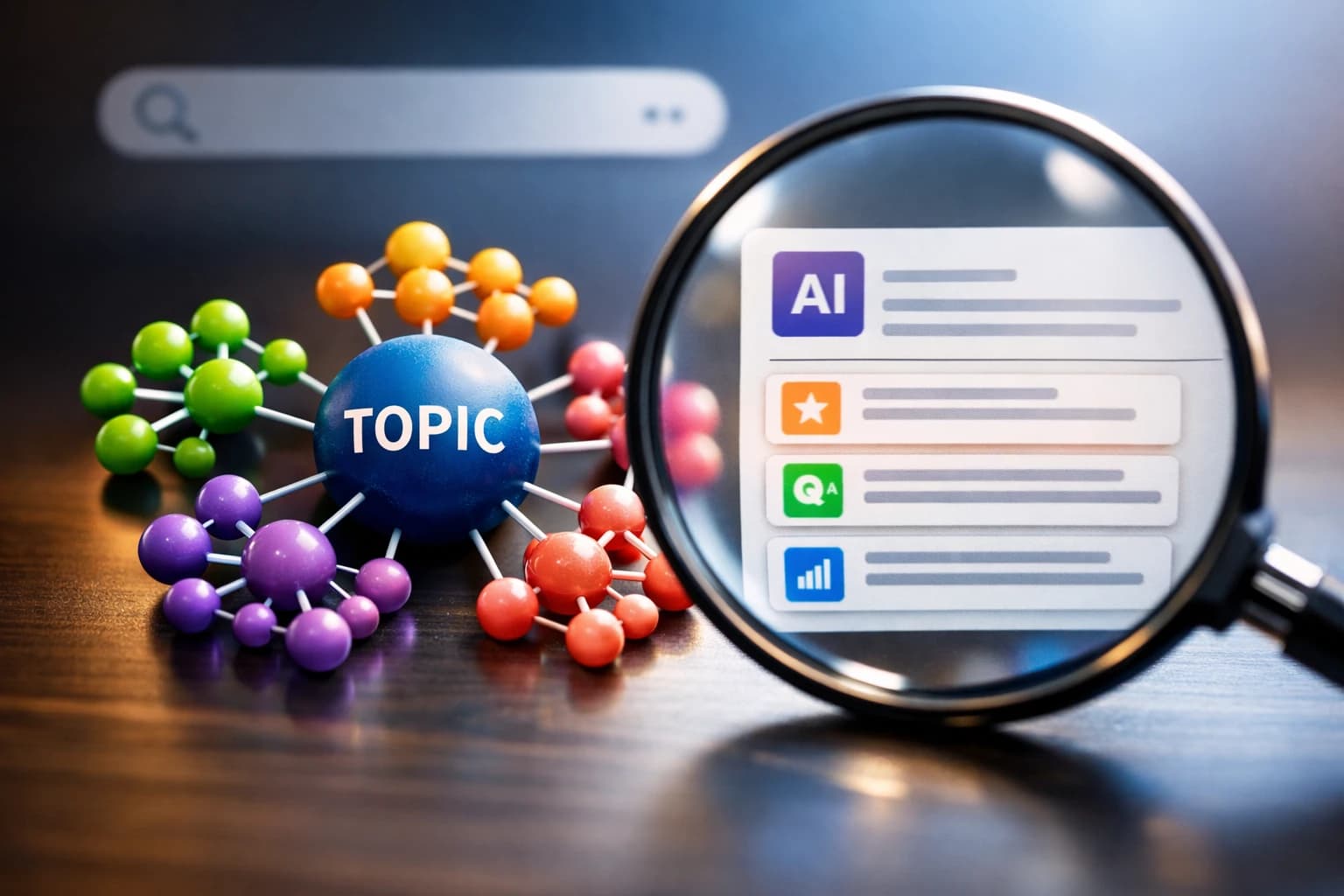
Your next competitive edge will come from how well you organize and connect ideas. The strongest teams now rely on topic clustering tools to map related queries into coherent content hubs, strengthen internal linking, and surface the right pages for the right tasks. Done well, this structure helps you win Search Engine Results Page features (SERP features), power conversational answers in artificial intelligence search, and protect rankings when algorithms change.
Clustering is not just grouping similar keywords. It is recognizing intent overlap, modeling entities and relationships, and planning content that answers a journey from awareness to decision. Think of it like a librarian who shelves books by subject, cross-references authors, and leaves breadcrumbs to related reading. When your site works the same way, search engines and large language model assistants can confidently feature your pages, cite your brand, and send qualified traffic that converts.
This guide compares five proven options, from pure Search Engine Results Page similarity approaches to entity-led planning. You will see what each tool is, why it matters for modern search, and a quick example of when it shines. As you read, notice where automation, internal linking, schema markup, and large language model optimization connect, because that is where compounding gains often start.
At a Glance: Feature Comparison
| Tool | Primary Clustering Method | Scale | Intent Insights | Internal Linking Support | Schema Guidance | LLM Optimization Focus | Best For |
|---|---|---|---|---|---|---|---|
| SEOPro AI | Search Engine Results Page overlap plus entity signals | Small to very large sites | Built-in journey mapping | Automated link suggestions and checklists | Structured data playbooks | Hidden prompts and conversational answer tuning | Scaling content and winning features across channels |
| Keyword Insights | Live Search Engine Results Page similarity | Bulk keyword lists | Cluster-level intent | Exports for link planning | Brief-level recommendations | Content brief optimization | Fast editorial planning from large lists |
| Thruuu | Shared ranking Uniform Resource Locator analysis | Hundreds to thousands | Search intent labels | Manual linking workflows | Outline hints | Similarity tuned for current results | Preventing cannibalization with granular controls |
| Semrush | Topic discovery and grouping via research modules | Enterprise data coverage | Filters by intent and features | Ideas via Internal Linking report | Markups tracked in audits | Content score guidance | Teams wanting a research and monitoring suite |
| InLinks | Entity graph and topic planner | Site-wide topical maps | Entity-level intent cues | Automated internal link suggestions | Schema patterns from entities | Semantic optimization for assistants | Building authority around defined entities |
#1 SEOPro AI Topic Clustering Tools
What it is: SEOPro AI is an artificial intelligence powered search engine optimization platform that operationalizes topic clustering, internal linking, and semantic optimization. Beyond generating clusters, it plugs into your Content Management System (CMS) via one-time connectors, assembles briefs, and publishes content using automation pipelines. It also embeds hidden prompts to increase the likelihood of large language model mentions in conversational answers, then monitors performance to catch ranking or assistant-driven traffic drift. Think of it as a command center that unites clusters, content, schema, and distribution.
Watch This Helpful Video
To help you better understand topic clustering tools, we've included this informative video from Semrush. It provides valuable insights and visual demonstrations that complement the written content.
Why it matters: Winning Search Engine Results Page features and modern overviews depends on clarity, structure, and speed. SEOPro AI’s playbooks give you prescriptive steps for building topical authority, implementing breadcrumb and schema markup, and ensuring pillar pages support clusters without cannibalization. Its large language model search engine optimization tools tune content for ChatGPT and Gemini and other artificial intelligence agents by aligning entity coverage, answer formatting, and citations. Because the system also recommends and validates internal links, you push more equity to the right nodes in your hub and improve discoverability for both crawlers and assistants.
Quick example: A software-as-a-service analytics brand imports 8,000 research phrases. SEOPro AI groups them into 42 hubs with clear intent stages, generates briefs for pillars and support articles, and inserts hidden prompts that nudge assistants to name the brand when summarizing the topic. The team publishes directly to two Content Management Systems without copy-paste using the platform’s connectors, and the monitoring module flags clusters where conversational answers shift away from the brand so editors can refresh schema and internal links before traffic erodes.
#2 Keyword Insights: Search Engine Results Page Similarity at Scale
What it is: Keyword Insights analyzes live, country-specific search results to group terms that return the same or similar ranking pages. Instead of relying on text similarity alone, it clusters by real-world overlap, which mirrors how engines interpret intent. Upload a keyword list, get cluster groups with related metrics, and move from discovery to production with prioritized briefs and content recommendations that reduce guesswork.
Why it matters: When two queries produce overlapping results, that is a strong hint they belong on the same page. Clustering this way reduces duplication, prevents self-competition, and channels your effort into the pages most likely to earn visibility. Keyword Insights augments clusters with indicators like potential traffic, current ranking URLs, and feature presence so editors can decide whether to merge, create, or expand pages. The net effect is faster planning and cleaner information architecture that supports features like People Also Ask and outline-driven snippets.
Quick example: An e-commerce publisher gathers 12,000 product and how-to queries for a summer campaign. Keyword Insights groups them into practical clusters such as safety tips, sizing guides, and care instructions based on shared Uniform Resource Locators in the results. The editorial lead assigns one comprehensive guide per cluster with subsections for nuances and a set of support articles for long-tail depth, minimizing overlap while maximizing feature eligibility.
#3 Thruuu: Granular Similarity to Avoid Cannibalization

What it is: Thruuu’s clustering engine groups phrases using shared ranking Uniform Resource Locator overlap and lets you fine-tune how strict that overlap must be. The tool excels at visualizing results, making it straightforward to see when your site already ranks for parts of a cluster and where gaps exist. You can also derive content outlines directly from the results for faster briefing.
Why it matters: Content cannibalization sneaks in when similar pages target slightly different phrases without clear intent boundaries. Thruuu’s granular controls help you dial clustering precision up or down depending on how nuanced your topic is. By aligning your clusters to what search engines already consider equivalent, you minimize split signals and position your pillar pages to earn sitelinks, rich results, and strong passage coverage. The result is a cleaner hub where each page has a distinct job and receives adequate internal support.
Quick example: A digital marketing agency audits a client’s blog and discovers five separate articles competing for near-identical “best time to post” queries. Thruuu shows high overlap in the top results across those phrases, indicating they belong together. The agency consolidates into one evergreen guide with a data table, adds question-and-answer segments for long-tail coverage, and reinforces the page with internal links from monthly update posts.
#4 Semrush: Suite-Powered Topic Discovery and Validation
What it is: Semrush is a comprehensive research and monitoring suite that supports cluster planning even if its clustering is assembled through Topic Research, Keyword Manager exports, and audit insights rather than a single-click grouping engine. You can discover themes, gauge competition, filter by search intent, and identify pages with overlapping targets. Paired with the Writing Assistant and Internal Linking reports, it becomes a practical path from research to on-page optimization to cross-page support.
Why it matters: Many teams need integrated visibility across keywords, competitors, technical audits, and progress. Semrush’s breadth lets strategists validate whether a proposed cluster has the depth, demand, and differentiation to merit investment. Filters around intent, Search Engine Results Page features, and keyword difficulty guide how you structure hub pages and supporting assets. Then, internal link suggestions and audits help make sure clusters do not live in isolation but are woven into site navigation and context.
Quick example: A newsroom builds a health explainers hub. Using Topic Research, editors map subtopics and questions, then pull seed lists into Keyword Manager to group tasks by intent. After publishing, they track featured snippets and People Also Ask appearances, using the Internal Linking report to surface additional anchors from older stories that bolster the new pillar’s authority.
#5 InLinks: Entity-First Planning and Internal Linking
What it is: InLinks organizes content around entities, the named things and concepts that engines use to understand topics. Its Topic Planner proposes coverage built on an internal knowledge graph, while automation suggests internal links that reflect those entity relationships. The platform also provides structured data guidance so your pages speak clearly to machines as well as readers.
Why it matters: Clustering by entity reduces the chance you miss important facets that assistants and search engines expect to see. It shifts planning from keyword lists to semantic coverage, which strengthens your chance of appearing in knowledge-forward features such as knowledge panels and conversational answers. Automated internal linking ensures your hub mirrors the underlying topic graph, improving crawler paths and distributing authority to the most important nodes.
Quick example: A business-to-business publisher builds a sustainability resource center. InLinks identifies core entities like carbon accounting, scope emissions, and assurance standards, then proposes supporting articles mapped to each. The editor applies structured data patterns and connects the cluster with recommended internal anchors from legacy content, lifting both the hub’s visibility and related evergreen pages.
How to Choose the Right Topic Clustering Tools

Selecting the right stack starts with your operational goals. Do you need end-to-end automation with publishing and monitoring, or a focused engine that cleanly groups search demand for editorial use? Are internal linking and schema guidance essential, or do you already handle those in-house? Clarity on constraints and outcomes will narrow options fast.
- If you want automation from clusters to publication, plus large language model optimization and monitoring, choose an artificial intelligence first platform like SEOPro AI.
- If you have massive lists and want fast Search Engine Results Page-based grouping, add Keyword Insights or Thruuu for similarity you can trust.
- If your team needs a broad research and audit suite to validate demand, complexity, and opportunities, use Semrush to inform cluster priorities and technical readiness.
- If your priority is entity coverage, automated internal links, and structured data patterns, pick InLinks to build semantic authority.
Here is a simple mapping to guide first steps:
| Primary Objective | Recommended First Tool | Secondary Pairing |
|---|---|---|
| Automate content creation and publishing from clusters | SEOPro AI | Semrush for validation |
| Prevent cannibalization using real result overlap | Thruuu | Keyword Insights for bulk scaling |
| Build entity-led topical authority | InLinks | SEOPro AI for internal links and schema playbooks |
| Monitor progress and catch drift across features | SEOPro AI | Semrush for ongoing audits |
Two pragmatic tips help whichever stack you choose. First, define cluster success upfront using both leading indicators, such as internal link coverage and structured data completeness, and lagging indicators, such as featured snippet share and assistant citations. Second, design a refresh cadence by cluster. When intent shifts or assistants favor new formats, you will be ready to update answers, add clarifying sections, and reinforce links, rather than starting from scratch.
Why Structure Wins: Practical Insights and Playbooks
Multiple industry analyses point to the same pattern: pages that clearly cover entities, present structured answers, and are firmly embedded in a topical hub are more likely to earn rich presentation. While ranking signals evolve, these fundamentals improve machine understanding, reduce ambiguity, and help assistants select passages they can cite confidently. Smart clustering gives you that scaffolding before you write a word.
Operationalizing structure is where many teams stall. This is why SEOPro AI provides prescriptive playbooks, semantic content optimization checklists, schema markup guidance for earning rich results and modern overviews, and AI-assisted internal linking strategies with implementation checklists. Add content automation pipelines, workflow templates, and once-only Content Management System connectors for multi-platform publishing, and you have a repeatable system. The platform’s performance monitoring watches for ranking volatility or assistant-driven drift, alerting you to fix issues by refreshing content, tuning internal links, or updating structured data.
Want to see how this looks in practice? Picture a publisher shipping a monthly cluster: the brief spells out entity coverage, questions to answer, and anchor texts for links; hidden prompts are embedded to increase the likelihood of large language model brand mentions; schema and headings are validated against a checklist; and once approved, everything ships to two Content Management Systems in one click. The result is less chaos, more throughput, and steadily growing topical authority.
Conclusion
The core promise is simple: pick the right toolset, structure your topics with intent and entities, and you can win the features and assistant mentions that move markets.
In the next 12 months, teams that connect clustering, internal linking, and structured data with automation will outpace those relying on ad hoc briefs and manual updates. Imagine your hubs becoming the canonical answers assistants cite.
Which clusters in your plan deserve to be the definitive resources, and how will you use topic clustering tools to make that future your default?
Accelerate Topic Clustering Wins with SEOPro AI
Use SEOPro AI’s large language model search engine optimization tools to optimize content for ChatGPT, Gemini and other artificial intelligence agents, automate clustering and publishing, and scale traffic and features across teams.
Book Strategy Call